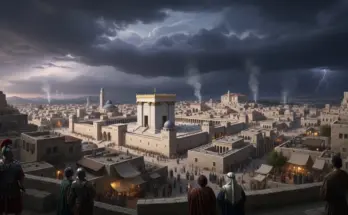
Isaiah 13 opens with strong and unsettling words about the fall of Babylon. For modern readers, this chapter can feel distant or even mysterious. Yet for its original audience, these words carried urgent meaning and deep reassurance. Isaiah spoke into a world shaped by empires, exile, and covenant promises. His message addressed real nations, real fears, and real expectations.
This chapter reminds us that biblical prophecy often speaks first to near events. It uses vivid language to describe historical judgment. At the same time, it points beyond itself to lasting truths about God’s rule. Isaiah 13 mattered because it revealed that no empire stands outside God’s authority. Babylon, the symbol of human pride and power, would not endure forever.
As we study Isaiah 13, we do so within a partial preterist framework. We emphasize fulfilled prophecy in Scripture, while affirming future hope where the Bible clearly teaches it. This approach helps us read prophecy as the original hearers would have heard it. It also guards us from projecting modern speculation onto ancient texts.
This article explores Isaiah 13 as prophecy fulfilled in history. We will examine its audience, language, and historical setting. We will then consider its fulfillment within redemptive history and its ongoing significance for believers today. Throughout, our focus remains on Christ, not timelines. Scripture calls us to trust God’s faithfulness, shown in what He has already brought to pass.
Audience and Time Frame in Scripture
Isaiah ministered during the eighth century BC, primarily to the kingdom of Judah. His audience lived under constant threat from rising empires. Assyria dominated the region, while Babylon was emerging as a future power. Isaiah’s words addressed people who feared invasion, exile, and covenant judgment.
Isaiah 13 begins with a clear marker: “The oracle concerning Babylon which Isaiah the son of Amoz saw” (Isaiah 13:1, ESV). This opening anchors the chapter to a specific nation and historical concern. The prophecy does not float in abstract time. It speaks to Babylon as a real empire that would face God’s judgment.
While Isaiah lived long before Babylon’s fall, his audience understood prophetic vision as God’s revealed plan. Prophets often spoke of future events as certain because God had declared them. This does not remove historical grounding. Instead, it strengthens it. God revealed what He intended to do within history.
Time sensitivity matters in interpretation. Isaiah 13 uses language of imminence from the prophet’s vantage point. The chapter describes God mustering armies and preparing judgment. This language assured Judah that Babylon’s power was temporary. God’s purposes were already in motion.
Although first-century believers lived much later, they inherited this prophetic worldview. They understood that God acts decisively in history. They also recognized Babylon as a recurring biblical symbol for oppressive power. Audience relevance reminds us that prophecy first comforts and warns its original hearers. Only then does it instruct later generations.
Biblical Context and Old Testament Background
Isaiah 13 draws heavily from Old Testament prophetic patterns. The language of cosmic disturbance, divine warfare, and total collapse appears throughout Scripture. These images communicate covenant judgment, not literal cosmic destruction.
Isaiah writes, “For the stars of the heavens and their constellations will not give their light; the sun will be dark at its rising, and the moon will not shed its light” (Isaiah 13:10, ESV). Similar language appears in Isaiah 34, Ezekiel 32, and Joel 2. In each case, the context is judgment on nations, not the end of the physical universe.
This imagery reflects covenant language rooted in Genesis and Deuteronomy. Blessings and curses shaped Israel’s understanding of history. When nations rose in pride and violence, prophets described their fall as cosmic unmaking. Creation imagery reversed to show divine judgment.
Isaiah also presents God as a warrior king. “The Lord of hosts is mustering a host for battle” (Isaiah 13:4, ESV). This echoes earlier texts where God fights on behalf of His purposes. The emphasis lies on God’s sovereignty, not human strength.
Babylon held symbolic weight even before its dominance. It echoed Babel, the city of human pride in Genesis 11. Isaiah taps into this shared memory. Babylon represents organized rebellion against God. Its fall demonstrates that such rebellion always ends in judgment.
Understanding this background prevents us from forcing modern meanings onto ancient imagery. Isaiah spoke in a symbolic, covenantal language familiar to his audience. His words carried theological weight without requiring futuristic interpretation.
Fulfillment in Redemptive History
Isaiah 13 finds clear fulfillment in the historical fall of Babylon. In 539 BC, the Medes and Persians captured the city under Cyrus the Great. Isaiah foretold this outcome long before it occurred. “Behold, I am stirring up the Medes against them” (Isaiah 13:17, ESV). This detail grounds the prophecy firmly in history.
Babylon’s fall marked a major shift in redemptive history. It ended an empire that had exiled Judah and challenged God’s covenant people. Through Babylon’s defeat, God demonstrated His faithfulness to His promises. He judged pride and delivered His people.
The language of total devastation does not require literal annihilation. Ancient prophetic texts often described conquest in absolute terms. Babylon continued to exist in reduced form, but its imperial power ended. This matches the pattern seen in other prophetic judgments.
This fulfillment also shaped later biblical theology. By the time of the New Testament, Babylon had become a symbol rather than a city. Revelation uses Babylon to represent oppressive systems opposed to God’s kingdom. This symbolic use rests on Isaiah’s fulfilled prophecy.
Within a partial preterist framework, fulfillment confirms God’s reliability. Prophecy fulfilled in history strengthens trust in Scripture. It also sets a pattern for understanding later prophetic language, including New Testament passages tied to the end of the Old Covenant age.
Isaiah 13 shows that God acts within time to judge nations. His purposes unfold across history, culminating in Christ. Fulfillment is not theological novelty. It is the consistent testimony of Scripture.
Ongoing Significance for Believers Today
Although Isaiah 13 describes a past event, its significance continues. Fulfilled prophecy shapes how believers understand God’s character. It shows that God keeps His word, even across centuries.
This chapter teaches that human power is temporary. Empires rise and fall under God’s authority. Believers today face different systems, yet the principle remains. God rules history, not political strength or cultural dominance.
Isaiah 13 also helps clarify what continues in God’s plan. The judgment of Babylon is complete. That specific prophecy does not repeat. Yet the pattern of divine justice remains active. God still opposes pride and injustice.
At the same time, Scripture affirms future realities clearly. The resurrection of the dead, final judgment, and eternal life remain ahead. Partial preterism does not deny these truths. Instead, it distinguishes between fulfilled covenant judgment and ultimate consummation.
Christ stands at the center of this distinction. He fulfills the Law and the Prophets. Through His death and resurrection, He established the new covenant. Isaiah’s fulfilled prophecy points forward to this greater fulfillment.
For believers, this brings confidence, not confusion. We trust God’s promises because we see His faithfulness in history. Isaiah 13 strengthens hope by grounding it in what God has already done.
Addressing Common Misunderstandings
Many readers assume that prophetic language must always describe future events. This assumption often leads to confusion when reading texts like Isaiah 13. Cosmic imagery feels dramatic, so it is placed at the end of time.
However, Scripture itself shows a different pattern. Prophets regularly used exalted language to describe historical judgment. This does not lessen the seriousness of the events. Instead, it communicates their theological weight.
Another misunderstanding is that partial preterism removes future hope. This is not the case. Partial preterism affirms future resurrection and final judgment. It simply recognizes that many prophetic texts addressed near-term covenant events.
Isaiah 13 does not predict modern geopolitics. It speaks to ancient Babylon. Expecting future fulfillment ignores the clear historical markers within the text. Respecting those markers honors Scripture’s original meaning.
We also avoid attacking other interpretive views. Faithful believers read prophecy differently. Our goal remains clarity, not debate. By focusing on what the text affirms, we build understanding without division.
Isaiah 13 teaches us how prophecy works. It speaks to real people in real time, while revealing God’s unchanging purposes. Recognizing this helps us read Scripture with humility and confidence.
Closing Thoughts on Isaiah 13
Isaiah 13 presents prophecy as historical judgment, not speculative prediction. It addressed Judah’s fears and Babylon’s pride with clarity and authority. God revealed that Babylon’s power would fall, and history confirms this fulfillment.
The chapter uses vivid, cosmic language to communicate covenant judgment. This language reflects Old Testament patterns and prophetic tradition. It does not describe the end of the physical universe. Instead, it announces the end of an empire.
Within redemptive history, Isaiah 13 demonstrates God’s faithfulness. He judges nations, vindicates His people, and advances His purposes. Fulfilled prophecy strengthens trust in Scripture rather than diminishing its relevance.
For believers today, this passage offers assurance. God remains sovereign over history. Human power does not last. Christ reigns as the fulfillment of God’s promises.
We end this study with confidence, not uncertainty. Isaiah 13 reminds us that God speaks clearly and acts faithfully. His word stands proven in history and secure in hope. Through Christ, we rest in the certainty of what God has done and what He will yet complete.
Discover More in Bible Study Toolbox
Want to study further? Explore our full Eschatology resources at Bible Study Toolbox, where we connect prophecy, Scripture, and history to show how God’s plan unfolds. Each study and outline is designed to help believers grow in understanding and live with confidence in Christ’s promises. Contact us if you need us!