We approach the study of eschatology with a desire to see God’s Word as both reliable and clear. Many readers feel overwhelmed when they encounter the prophetic warnings of Jesus in the Gospels. We often bring modern headlines to the text, yet Scripture invites us to look first at its own historical context. In Luke 21, Jesus provides a detailed roadmap for His disciples regarding the coming destruction of Jerusalem. This event stands as a pivot point in redemptive history. It signals the transition from the Old Covenant shadows to the New Covenant reality. Jesus spoke these words to prepare His followers for a specific, looming judgment upon the city and its temple. This passage mattered deeply to the original audience because it concerned their immediate physical and spiritual survival. We must recognize that Scripture frequently speaks to near-at-hand events with profound, lasting significance. By framing our study around biblical fulfillment rather than modern speculation, we honor the intent of the Lord. He did not intend to confuse His sheep but to equip them for the changes ahead. Understanding this history helps us appreciate the faithfulness of Christ.
Luke 21: Audience & Time Frame in Scripture
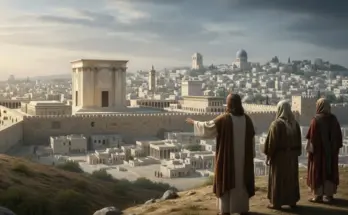
We must first identify the original audience to understand the scope of the prophecy. Jesus sat with His disciples on the Mount of Olives, overlooking the majestic temple structures. The disciples asked a specific question about when these stones would fall. Jesus responded to them directly, using second-person language throughout the discourse. He warned them about what “you” will see and how “you” must flee. This direct address indicates that the primary fulfillment involved the very men standing before Him. We find the most crucial time-marker in Luke 21:32. Jesus explicitly states that “this generation will not pass away until all has taken place.”
Audience relevance serves as the bedrock of sound interpretation. If we push these warnings thousands of years into the future, we strip the words of their immediate urgency for the first-century Church. The disciples needed to know how to recognize the approaching Roman armies. They needed to understand the signs of the end of the Mosaic age. Jesus used words like “near” and “soon” to describe the proximity of these events. He promised that the contemporary generation would witness the completion of these prophecies. By honoring these time-markers, we see that Jesus accurately predicted the Roman siege of AD 70. His accuracy confirms His identity as the true Prophet like Moses.
Biblical Context and Old Testament Background
Jesus did not invent a new vocabulary for His prophecy in Luke 21. Instead, He drew heavily from the rich imagery of the Old Testament prophets. When Jesus describes the sun, moon, and stars falling, He utilizes covenantal language. Isaiah, Ezekiel, and Joel used this same “de-creation” imagery to describe the fall of ancient nations like Babylon and Edom. In the prophetic tradition, cosmic language signifies the collapse of a political or religious order. The “shaking of the heavens” represents the removal of earthly powers and the judgment of a rebellious covenant people.
We see a clear continuity between the warnings of the Old Testament and the words of Christ. The temple represented the center of the Jewish world, acting as a microcosm of the heavens and earth. Therefore, the destruction of the temple felt like the end of the world to the Jewish mind. Jesus used these familiar patterns to show that God was again visiting His people in judgment. He warned that the “days of vengeance” had arrived to fulfill all that the prophets wrote. This language does not require a literal collapse of the physical universe. Rather, it describes a total shift in the spiritual landscape. The Old Covenant world was passing away to make room for the kingdom that cannot be shaken.
Luke 21: Fulfillment in Redemptive History
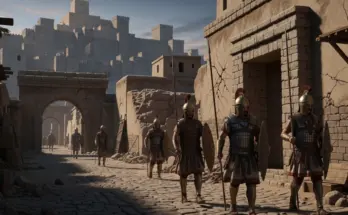
The primary fulfillment of Luke 21 occurred within the lifetime of the apostles. History records that the Roman general Titus surrounded Jerusalem in AD 70, exactly as Jesus foretold. The Roman legions set up the “abomination of desolation” by bringing their pagan standards into the holy precincts. Jesus warned His followers to flee to the mountains when they saw Jerusalem surrounded by armies. Church history tells us that the Christian community heeded this warning and escaped to the city of Pella. They survived the siege because they believed the specific prophecy of their Lord.
This fulfillment marks the formal end of the Old Covenant age. The sacrificial system stopped because the temple no longer existed to house it. God vindicated Jesus as the true Messiah by bringing the predicted judgment upon those who rejected Him. We view the destruction of Jerusalem not as a random tragedy, but as a judicial act of God. It cleared the way for the international expansion of the Church. The gospel no longer centered on a single building in Judea. Instead, the kingdom of God began to fill the whole earth through the preaching of the Word. This historical reality proves that God keeps His promises with terrifying and beautiful precision.
Ongoing Significance for Believers Today
Fulfilled prophecy continues to shape our faith by anchoring it in objective history. We do not follow cleverly devised myths; we follow a Lord who rules over the rise and fall of nations. While the specific judgments of Luke 21 are behind us, the theological principles remain. We learn that God is holy and that He holds His people accountable to His covenant. We also see the absolute reliability of the words of Jesus. If He was right about the temple, we can trust Him for everything else.
While we emphasize fulfilled prophecy, we also affirm the future hopes that Scripture clearly teaches. The destruction of the temple in AD 70 serves as a “type” or a preview of the final judgment. We still look forward to the physical resurrection of the dead at the last day. We anticipate the final appearing of Christ to dwell with His people in a renewed creation. The New Testament distinguishes between the “end of the age” (the Jewish age) and the “end of the world” (the final consummation). Our hope rests in the fact that Christ has already defeated His enemies and now sits at the right hand of the Father. He will continue to reign until He puts every enemy under His feet, with death being the last enemy.
Addressing Common Misunderstandings
Many readers assume that language about “the end” must always refer to the end of the physical globe. This assumption often leads to confusion when reading Luke 21. If we interpret the passage as exclusively future, we make the warnings irrelevant to the people Jesus was actually talking to. We must remember that “the end” in this context refers to the end of the temple-centered era. Partial preterism does not deny the future return of Christ or the final judgment. It simply insists that we allow the text to define its own timeline.
We do not view these events as a “failed prophecy” or a “double fulfillment” that lacks clarity. Instead, we see a God who acts decisively in history to establish His kingdom. Some fear that focusing on the past fulfillment of these verses robs them of their power. However, the opposite is true. When we see how perfectly Jesus fulfilled His word in AD 70, our confidence in His future promises grows. We no longer have to live in a state of constant “prophecy watch” based on the evening news. Instead, we live in the victory of a King who has already inaugurated His reign.
Closing Reflection on Luke 21
In our study of Luke 21, we have seen how Jesus predicted the destruction of Jerusalem with absolute accuracy. He spoke to His disciples about the end of the Old Covenant age and the vindication of His kingdom. By using the language of the Old Testament prophets, He signaled a massive shift in redemptive history. This event was not a cosmic catastrophe for the world, but a judicial collapse for a city that rejected its King. Today, we stand on the other side of that fulfillment, looking back at the faithfulness of God. We trust in the reliability of Scripture and the authority of Christ. As we move forward, we keep our eyes on the resurrected Lord. He has finished the work of the Old Covenant and now leads us into an eternal hope. We rest in the assurance that the Word of the Lord stands forever.
Discover More in Bible Study Toolbox
Want to study further? Explore our full Eschatology resources at Bible Study Toolbox, where we connect prophecy, Scripture, and history to show how God’s plan unfolds. Each study and outline is designed to help believers grow in understanding and live with confidence in Christ’s promises. Contact us if you need us!