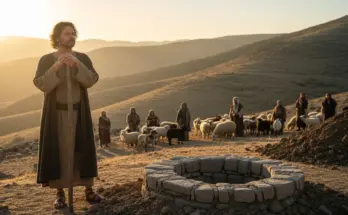
Some leaders stand in the spotlight. Others quietly lift others into it. Barnabas belongs in the second group. Yet without him, the story of the early church would look very different.
When we first meet Barnabas in the book of Acts, the church is young and fragile. Persecution has already begun. Believers are learning how to live as one body in Christ. In that setting, Barnabas emerges as a steady, generous, and courageous man. His given name was Joseph. However, the apostles called him Barnabas, which means “son of encouragement” (Acts 4:36, ESV). That name captures his life.
Barnabas was more than kind. He was a leader. He was a missionary partner. Scripture even calls him an apostle in Acts 14:14. He walked beside Paul during some of the most important moments in early Christian history. At times, he led. At other times, he stepped back.
Barnabas: Strengths & Accomplishments
Barnabas first appears during a time of remarkable unity in the church. Acts 4 describes believers sharing their possessions so that no one lacked anything. Luke then highlights Barnabas by name:
“Thus Joseph, who was also called by the apostles Barnabas (which means son of encouragement), a Levite, a native of Cyprus, sold a field that belonged to him and brought the money and laid it at the apostles’ feet” (Acts 4:36–37, ESV).
His generosity was not forced. It flowed from faith. He trusted God enough to release what he owned. Because of that, he strengthened the church during its early days.
However, Barnabas’s influence grew even more significant when Saul of Tarsus came to Jerusalem. Saul had persecuted the church. Believers feared him. Yet Barnabas stepped forward when others stepped back. Acts 9:27 tells us, “But Barnabas took him and brought him to the apostles and declared to them how on the road he had seen the Lord.” Barnabas vouched for Saul’s genuine conversion.
That moment changed history. Without Barnabas’s courage, Saul might have remained isolated. Instead, he gained acceptance among the apostles. Therefore, Barnabas played a direct role in Paul’s future ministry.
Later, when the gospel reached Antioch, the Jerusalem church sent Barnabas to investigate. Acts 11:23 describes his response: “When he came and saw the grace of God, he was glad, and he exhorted them all to remain faithful to the Lord with steadfast purpose.” Barnabas did not crush the young believers with suspicion. He rejoiced at God’s work. He encouraged them to stay true.
Luke adds a powerful summary: “For he was a good man, full of the Holy Spirit and of faith. And a great many people were added to the Lord” (Acts 11:24, ESV). Scripture rarely describes someone so plainly and positively.
Barnabas also showed wisdom in leadership. When the work in Antioch expanded, he sought help. Instead of guarding influence, he traveled to Tarsus to find Saul. Acts 11:26 states that he brought Saul to Antioch, and together they taught the church for a year. Barnabas recognized Saul’s gifts. Therefore, he invited partnership.
In Acts 13, the Holy Spirit set apart Barnabas and Saul for missionary work. They were sent out by the church in Antioch. Barnabas’s name appears first in the account. This detail suggests that he may have initially taken the lead. Together, they proclaimed Christ in Cyprus and Asia Minor. They faced opposition, yet they continued boldly.
In Lystra, after healing a crippled man, the crowd attempted to worship them as gods.
Luke writes, “But when the apostles Barnabas and Paul heard of it, they tore their garments and rushed out into the crowd” (Acts 14:14, ESV). Here Barnabas is clearly called an apostle. He shared fully in the authority and responsibility of the mission.
Through generosity, discernment, courage, and partnership, Barnabas strengthened the early church. God used him to build bridges, establish churches, and support emerging leaders.
Barnabas: Weaknesses & Mistakes
Barnabas’s life was faithful, yet he was not flawless. Scripture records a serious conflict between him and Paul.
After their first missionary journey, Paul proposed revisiting the churches they had planted. Barnabas agreed in principle. However, he wanted to bring John Mark. Mark had previously left them during the earlier mission. Acts 15:37–38 explains that Paul considered Mark unreliable because he had withdrawn from the work.
The disagreement became intense. Acts 15:39 states, “And there arose a sharp disagreement, so that they separated from each other.” Barnabas took Mark and sailed to Cyprus. Paul chose Silas and traveled elsewhere.
This moment reveals human tension within faithful ministry. Barnabas believed in giving Mark another chance. Paul believed the mission required proven endurance. Neither man is portrayed as sinful here. Yet their partnership ended.
The consequences were real. The missionary team split into two. However, God continued to work through both paths. Later in Paul’s letters, we see reconciliation. In Colossians 4:10, Paul refers to “Mark the cousin of Barnabas.” In 2 Timothy 4:11, Paul writes, “Get Mark and bring him with you, for he is very useful to me for ministry.”
Barnabas’s commitment to Mark eventually bore fruit. Mark became a valuable worker and likely authored the Gospel of Mark. Therefore, even in conflict, God advanced His purposes.
Scripture also mentions a moment of weakness involving Barnabas in Galatians 2. Paul describes how Peter withdrew from eating with Gentile believers out of fear of the circumcision party. Paul adds, “And the rest of the Jews acted hypocritically along with him, so that even Barnabas was led astray by their hypocrisy” (Galatians 2:13, ESV).
This statement is sobering. Barnabas, known for encouragement and inclusion, wavered under pressure. He followed Peter’s example instead of standing firmly in gospel freedom.
Yet this account also shows growth in the early church. Paul confronted the issue openly. The truth of justification by faith remained clear. Barnabas’s stumble did not erase his faithfulness. It reminds us that even strong leaders can falter when fear influences their decisions.
Lessons from Their Life
Barnabas teaches us that encouragement is not weakness. It is spiritual strength. The Greek word paraklēsis, often translated encouragement or exhortation, carries the sense of coming alongside to help. Barnabas embodied this role.
First, we learn the power of generosity. Barnabas’s willingness to sell his property showed trust in God’s provision. Therefore, his example challenges us to hold our resources loosely.
Second, we see the importance of advocating for others. Barnabas stood beside Saul when others doubted him. He saw God’s grace before others did. Because of that, the church gained one of its greatest teachers. We should ask whether we recognize potential in others and speak up on their behalf.
Third, Barnabas models shared leadership. He did not cling to prominence. When Paul’s gifts became more visible, the order of names in Acts shifted from “Barnabas and Saul” to “Paul and Barnabas.” Barnabas did not resist this change. He continued serving faithfully. True leadership seeks God’s glory, not personal status.
Fourth, Barnabas reminds us that disagreements can occur even among faithful believers. Acts 15 shows that sharp conflict does not automatically mean spiritual failure. However, how we handle such moments matters. Barnabas chose to invest in John Mark. Paul chose to continue expanding the mission. God used both paths.
Finally, Barnabas’s life highlights the need for courage rooted in faith. He rejoiced when he saw God’s grace in Antioch. He tore his garments when people attempted to worship him. He risked his reputation to support Saul. Therefore, Barnabas combined encouragement with conviction.
Vital Statistics for Barnabas
Barnabas was born Joseph. The apostles gave him the name Barnabas, meaning “son of encouragement.” He was a Levite, which connects him to the priestly tribe of Israel. However, he was a native of Cyprus, an island in the eastern Mediterranean.
He lived during the first century, in the earliest decades of the church after Christ’s resurrection. Barnabas became closely associated with the Jerusalem church, and later with the church in Antioch. He served as a missionary, teacher, and apostle.
He partnered closely with Paul during the first missionary journey. He also had a family connection to John Mark, who is described as his cousin in Colossians 4:10. After separating from Paul, Barnabas traveled with Mark to Cyprus.
Although Acts does not record the end of his life, early Christian tradition suggests that he continued serving faithfully. Scripture, however, focuses on his role in establishing and strengthening the church.
Barnabas: Key Verses & Mentions
Barnabas appears primarily in the book of Acts. His story begins in Acts 4:36–37 with his generous gift to the apostles. He then appears in Acts 9:27 as the one who brings Saul to the apostles.
Acts 11:22–26 highlights his ministry in Antioch and his partnership with Saul. Verse 24 provides a summary that defines his character: “For he was a good man, full of the Holy Spirit and of faith. And a great many people were added to the Lord.”
Acts 13 and 14 record his missionary journeys. In Acts 14:14, he is clearly called an apostle alongside Paul. Acts 15:36–41 recounts the sharp disagreement between him and Paul over John Mark.
Outside Acts, Paul mentions Barnabas in 1 Corinthians 9:6, acknowledging his shared labor in gospel work. Galatians 2:13 records his moment of weakness during the controversy over Gentile inclusion.
These passages together present a balanced portrait. Barnabas was faithful, influential, and human.
Closing Reflection on Barnabas
Barnabas did not write a New Testament letter. He did not leave behind a long speech recorded in Scripture. Yet his fingerprints rest on the expansion of the gospel.
He encouraged believers in Jerusalem. He welcomed Saul when others feared him. He strengthened the church in Antioch. He traveled as an apostle. He invested in John Mark when others doubted him.
At the same time, he faced conflict and momentary failure. Therefore, his story feels real. God used his strengths. God also worked through his weaknesses.
When we look at Barnabas, we see that the Lord builds His church through faithful partners. Some preach boldly. Others encourage quietly. Both matter.
The same Spirit who filled Barnabas still works in Christ’s people today. As we study his life, we remember that God delights to use willing servants. Therefore, we rest not in human leaders, but in the faithfulness of the Lord who calls, sends, and sustains.
Explore More Bible Character Studies
This study is part of our Bible Character studies, explore the lives, lessons, and faith of men and women throughout Scripture. For more outlines, studies, and resources, return to the Bible Study Toolbox homepage. Contact us with any questions.