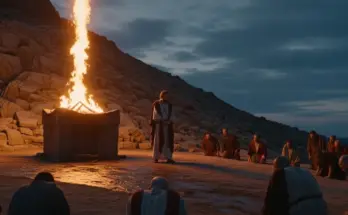
A Reluctant Messenger in a Doomed Land
The story of Jeremiah opens not with confidence, but with hesitation. According to the book that bears his name, Jeremiah is called to prophetic service during the reign of Josiah, king of Judah, a period often remembered for religious reform and renewed covenant loyalty. Yet the biblical record makes clear that the spiritual health of the nation was far more fragile than the reforms suggested. Beneath the surface, idolatry persisted, political alliances replaced trust in God, and injustice remained entrenched in daily life.
Jeremiah’s calling is dated precisely. “In the thirteenth year of the reign of Josiah” (Jeremiah 1:2, ESV), placing it around 627 BC. This was a generation before Jerusalem’s fall, when Babylon was rising and Assyria was fading from power. Judah stood at a crossroads, but most of its leaders believed survival could be managed through diplomacy and ritual rather than repentance. Into this moment, Jeremiah is summoned not as a reformer with popular backing, but as a watchman announcing what many refused to imagine.
The call narrative in Jeremiah 1 establishes the tension that will define his entire ministry. God declares that Jeremiah was appointed before birth, set apart for a task that would involve uprooting and overthrowing before any rebuilding could occur. Jeremiah’s response is not defiance but fear. He protests his youth and inexperience, a reaction that reflects both personal insecurity and cultural reality. In ancient Judah, authority was closely tied to age, lineage, and public standing. A young man speaking words of judgment to elders, priests, and kings would not be received as credible by default.
God’s reply does not remove the danger. Instead, it confirms it. Jeremiah is warned that opposition is inevitable, yet he is commanded not to be afraid of those he will face. The promise offered is not ease, but presence. God will be with him, but the path ahead will be marked by resistance. From the beginning, the biblical text frames Jeremiah’s ministry as one of collision between divine truth and national self-deception.
Geographically, Jeremiah comes from Anathoth, a small priestly town just a few miles northeast of Jerusalem. This detail matters. Anathoth was close enough to the center of power for Jeremiah to be drawn into national affairs, yet distant enough to leave him without the protection enjoyed by temple elites. His priestly background gave him familiarity with Israel’s traditions, but it did not shield him from rejection. In fact, it would later intensify it.
The message Jeremiah is commissioned to deliver focuses on covenant accountability. Judah’s confidence rested heavily on the presence of the temple and the memory of past deliverance. Many believed these symbols guaranteed protection regardless of behavior. Jeremiah’s calling directly challenges this assumption. Judgment, he is told, is not hypothetical. It is approaching, and it will come from the north, a clear reference to Babylon that would grow sharper as history unfolded.
Scholars widely recognize Jeremiah as a prophet positioned between reform and collapse. In this reading, his ministry begins with opportunity but quickly shifts to inevitability. While Josiah’s reforms created a brief window for repentance, the biblical narrative suggests that the nation’s heart had already hardened. Jeremiah is therefore called not to rescue Judah from consequence, but to bear faithful witness as those consequences draw near. This interpretation is common across evangelical and historical-critical scholarship and fits the internal logic of the text.
From the outset, Jeremiah’s reluctance is not weakness of faith, but clarity of vision. He understands, at least in part, what obedience will cost. His story begins with a calling that cannot be refused and a future that cannot be softened. The doomed land does not yet know it is doomed, but the reluctant messenger does.
Jeremiah – Truth That Threatens Power
As Jeremiah’s ministry moves from calling to confrontation, the conflict sharpens quickly. The opposition he faces does not arise because his message is unclear, but because it is precise. He speaks to kings, priests, prophets, and people with words that strike at the foundations of Judah’s confidence. According to the biblical record, this resistance intensifies as Jeremiah proclaims that judgment is not only possible, but certain.
The flashpoint comes when Jeremiah delivers his message at the temple gates in Jerusalem. Recorded in Jeremiah 7, this sermon confronts what scholars often call “temple theology,” the belief that the presence of the temple guaranteed divine protection regardless of moral or covenant faithfulness. Jeremiah declares that trust in sacred space, ritual language, and national identity has become a substitute for obedience. The people chant, “This is the temple of the LORD,” yet their daily practices contradict the covenant they claim to honor.
This message directly threatens institutional power. The priests oversee temple worship, the prophets offer reassuring oracles of peace, and the political leaders rely on public stability to maintain control. Jeremiah’s warning undermines all three. If the temple itself can fall, then no authority structure is secure. If judgment is coming from the north, then political alliances are exposed as fragile illusions. The prophet’s words do not merely criticize behavior; they dismantle the story Judah tells itself about safety and favor.
The response is swift and hostile. Jeremiah is seized, beaten, and placed in stocks by Pashhur, a priest and temple official (Jeremiah 20:1–2). This is not a spontaneous act of anger but an official disciplinary measure. Public punishment serves as both humiliation and warning. It signals to others that dissent from the approved religious narrative will be met with force. Jeremiah’s suffering is therefore not incidental. It is a consequence of speaking truth where power depends on silence.
Kings also perceive Jeremiah as a threat. During the reigns of Jehoiakim and Zedekiah, his prophecies collide with royal policy. Jeremiah warns against rebellion against Babylon, not because Babylon is righteous, but because its rise is presented in Scripture as an instrument of divine judgment. To the court, this sounds like treason. In a time of political crisis, any voice that discourages resistance is viewed as weakening national resolve. Jeremiah’s loyalty to God is interpreted as disloyalty to the state.
False prophets intensify the conflict by offering an alternative message. Figures such as Hananiah proclaim peace and swift deliverance, directly contradicting Jeremiah’s warnings (Jeremiah 28). Their assurances resonate with the people because they preserve hope without requiring repentance. Jeremiah’s message, by contrast, demands humility, confession, and submission. The biblical text presents this clash not as a debate between equally valid perspectives, but as a test of truthfulness. Time itself becomes the judge, as events unfold exactly as Jeremiah foretells.
Culturally, prophets occupied an uneasy position in ancient Israel and Judah. While revered in theory, they were dangerous in practice. A true prophet was not measured by popularity or optimism, but by faithfulness to the word of the LORD. Jeremiah embodies this role fully. His conflict with power is not the result of personal ambition or political ideology. It flows from obedience to a message that exposes false security and calls an entire nation to account.
Many scholars describe this stage of Jeremiah’s ministry as the moment when prophetic truth and institutional religion become openly incompatible. This interpretation, common in both Jewish and Christian scholarship, highlights how systems built to preserve faith can become resistant to correction. In Jeremiah’s case, the guardians of worship become opponents of the word they claim to serve.
The conflict, therefore, is not merely between a prophet and his opponents. It is between truth and control, repentance and preservation, covenant faithfulness and national pride. Jeremiah stands alone not because he seeks isolation, but because the truth he carries leaves no room for compromise.
Jeremiah – Wounds Close to Home
The most painful opposition Jeremiah faces does not come first from kings or priests, but from those who know him best. Scripture records a turning point when the prophet discovers that the threat against his life is not distant or abstract. It is personal. The betrayal rises from Anathoth, his own hometown, among people who share his bloodline, priestly heritage, and daily life.
Jeremiah 11 exposes this wound with startling clarity. After proclaiming judgment against Judah for breaking the covenant, Jeremiah learns of a plot to silence him. The men of Anathoth, identified explicitly as his own people, conspire to kill him, warning him not to speak any longer in the name of the LORD. The text offers no suggestion of misunderstanding or miscommunication. The motivation is direct. Jeremiah’s words threaten the standing, safety, and traditions of those closest to him. Eliminating the messenger appears easier than confronting the message.
This moment is especially severe given Jeremiah’s background. Anathoth was a priestly town, populated by families descended from Aaron. These were not pagan outsiders rejecting God’s word. They were covenant insiders who believed they were defending their community and religious stability. Jeremiah’s prophetic role, instead of earning him trust, marks him as a danger. His loyalty to God isolates him from the very circle that should have understood him best.
The biblical text emphasizes Jeremiah’s vulnerability. He admits that he was unaware of the plot until God revealed it to him. This detail matters. Jeremiah is not portrayed as suspicious or guarded. He trusts his community, and that trust is betrayed. The language used in Jeremiah 11 compares him to a gentle lamb led to slaughter, underscoring the shock and innocence with which he receives the threat. The imagery is not exaggerated drama. It reflects the emotional reality of a prophet who did not expect the cost of obedience to reach into his own household.
God’s response to the betrayal is measured and firm. Judgment is pronounced on the men of Anathoth, not because they opposed Jeremiah personally, but because they rejected the word of the LORD. The text makes clear that prophetic authority does not rest on social consensus. Family ties and religious pedigree do not excuse resistance to divine truth. This episode reinforces a central theme of Jeremiah’s ministry. Covenant membership does not guarantee covenant faithfulness.
Culturally, this betrayal would have carried lasting consequences. In ancient Judah, identity was deeply communal. Survival depended on kinship networks, shared labor, and mutual protection. To be rejected by one’s hometown meant social and economic isolation. Jeremiah’s later command not to marry or raise a family further compounds this loneliness, though the text presents that command as divine instruction rather than consequence alone. His life becomes a living sign of separation, mirroring the broken relationship between Judah and its God.
Scholars often identify this episode as one of the earliest moments when Jeremiah’s ministry becomes irreversibly solitary. While he continues to speak publicly, the safety of private belonging is gone. This interpretation is widely accepted across Jewish and Christian scholarship and aligns with the prophet’s later laments, where personal grief and prophetic burden are tightly intertwined.
The betrayal at Anathoth reveals something essential about Jeremiah’s calling. Faithfulness does not merely invite opposition from hostile powers. It can fracture the closest bonds when truth exposes what familiarity prefers to ignore. Jeremiah does not retaliate, organize resistance, or abandon his calling. He entrusts judgment to God and continues speaking. The wound remains, but it does not silence him.
In this moment, Jeremiah learns that obedience may cost more than reputation or freedom. It may cost belonging itself.
Jeremiah – The Prophet Who Cannot Stay Silent
The turning point in Jeremiah’s ministry does not come through victory, acceptance, or relief. It comes through exhaustion. After public humiliation, imprisonment, and betrayal from his own community, Jeremiah reaches a moment where the cost of obedience seems heavier than he can carry. Scripture records this struggle without softening its edges.
In Jeremiah 20, following his release from confinement by Pashhur, the prophet pours out a lament that reveals the depth of his inner conflict. His words expose the tension between divine calling and human endurance. Jeremiah acknowledges that his message has made him a target of ridicule and violence. Everywhere he speaks, he announces judgment and disaster, and the result is mockery and abuse. The text presents this not as self-pity, but as an honest reckoning with what prophetic faithfulness demands.
At this point, Jeremiah attempts what many before and after him have considered. He resolves to stop speaking in the name of the LORD. This decision is not framed as rebellion. It is framed as survival. Silence appears to offer relief from suffering. Yet the attempt fails almost immediately. Jeremiah describes the word of God as a consuming fire shut up in his bones, an inner compulsion that cannot be restrained. The imagery is visceral and deliberate. It portrays prophecy not as a role Jeremiah performs, but as a force acting upon him from within.
This moment marks a decisive shift. Jeremiah learns that his calling is no longer something he can accept or reject at will. The word entrusted to him has become inseparable from his identity. Scholars frequently point to this passage as unique among the prophets, noting how openly it reveals the psychological and spiritual cost of bearing divine truth. This interpretation is common in both Jewish exegesis and Christian theology and highlights Jeremiah’s role as a model of prophetic suffering rather than prophetic triumph.
The consequences of this realization are immediate and lasting. Jeremiah does not escape danger. In fact, his continued ministry leads to further imprisonment, accusations of treason, and threats against his life. Yet after this turning point, there is a noticeable clarity in his resolve. He no longer measures his obedience by outcomes. Whether the people listen or refuse, whether the kings respond or retaliate, Jeremiah continues to speak because silence is no longer an option.
Culturally, this moment underscores the ancient understanding of prophecy as divine compulsion rather than voluntary vocation. A true prophet was not simply one who chose to speak for God, but one who was seized by God’s word. Jeremiah’s experience aligns with this tradition while also exposing its cost. The same word that sustains him also isolates him. The fire that drives him forward offers no comfort from the consequences it brings.
This turning point also deepens the emotional texture of Jeremiah’s ministry. His later oracles are not delivered with detachment. They are shaped by suffering, grief, and relentless faithfulness. The prophet who cannot stay silent is not fearless. He is compelled. His endurance is not rooted in personal strength, but in the inescapable weight of the word he carries.
From this moment on, Jeremiah’s story is no longer about whether he will speak. It is about how much speaking will cost, and how faithfully he will continue despite it.
Jeremiah – Faithfulness Without Vindication
The fall of Jerusalem does not bring public repentance, nor does it restore Jeremiah to honor. When Babylon finally breaches the city in 586 BC, the catastrophe unfolds exactly as Jeremiah had warned for decades. The temple is burned, the monarchy collapses, and much of the population is carried into exile. Yet Scripture offers no scene of national apology, no moment where the prophet is formally acknowledged as right. Vindication, in the human sense, never arrives.
Jeremiah’s own circumstances at this moment reflect the irony of prophetic faithfulness. Though condemned as a traitor by Judah’s leaders, he is treated with relative restraint by the Babylonian authorities. According to Jeremiah 39 and 40, the Babylonian commander orders that Jeremiah be spared and given freedom of movement. This is not presented as reward or honor. It is simply the outcome of events. The prophet survives the judgment he proclaimed, but survival is not the same as restoration.
Rather than leaving with the exiles or taking refuge in Babylon, Jeremiah remains among the shattered remnant left in the land. This choice is significant. The land is impoverished, politically unstable, and spiritually disoriented. Jeremiah continues to speak, not now of warning alone, but of guidance, urging the people to seek stability and submit to the new reality imposed by conquest. His message remains unwelcome. When a remnant later flees to Egypt against the word of the LORD, Jeremiah goes with them, not because he agrees, but because his calling does not release him from their company.
The resolution of Jeremiah’s story is therefore quiet and unresolved. Scripture does not record a peaceful old age or a restored community gathered around his teaching. Instead, the narrative emphasizes endurance. Jeremiah continues to speak truth long after the opportunity for repentance has passed. He proclaims hope in the form of a future restoration and a new covenant written on the heart (Jeremiah 31), even though he will not live to see it fulfilled. The promise belongs to a generation beyond him.
Historically and theologically, many scholars describe Jeremiah as a prophet whose success is measured entirely by faithfulness rather than outcome. This view is common across Jewish and Christian scholarship. Jeremiah does not avert disaster. He does not unify the people. He does not rebuild what was lost. His role is to speak truth before, during, and after collapse. The value of his ministry lies not in results, but in obedience.
Tradition outside Scripture offers various accounts of Jeremiah’s death, some suggesting martyrdom in Egypt. These accounts are extra-biblical and speculative, and they are not necessary to understand the biblical portrait. The canonical text is intentionally restrained. It leaves Jeremiah standing among a broken people, still speaking, still warning, still hoping in God’s purposes beyond his own lifetime.
This resolution reframes the meaning of success in the life of faith. Jeremiah’s words are proven true by history, yet he gains no public triumph from that truth. What remains is a life marked by costly obedience. He is faithful without applause, correct without celebration, and committed without closure. In that unresolved ending, Scripture presents a sobering conclusion. Sometimes the highest form of faithfulness is to stand firm, speak clearly, and trust God with results that will never be seen.
Discover More Untold Stories
We hope this untold story helps you see God’s work in a new way. You can keep exploring by visiting our homepage at BibleStudyToolbox.com. You can also browse more articles in the Untold Stories category to continue your study. If you have any questions or want to reach out, please visit our Contact Page.