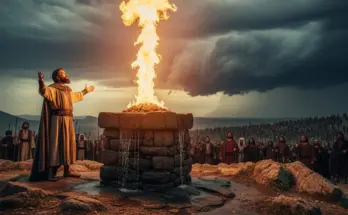
Hebrews 12 stands as one of the clearest calls to endurance in the New Testament. In this chapter, the writer urges believers to persevere with their eyes fixed on Jesus. He explains suffering, discipline, holiness, and the unshakable kingdom of God.
The book of Hebrews was written to Jewish Christians who faced pressure and hardship. Many likely lived before the destruction of Jerusalem in AD 70. They endured persecution and social rejection. Some felt tempted to return to the old covenant system centered in the temple.
Hebrews 11 has just recounted faithful men and women from Israel’s history. Now, Hebrews 12 builds on that testimony. The writer moves from examples of faith to a direct call for perseverance. He shows how God uses discipline for growth. He contrasts Mount Sinai with Mount Zion. Finally, he points to a kingdom that cannot be shaken.
This chapter matters because it explains how believers endure trials within God’s covenant plan. It connects Israel’s past with Christ’s finished work. It clarifies that hardship does not signal God’s absence. Instead, it often confirms His fatherly care. In what follows, we will trace the flow of Hebrews 12 and see how it strengthens believers in every generation.
The New Testament in Its World: An Introduction to the History, Literature, and Theology of the First Christians
Your ticket from the twenty-first century to the era of Jesus and the first Christians. A readable, one-volume introduction placing the entire New Testament and early Christianity in its original context, written by distinguished scholar and author N. T. Wright.
Surrounded by a great cloud of witnesses (Hebrews 12:1–3)
Hebrews 12 opens by connecting directly to the examples of faith in chapter 11. The writer says, “Therefore, since we are surrounded by so great a cloud of witnesses, let us also lay aside every weight, and sin which clings so closely, and let us run with endurance the race that is set before us.”
The image shifts to an athletic race. The “cloud of witnesses” refers to the faithful saints just described. They testify through their lives that faith endures hardship. Their witness does not mean they watch us from heaven. Instead, their recorded faith bears witness to God’s faithfulness.
The writer calls believers to lay aside “every weight” and persistent sin. He uses active language. The Christian life requires focus and effort. However, endurance does not rest on human strength alone. The central command follows: “looking to Jesus, the founder and perfecter of our faith.”
The word translated “founder” comes from the Greek archēgos, meaning pioneer or leader. Jesus blazed the trail of faithful obedience. He endured the cross “for the joy that was set before him.” He now sits at the right hand of God.
Therefore, the writer urges his readers to consider Jesus carefully. When they face hostility or weariness, they must remember His suffering. This opening section frames the entire chapter. Endurance flows from fixing our eyes on Christ.
God’s loving discipline and the training of sons (Hebrews 12:4–11)
The next section addresses suffering more directly. The readers had not yet resisted to the point of shedding blood. However, they faced real hardship. The writer interprets their trials through the lens of Proverbs 3:11–12, which he quotes:
My son, do not regard lightly the discipline of the Lord, nor be weary when reproved by him. For the Lord disciplines the one he loves, and chastises every son whom he receives.
The word “discipline” translates the Greek paideia. It refers to training, instruction, and correction. In the ancient world, fathers trained sons through guidance and correction. The writer uses this image to explain suffering.
Hardship does not prove rejection. Instead, it confirms sonship. “God is treating you as sons,” he writes. If believers experienced no discipline, they would resemble illegitimate children. Therefore, discipline marks covenant belonging.
The writer reasons from lesser to greater. Earthly fathers disciplined for a short time. God disciplines for our good, “that we may share his holiness.” This purpose clarifies everything. God shapes character through trials.
He admits discipline feels painful, not pleasant. However, it later yields “the peaceful fruit of righteousness to those who have been trained by it.” The metaphor shifts back to training. Endurance under discipline produces maturity.
Within the larger covenant story, this teaching reflects Israel’s history. God disciplined Israel in the wilderness. He corrected them through exile. Yet He never abandoned His covenant promises. Now, in Christ, believers understand discipline as part of God’s redemptive work.
Strengthened hands and straight paths (Hebrews 12:12–17)
After explaining discipline, the writer calls for renewed strength. He echoes Isaiah 35:3, saying, “Therefore lift your drooping hands and strengthen your weak knees.” The imagery returns to the race and the journey.
Believers must “make straight paths” for their feet. This language reflects wisdom literature. A straight path symbolizes faithful obedience. A crooked path leads to stumbling. The writer wants the weak not to be put out of joint, but healed.
He then commands believers to “strive for peace with everyone, and for the holiness without which no one will see the Lord.” Holiness here refers to separation for God’s purposes. Under the new covenant, holiness flows from Christ’s work and shapes daily conduct.
The writer warns against bitterness. He speaks of a “root of bitterness” that can cause trouble and defile many. This likely echoes Deuteronomy 29:18, which warned Israel against turning from the Lord.
He also references Esau. Esau sold his birthright for a single meal. Later he desired the blessing but found no chance to repent. The writer uses Esau as a covenant warning. Do not trade eternal inheritance for temporary relief.
This section bridges personal endurance and communal responsibility. The community must guard against drifting away. Covenant faithfulness involves both individual perseverance and corporate care.
From Mount Sinai to Mount Zion (Hebrews 12:18–24)
The tone shifts dramatically as the writer contrasts two mountains. First, he describes Mount Sinai. He recalls the terrifying scene of Exodus 19. He writes:
“For you have not come to what may be touched, a blazing fire and darkness and gloom and a tempest and the sound of a trumpet and a voice whose words made the hearers beg that no further messages be spoken to them.”
Sinai represented the giving of the law. The people trembled. Even Moses said, “I tremble with fear.” The scene emphasized distance, fear, and restricted access.
However, the readers have not come to Sinai. Instead, they have come to Mount Zion. He describes Zion in exalted terms:
“But you have come to Mount Zion and to the city of the living God, the heavenly Jerusalem, and to innumerable angels in festal gathering.”
Zion represents the fulfillment of God’s covenant promises. It signifies the heavenly reality inaugurated through Christ. Believers approach “Jesus, the mediator of a new covenant.” His sprinkled blood “speaks a better word than the blood of Abel.”
Abel’s blood cried out for justice. Jesus’ blood secures forgiveness and reconciliation. Therefore, the contrast highlights covenant transition. The old covenant at Sinai revealed God’s holiness through fear and distance. The new covenant grants access through Christ.
This comparison fits the broader message of Hebrews. The writer repeatedly shows that Jesus fulfills and surpasses the old system. Hebrews 12 climaxes that argument by contrasting the mountains themselves.
A kingdom that cannot be shaken (Hebrews 12:25–29)
The final section returns to warning and promise. The writer urges his readers not to refuse the One who speaks. If those who rejected God at Sinai did not escape, neither will those who reject His voice from heaven.
He recalls that God’s voice once shook the earth. He then cites Haggai 2:6: “Yet once more I will shake not only the earth but also the heavens.” This shaking symbolizes judgment and transition.
In Israel’s story, shaking often accompanied covenant change. The destruction of Jerusalem and the temple would mark the end of the old covenant order. Therefore, the writer assures his readers that what can be shaken will be removed.
However, believers receive “a kingdom that cannot be shaken.” This kingdom rests on Christ’s finished work. It does not depend on a physical temple or earthly priesthood. It stands secure because Jesus reigns.
The chapter closes with a reminder: “our God is a consuming fire.” This echoes Deuteronomy 4:24. Even under the new covenant, God remains holy. Therefore, believers respond with reverence and awe.
This ending balances assurance and warning. The unshakable kingdom brings stability. Yet God’s holiness demands serious devotion. Hebrews 12 concludes by anchoring endurance in God’s sovereign reign.
Closing Reflection: The Enduring Message
Hebrews 12 weaves together endurance, discipline, covenant transition, and kingdom hope. It begins with a call to run the race with eyes fixed on Jesus. It explains hardship as loving discipline from a faithful Father. It warns against drifting like Esau. It contrasts Sinai’s fear with Zion’s access. Finally, it promises a kingdom that cannot be shaken.
Within Scripture’s larger story, Hebrews 12 stands at a turning point. The old covenant system had reached its fulfillment in Christ. The temple-centered order would soon pass away. Therefore, believers needed assurance that their faith rested on something permanent.
The chapter directs attention to Jesus Christ as pioneer and perfecter. It roots perseverance in His finished work. It interprets suffering through covenant love. It situates believers within the heavenly Zion. It anchors hope in God’s unshakable kingdom.
Hebrews 12 does not minimize hardship. Instead, it explains it within God’s redemptive plan. It calls believers to steady endurance grounded in Christ’s victory. As we read this chapter, we see a clear and confident message: the race continues, the Father trains His children, and the kingdom stands secure.
Continue Exploring Chapter Outlines
This outline is part of our growing collection of Chapter Outlines. You can explore more Bible Outlines or return to the Bible Study Toolbox homepage for outlines, studies, and resources to deepen your understanding of God’s Word. Contact us anytime.