The book of Daniel stands at a turning point in the Old Testament storyline. Jerusalem has fallen. The temple lies in ruins. God’s people live in exile under foreign rule. Everything that once defined Israel appears shattered.
This book opens during the Babylonian captivity. Nebuchadnezzar has carried young nobles from Judah into Babylon. Among them is Daniel. The covenant people now live in a pagan empire. They face pressure to compromise their faith.
The spiritual condition of Israel is sobering. Years of idolatry and rebellion led to judgment. The exile fulfills earlier warnings given by prophets like Jeremiah. Yet judgment is not the end of the story.
The central tension of the book is simple but powerful. Who truly rules the world? Is it Babylon, Persia, Greece, and Rome? Or is it the God of Israel?
The tone of Daniel blends narrative and prophecy. It contains courtroom drama, fiery trials, dreams, and apocalyptic visions. At times it warns. At other times it comforts. Throughout, it assures us that God reigns.
Daniel connects naturally to the books before it, especially Kings and Chronicles, which record Judah’s downfall. It also prepares us for later prophetic hope found in Ezekiel and, in the New Testament, in Revelation. The book assures us that even in exile, God’s kingdom advances.
Writer of the Book of Daniel
The traditional writer of the book of Daniel is Daniel himself. Both Jewish and Christian traditions affirm this view. The book contains first-person sections that strongly support this claim.
For example, Daniel writes, “I, Daniel, saw in my vision by night…” (Daniel 7:2, ESV). Again he says, “I, Daniel, was grieved in my spirit within my body” (Daniel 7:15, ESV). These personal statements point to direct involvement.
Daniel was a young noble from Judah. He likely belonged to a respected family. Nebuchadnezzar selected him for training in Babylon’s court. Therefore, Daniel received education in language, literature, and administration.
His calling was unusual. He served as both a government official and a prophet. He interpreted dreams. He advised kings. Yet he also received divine revelations about future kingdoms.
Daniel’s relationship to his audience was unique. He lived among the exiles. He understood their fear and confusion. However, he also moved in royal circles. Therefore, he witnessed firsthand the rise and fall of empires.
His experiences shape the message. Because Daniel faced pressure to compromise, he writes with clarity about faithfulness. Because he saw God deliver him and his friends, he emphasizes divine sovereignty. His life becomes part of the message itself.
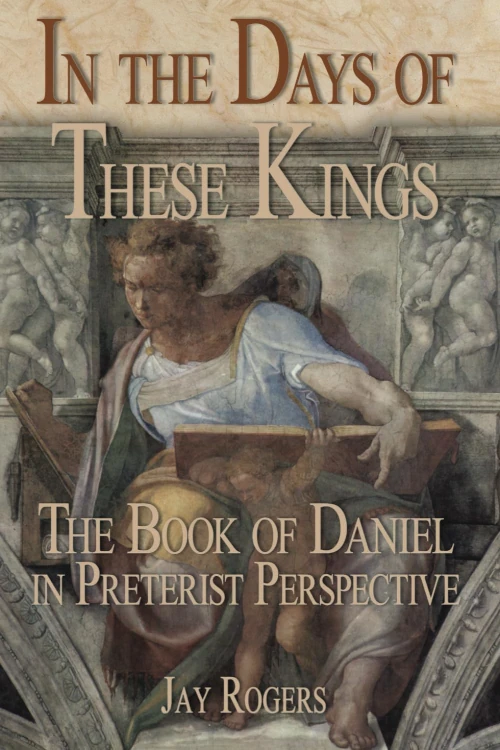
In The Days of These Kings: Daniel in Preterist Perspective
The overarching message of Daniel is that Jesus the Messiah is even now ruling over the nations. He is the King of kings. Daniel tells us that Messiah’s kingdom will advance in the whole world from “generation to generation” (Daniel 4:4,34). Christ’s dominion is “given to the people of the saints of the most High” (Daniel 7:22). Our purpose then is to see “all people, nations, and languages… serve and obey him” (Daniel 7:14,27).
Date Written
The events in Daniel span from the early sixth century BC into the later Persian period. The first chapter begins “In the third year of the reign of Jehoiakim king of Judah” (Daniel 1:1, ESV). That places the opening around 605 BC.
Daniel continues serving through the reigns of Nebuchadnezzar, Belshazzar, Darius, and Cyrus. The book therefore covers several decades. The final visions likely occurred near the end of Daniel’s life.
Most conservative scholars date the writing during the sixth century BC, close to the events themselves. The detailed knowledge of Babylonian and Persian customs supports an early date.
The timing deeply affects interpretation. If Daniel wrote during the exile, then the prophetic visions function as genuine predictions of future kingdoms. They provide hope before events unfold.
Politically, this period saw the rise and fall of Babylon and the emergence of Persia. Spiritually, Israel struggled with identity. The temple was gone. The monarchy had ended. Therefore, the question of God’s faithfulness loomed large.
Daniel writes into that uncertainty. He assures God’s people that history unfolds according to divine decree.
To Whom Written
The primary audience of the book of Daniel was the Jewish exiles. They lived under foreign rule. Many felt displaced and disoriented. They had lost land, king, and temple.
Spiritually, they were chastened but not destroyed. Some remained faithful. Others struggled with compromise. Therefore, they needed both encouragement and warning.
Their struggles were real. They lived in a culture saturated with idolatry. They worked within pagan systems. They heard foreign languages daily. The pressure to conform was constant.
Culturally, Babylon valued wisdom, power, and religious pluralism. Loyalty to the state often clashed with loyalty to God. Daniel’s refusal to bow to idols speaks directly into that context.
The tone of the book reflects their situation. The early narratives show how to live faithfully in exile. The later visions reveal that empires rise and fall under God’s hand.
Although written to exiles, the message extends to all believers who feel like strangers in this world. We too live between kingdoms. Therefore, Daniel remains relevant.
Purpose of the Book of Daniel
The main purpose of the book of Daniel is to reveal God’s sovereignty over human history. It answers the question raised by exile. Has God lost control?
The book instructs and encourages. It corrects any assumption that earthly empires are ultimate. It also warns rulers who exalt themselves.
A key verse states the theme clearly. After Nebuchadnezzar’s humbling, he declares:
“For his dominion is an everlasting dominion, and his kingdom endures from generation to generation; all the inhabitants of the earth are accounted as nothing, and he does according to his will among the host of heaven and among the inhabitants of the earth; and none can stay his hand or say to him, ‘What have you done?’” (Daniel 4:34–35, ESV)
Another foundational text appears in Daniel 2:44:
“And in the days of those kings the God of heaven will set up a kingdom that shall never be destroyed… It shall break in pieces all these kingdoms and bring them to an end, and it shall stand forever.”
The writer expects a response of faith and endurance. God’s people must remain loyal. They must trust that divine purposes unfold even when circumstances look bleak.
Historical Context of the Book of Daniel
The historical context of Daniel centers on the Babylonian exile. Nebuchadnezzar conquered Jerusalem. He deported nobles and craftsmen. Babylon then stood as the dominant empire.
Later, Persia under Cyrus overthrew Babylon. This transition appears in Daniel 5 and 6. The shift of power demonstrates the fragility of human rule.
Religiously, Babylon worshiped many gods. Idols stood at the heart of public life. Refusal to bow carried severe consequences. Daniel 3 illustrates this clearly.
Culturally, Babylon prized learning and administration. Young captives received training in language and literature. Therefore, Daniel and his friends served within imperial systems while maintaining covenant loyalty.
Major crises include the destruction of Jerusalem and the threat of execution for those who defy royal decrees. These crises highlight the cost of faithfulness.
History directly shapes the message. Because empires shift rapidly, Daniel shows that God alone remains constant. Political power appears impressive, yet it collapses quickly under divine judgment.

Key Themes in the Book of Daniel
One dominant theme in the book of Daniel is the sovereignty of God. Repeated phrases like “the Most High rules the kingdom of men” reinforce this truth.
Another major theme is faithful obedience in hostile environments. Daniel refuses royal food. His friends refuse to bow. Later, Daniel continues praying despite legal threats.
The book also emphasizes divine revelation. God reveals mysteries through dreams and visions. Human wisdom alone proves insufficient.
God’s attributes shine clearly. He is sovereign, wise, just, and faithful. He humbles the proud. He exalts the faithful.
Human responses matter. Faith, courage, and repentance appear repeatedly. Nebuchadnezzar eventually acknowledges God’s rule. Belshazzar does not and falls.
Promises and warnings dominate the prophetic sections. Future kingdoms will arise. However, they will ultimately yield to God’s everlasting kingdom. This hope anchors the faithful.
Book of Daniel: Major Events/Stories
The narrative portion of Daniel includes several dramatic turning points. In Daniel 1, young captives refuse to defile themselves with royal food. God honors their obedience with wisdom.
In Daniel 2, Nebuchadnezzar dreams of a statue made of various metals. Daniel interprets it as a sequence of kingdoms. The stone that shatters the statue represents God’s eternal kingdom.
Daniel 3 records the fiery furnace. Shadrach, Meshach, and Abednego refuse to worship an image. God delivers them visibly, demonstrating His power.
Daniel 4 recounts Nebuchadnezzar’s pride and humbling. God removes his sanity until he acknowledges heaven’s rule. This event marks a theological high point.
Daniel 5 describes the fall of Babylon. The writing on the wall announces judgment. That very night, the empire collapses.
Daniel 6 presents the lions’ den. Daniel remains faithful in prayer. God shuts the lions’ mouths.
The later chapters shift to visions. Daniel 7 reveals four beasts and the “Ancient of Days.” Daniel 9 includes the prophecy of the seventy weeks. These visions move the message from present faithfulness to future fulfillment.
Book of Daniel: Theological Contributions
The book of Daniel contributes richly to biblical theology. It presents a high view of God’s sovereignty over nations. No empire operates outside divine decree.
It also deepens our understanding of apocalyptic literature. Symbolic beasts and numbers communicate real historical truths. These patterns later appear in Revelation.
Daniel reveals humanity’s frailty. Kings boast, yet they fall. Pride leads to humiliation. Therefore, humility before God is essential.
Covenant theology appears clearly. Though Israel faces judgment, God does not abandon His promises. The exile disciplines but does not nullify covenant faithfulness.
Daniel 7 introduces the “Son of Man” figure. This title later becomes central in the Gospels. Jesus frequently uses it of Himself. Therefore, Daniel contributes significantly to messianic expectation.
The promise of resurrection in Daniel 12:2 also stands out:
“And many of those who sleep in the dust of the earth shall awake, some to everlasting life, and some to shame and everlasting contempt.”
This text clarifies hope beyond exile and beyond death itself.
Special Consideration in the Book of Daniel
Several passages in the book of Daniel require careful interpretation. The symbolic visions in chapters 7 through 12 challenge modern readers. Beasts, horns, and numbers carry meaning rooted in ancient context.
Prophetic timelines, such as the seventy weeks in Daniel 9, generate much discussion. Interpretations vary among believers. Therefore, humility is wise.
The language shift from Hebrew to Aramaic in portions of the book also deserves attention. It reflects the international scope of the message.
Apocalyptic imagery should not be forced into modern headlines without context. The primary message concerns God’s rule over real historical empires.
Common misunderstandings often treat Daniel only as a prophecy codebook. However, the narrative chapters are equally central. They teach daily faithfulness.
We must read Daniel as both historical and prophetic. When we do, the message becomes clear. God rules history. His kingdom will stand.
Closing Reflections
The book of Daniel resolves its central tension decisively. Earthly kingdoms rise and fall. However, God’s kingdom endures forever.
Exile does not mean abandonment. Judgment does not cancel a promise. Instead, God works through history to accomplish His purposes.
The lasting takeaway is confidence in divine sovereignty. We live in uncertain times. Yet Daniel reminds us that the Most High rules.
Practically, the book calls us to faithful obedience. We may not face lions or furnaces. However, we face pressures to compromise. Daniel shows that quiet faithfulness matters.
Ultimately, the book points us to Christ. The Son of Man receives an everlasting dominion. The stone becomes a mountain filling the earth. The kingdom of God triumphs.
Therefore, as we study the book of Daniel, we gain courage. God reigns. His kingdom cannot fail.
Discover More in Bible Study Toolbox
Looking for more? Explore additional Old Testament Bible Outlines to see how God’s Word fits together chapter by chapter. Each outline is part of the resources available at Bible Study Toolbox, where we provide studies, guides, and tools to help believers grow in the Word with clarity and confidence. Contact us with any questions or concerns.