In 1 Kings 18, we witness one of the most dramatic confrontations in the Old Testament. The prophet Elijah stands alone against hundreds of prophets of Baal. The setting is the northern kingdom of Israel during the reign of Ahab, one of its most wicked kings. Idolatry fills the land. The covenant with the LORD stands ignored.
This chapter unfolds after three years of drought. Earlier, Elijah announced to Ahab that no rain would fall except by the word of the LORD. That drought was not random. It directly challenged Baal, the Canaanite storm god who supposedly controlled rain and fertility. Therefore, the famine exposed the weakness of false worship.
1 Kings 18 sits at a turning point in Israel’s story. The nation wavers between loyalty to the LORD and devotion to Baal. So this chapter forces a public decision. God will reveal His power openly. Fire will fall. Hearts will be tested.
As we walk through this outline, we will trace the confrontation step by step. We will see God expose false worship, restore covenant order, and confirm His authority before the people.
Elijah returns to Ahab after three years
The chapter opens with God’s command to Elijah: “Go, show yourself to Ahab, and I will send rain upon the earth” (1 Kings 18:1, ESV). The drought has lasted three years. The land suffers severely. Samaria, the capital of the northern kingdom, faces famine.
This drought was covenant judgment. According to Deuteronomy 11:16–17, if Israel turned to other gods, the LORD would “shut up the heavens, so that there will be no rain.” Therefore, the lack of rain confirmed that Israel had broken covenant.
Ahab does not seek repentance. Instead, he searches for grass to keep the royal animals alive. He divides the land with Obadiah, his palace steward. Obadiah fears the LORD. He has hidden one hundred prophets in caves and supplied them with food and water.
Elijah meets Obadiah on the road. Obadiah fears reporting Elijah’s presence because Ahab has searched everywhere for him. Elijah assures him, “As the LORD of hosts lives, before whom I stand, I will surely show myself to him today” (1 Kings 18:15).
This opening section establishes the tension. The king searches for grass. The prophet stands before the LORD. One acts out of desperation. The other acts out of obedience.
Now the confrontation begins.
A divided nation confronted in 1 Kings 18
When Ahab sees Elijah, he says, “Is it you, you troubler of Israel?” (1 Kings 18:17). Ahab blames the prophet for the drought. However, Elijah answers boldly. He declares that Ahab and his father’s house have troubled Israel because they abandoned the commandments of the LORD and followed the Baals.
The name Baal means “lord” or “master.” In Canaanite religion, Baal was a fertility god linked to storms and rain. Therefore, worshiping Baal directly contradicted Israel’s covenant confession that the LORD alone controls the heavens.
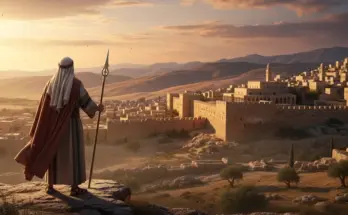
Elijah calls for a national assembly at Mount Carmel. He summons the 450 prophets of Baal and the 400 prophets of Asherah who eat at Jezebel’s table. Mount Carmel rises near the Mediterranean coast. It overlooks fertile plains. The location suits the challenge because Baal supposedly rules the skies.
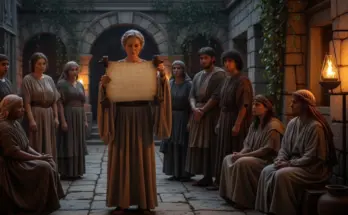
Elijah addresses the gathered people with a piercing question: “How long will you go limping between two different opinions?” (1 Kings 18:21). The word translated “limping” suggests wavering or hobbling between loyalties. Israel attempts to serve both the LORD and Baal.
The people answer him not a word. Their silence exposes their divided hearts. So Elijah proposes a test. Two bulls will be prepared. No fire will be set. The god who answers by fire will prove Himself true.
The people agree. The contest will reveal reality.
The failure of Baal and the silence of false worship
The prophets of Baal go first. They prepare their bull and call on Baal from morning until noon. They cry out, “O Baal, answer us!” (1 Kings 18:26). However, the text states plainly, “There was no voice, and no one answered.”
They limp around the altar they made. The same verb appears earlier describing Israel’s wavering. The prophets embody the spiritual instability of the nation.
At noon Elijah mocks them. He suggests that Baal may be meditating, traveling, or sleeping. The sarcasm exposes the absurdity of idolatry. False gods depend on human imagination.
The prophets intensify their efforts. They cut themselves with swords and lances until blood gushes out. This practice reflected pagan rituals designed to stir divine attention. Yet again, Scripture repeats, “There was no voice. No one answered; no one paid attention” (1 Kings 18:29).
The repetition matters. Baal remains silent. The heavens remain closed. The drought continues. Therefore, the supposed storm god cannot send fire or rain.
This section demonstrates a foundational biblical truth. Idols have mouths but do not speak. They have ears but do not hear. The covenant LORD stands in sharp contrast. He hears. He speaks. He acts.
1 Kings 18: Elijah rebuilds the altar of the LORD
After Baal’s failure, Elijah calls the people near. He first repairs the altar of the LORD that had been thrown down. That detail reveals spiritual decay. Israel once worshiped the LORD publicly. Now the altar lies broken.
Elijah takes twelve stones, “according to the number of the tribes of the sons of Jacob” (1 Kings 18:31). Although the kingdom stands divided, Elijah symbolizes unity under the covenant name Israel. God’s promise to the patriarchs remains intact.
He rebuilds the altar in the name of the LORD. Then he digs a trench around it. He arranges the wood, cuts the bull, and lays it on the wood.
Next he commands four jars of water to be poured over the offering and wood. He orders this three times. Water soaks everything. The trench fills.
In the midst of drought, this action magnifies the coming miracle. No trickery can explain what will happen. The sacrifice stands saturated. Only divine fire could consume it.
Elijah restores covenant order before calling for fire. The altar stands rebuilt. The tribes stand represented. The sacrifice stands prepared. Now the prophet prays.
The Fire of the LORD falls in 1 Kings 18
At the time of the evening offering, Elijah steps forward. His prayer is brief and direct:
“O LORD, God of Abraham, Isaac, and Israel, let it be known this day that you are God in Israel, and that I am your servant” (1 Kings 18:36).
He asks that the people may know that the LORD is God and that He has turned their hearts back.
Immediately, “the fire of the LORD fell and consumed the burnt offering and the wood and the stones and the dust, and licked up the water that was in the trench” (1 Kings 18:38).
The description leaves no doubt. The fire devours everything. Even the stones and dust disappear. The soaked trench dries instantly.
When the people see it, they fall on their faces. They cry, “The LORD, he is God; the LORD, he is God” (1 Kings 18:39).
The contest ends decisively. Fire from heaven confirms covenant truth. The LORD alone rules creation. Baal remains powerless.
Elijah then commands the seizure of the prophets of Baal. They are brought down to the brook Kishon and executed. This action reflects Deuteronomy 13, which required the removal of false prophets who led Israel astray.
Therefore, 1 Kings 18 demonstrates both revelation and judgment. God reveals His glory. He also purges false worship from the land.
The return of rain and covenant restoration
After the execution, Elijah tells Ahab to eat and drink, “for there is a sound of the rushing of rain” (1 Kings 18:41). Yet no cloud appears. The sky remains clear.
Elijah climbs to the top of Carmel. He bows himself down and puts his face between his knees. He sends his servant to look toward the sea. Six times the servant returns with nothing.
On the seventh time, the servant reports a small cloud like a man’s hand rising from the sea. Elijah immediately tells Ahab to prepare his chariot before the rain stops him.
Soon the heavens grow black with clouds and wind. A great rain falls. The drought ends.
The chapter closes with a striking image. “The hand of the LORD was on Elijah” (1 Kings 18:46). Elijah runs before Ahab’s chariot to Jezreel.
Rain signals restored covenant blessing. The drought began because of idolatry. Now repentance and revelation open the heavens again. God proves faithful to His word in judgment and in mercy.
Closing Reflection in 1 Kings 18
1 Kings 18 stands as a decisive moment in Israel’s covenant history. The chapter confronts divided loyalty and exposes false worship. It also reveals the living God who answers by fire and controls the rain.
Mount Carmel becomes a courtroom. The LORD demonstrates His supremacy before king, prophet, and people. Baal remains silent. The altar of the LORD stands restored. Fire falls. Rain returns.
This chapter fits within the larger story of Scripture. Israel’s struggle with idolatry continues, yet God preserves a faithful witness. Elijah’s ministry prepares the way for future prophetic calls to repentance. Centuries later, John the Baptist ministers in Elijah’s spirit, calling Israel back to covenant faithfulness.
Ultimately, the contest on Carmel points forward to Jesus Christ. Jesus stands as the true and final revelation of God’s glory. At the cross, divine judgment and mercy meet. Fire does not fall on the people but on the sacrifice. Therefore, the covenant reaches its fulfillment in Him.
When we study 1 Kings 18, we see more than ancient drama. We see the living God who acts in history, keeps His promises, and refuses to share His glory with idols.
Continue Exploring Chapter Outlines
This outline is part of our growing collection of Chapter Outlines. You can explore more Bible Outlines or return to the Bible Study Toolbox homepage for outlines, studies, and resources to deepen your understanding of God’s Word. Contact us anytime.