What would it look like if God started something brand new, right in the middle of a religious crowd? That’s exactly what we see in Acts 2. The chapter opens with a loud, rushing wind from heaven and ends with thousands turning their hearts to Jesus. Something powerful and unexpected unfolds, and we get to watch the birth of the church unfold in real time.
We often think of the church as buildings, programs, or traditions. However, Acts 2 reminds us that it all began with people, regular men and women, empowered by the Holy Spirit. Because of their obedience and faith, the gospel spread like wildfire.
As we read Acts 2, we find several major themes: the arrival of the Holy Spirit, Peter’s bold message, and the response of the people. These moments are not just ancient history. They still shape how we understand our identity as believers and how we live out our faith today.
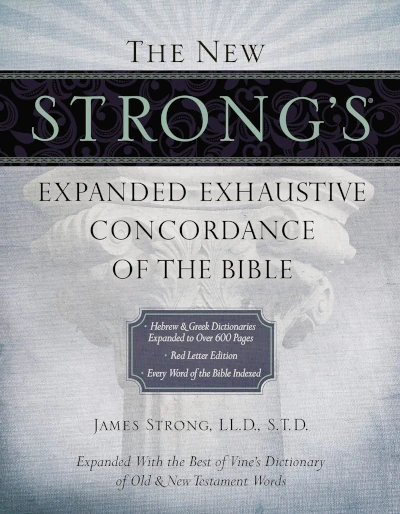
Strong’s Exhaustive Concordance
The New Strong’s Expanded Exhaustive Concordance of the Bible is a valuable tool for pastors, teachers, and students of the Bible. This expanded edition is computer generated for highest accuracy, and the Hebrew and Greek dictionaries have been augmented with definitions from the classic reference work Vine’s Complete Expository Dictionary of Old and New Testament Words. Get Yours on Amazon
That’s why studying Acts 2 matters. It shows us what happens when God fills His people, stirs their hearts, and sends them out. So whether we’re new to the faith or seasoned in the Word, we can always return to this chapter for fresh clarity and direction.
In this outline, we’ll break down the key events and teachings of Acts 2. As we walk through it together, we’ll discover how God’s Spirit still works through the church today, through us. Let’s begin where the church began: in an upper room, waiting and praying.
The Coming of the Holy Spirit (Acts 2:1–13)
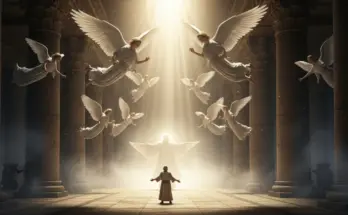
The story begins on the day of Pentecost, a feast celebrated fifty days after Passover. Faithful Jewish men and women from all over the known world had come to Jerusalem. The disciples were gathered in one place, still obeying Jesus’ instruction to wait for the promised gift. Then suddenly, the atmosphere changed. A sound like a rushing wind filled the house, and something that looked like tongues of fire rested on each of them. Every one of them was filled with the Holy Spirit and began speaking in other languages.
This was not chaos, though it may have looked like it at first. People from many nations were amazed to hear the disciples speaking in their own native tongues, languages the Galileans had no natural way of knowing. These were not heavenly tongues but real, earthly ones. The crowd was confused, curious, and stirred. Some asked, “What does this mean?” while others scoffed and accused them of being drunk.
What happened that day fulfilled what Jesus had promised before ascending: “You will receive power when the Holy Spirit has come upon you” (Acts 1:8). God’s Spirit now lived within His people, empowering them to witness boldly and reach every nation.
This moment was more than emotional excitement. It was the launch of a global mission. God didn’t choose a private moment to pour out His Spirit. Instead, He did it in public, surrounded by witnesses. The church was born in the streets, not hidden in a temple. From the very first breath, the gospel was meant for every culture, tribe, and tongue. Pentecost was not the end of something old, it was the beginning of something eternal.
Peter’s Sermon at Pentecost (Acts 2:14–41)
Apostle Peter, once afraid to speak, now stood up with boldness. Something had changed in him. He raised his voice to speak to the crowd. This was not random emotion or chaos, he explained, but the fulfillment of prophecy. Quoting Joel 2, Peter declared that God had promised to pour out His Spirit on all flesh. What they were witnessing was not drunkenness but divine power.
Then Peter turned their attention to Jesus. He reminded them that Jesus had worked miracles among them, yet they had handed Him over to be crucified. Even so, God raised Him up, because death could not hold Him. Peter used Psalm 16 and Psalm 110 to show that King David had foretold the Messiah’s resurrection and exaltation.
This sermon was more than history, it was a call to respond. Peter told them that Jesus, whom they had crucified, was both Lord and Christ. The truth hit hard. The people were “cut to the heart” and asked what they should do.
Peter’s answer was clear and powerful: “Repent and be baptized every one of you in the name of Jesus Christ for the forgiveness of your sins, and you will receive the gift of the Holy Spirit” (Acts 2:38). That day, about 3,000 souls responded in faith and were baptized.
This moment is not just about numbers. It reveals the power of gospel truth when spoken plainly and boldly. Peter preached the death, resurrection, and lordship of Jesus. The people believed, repented, and were baptized. It’s the same message we still carry today. God still convicts hearts, and the Spirit still draws people into His family through faith in Jesus Christ.
Fellowship of Believers (Acts 2:41–47)
After 3,000 people were added to the church, something remarkable happened, they didn’t go back to life as usual. Instead, they devoted themselves to four things: the apostles’ teaching, fellowship, the breaking of bread, and prayers. These new believers weren’t just spiritually awakened. They became a new kind of community, centered on Jesus and guided by the Spirit.
They gathered daily, sharing meals and worshiping together. They learned the Word, not in isolation but as a group. Their relationships were not shallow; they cared deeply for one another. This was not forced or commanded, it was voluntary and joyful. Some sold property to help those in need. Others opened their homes. Everyone played a part.
God’s power didn’t stop with Pentecost. Many signs and wonders continued through the apostles, and a sense of awe rested on everyone. Yet this was no show. These believers lived with sincere hearts and consistent joy, praising God and finding favor with those around them.
The last verse in the chapter gives a beautiful summary: “And the Lord added to their number day by day those who were being saved” (Acts 2:47). The church didn’t grow through strategy, programs, or marketing. It grew through Spirit-filled believers living out their faith in community.
This section shows us the daily rhythm of the early church, rooted in truth, filled with grace, and marked by unity. It challenges us to rethink what church really means. It’s not a place we go once a week. It’s a people we belong to, every day, through the Spirit who connects us to Christ and to each other.
Closing Thoughts Acts 2 A Church Born by the Spirit
Acts 2 shows us more than a moment. It reveals the movement that began when heaven touched earth. The Holy Spirit did not just visit for a day, He came to stay. The result was a bold new people, empowered by God, preaching the gospel, and living out radical love in community.
We often think of the church as a place, but Acts 2 reminds us it is a people. They were not perfect, but they were committed. The Spirit united them, Scripture grounded them, and fellowship held them together. Because of their obedience, the gospel began to spread from Jerusalem to the ends of the earth.
This chapter is still alive for us today. The Spirit still fills, the Word still convicts, and the church still grows when we walk in unity. We don’t need to recreate the early church, but we can learn from it. We can seek the same Spirit-led devotion that turned a handful of disciples into a global movement.
As we study Acts 2, let’s remember where we came from, and who we are called to be. This is the church Jesus Christ is still building, and we get to be part of it. Let’s carry the same fire into our world, one step at a time.
Continue Exploring Chapter Outlines
This outline is part of our growing collection of Chapter Outlines. You can explore more Bible Outlines or return to the Bible Study Toolbox homepage for outlines, studies, and resources to deepen your understanding of God’s Word. Contact us anytime.