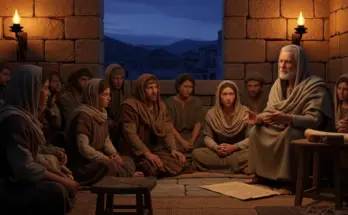
John 15 stands near the heart of Jesus’ final teaching before His arrest. In the Gospel of John, chapters 13 through 17 record His private instruction to the eleven disciples after Judas departs. This moment takes place on the night before the crucifixion. Therefore, every word carries covenant weight and urgency.
John 15 continues the Upper Room discourse. Jesus prepares His disciples for life after His departure. He explains how they will remain spiritually alive and fruitful when He is no longer physically present. The chapter centers on union with Christ, obedience flowing from love, and the coming hostility of the world.
Within Israel’s story, the imagery of the vine connects directly to Old Testament covenant language. Israel was often called God’s vine, yet she failed to produce faithful fruit. Now Jesus presents Himself as the true vine. So this chapter clarifies how God’s covenant purposes will continue through Him and through those united to Him.
The true vine and the Father’s pruning work (John 15:1–8)
John 15 opens with a striking declaration: “I am the true vine, and my Father is the vinedresser” (John 15:1, ESV). This is the final “I am” statement in John’s Gospel. Jesus identifies Himself as the fulfillment of Israel’s calling. In passages such as Psalm 80 and Isaiah 5, Israel appears as God’s vine. However, she produced wild grapes instead of righteousness.
By calling Himself the true vine, Jesus claims to embody faithful Israel. Therefore, life with God now centers on union with Him rather than national identity alone. The Father appears as the vine dresser who actively tends the vine. He removes unfruitful branches and prunes fruitful ones. The Greek word for “prunes” is kathairei, which also carries the idea of cleansing. So pruning is not punishment for true disciples but purposeful shaping.
Jesus explains, “Every branch in me that does not bear fruit he takes away, and every branch that does bear fruit he prunes, that it may bear more fruit” (John 15:2). Fruit in John’s Gospel includes obedience, love, witness, and perseverance. It reflects a transformed life that flows from communion with Christ.
The central command appears in verse 4: “Abide in me, and I in you.” The Greek word menō means to remain or continue. Jesus does not call for occasional attachment but ongoing union. Just as a branch cannot produce grapes apart from the vine, disciples cannot produce spiritual fruit apart from Christ.
He states clearly, “Apart from me you can do nothing” (John 15:5). This statement defines the entire chapter. Spiritual vitality does not arise from human effort alone. It flows from the living connection to the Son. Therefore, fruitfulness is evidence of abiding, not a replacement for it.
Jesus also connects abiding with prayer. “If you abide in me, and my words abide in you, ask whatever you wish, and it will be done for you” (John 15:7). Prayer here aligns with the will of Christ because His words shape the disciple’s desires. The Father receives glory when disciples bear much fruit. So fruitfulness ultimately displays God’s character to the world.
Abiding in Christ and obedience in John 15 (John 15:9–17)
In the next section, Jesus deepens the meaning of abiding. He grounds it in divine love. “As the Father has loved me, so have I loved you. Abide in my love” (John 15:9). The love between Father and Son becomes the pattern and source of the disciples’ relationship with Christ.
Jesus links love and obedience directly. “If you keep my commandments, you will abide in my love” (John 15:10). Obedience does not earn love. Instead, it expresses ongoing participation in it. Just as the Son obeys the Father and remains in His love, so disciples obey Christ and remain in His love.
He explains the purpose of these commands: “These things I have spoken to you, that my joy may be in you, and that your joy may be full” (John 15:11). Joy arises from communion with God. Therefore, obedience and joy stand together, not opposed.
The central command becomes explicit: “This is my commandment, that you love one another as I have loved you” (John 15:12). The measure of this love appears in verse 13: “Greater love has no one than this, that someone lay down his life for his friends.” Within hours, Jesus will fulfill these words at the cross.
He shifts their identity from servants to friends. “No longer do I call you servants… but I have called you friends” (John 15:15). A servant may obey without understanding. However, a friend receives revelation of the master’s purposes. Jesus has revealed what He heard from the Father.
This section ends with election and mission. “You did not choose me, but I chose you and appointed you that you should go and bear fruit” (John 15:16). The calling to bear fruit extends outward. It includes witness and multiplication. Yet it remains grounded in love for one another.
The hatred of the world and covenant conflict (John 15:18–25)
John 15 shifts from love within the community to hostility from the world. Jesus states plainly, “If the world hates you, know that it has hated me before it hated you” (John 15:18). The word “world” in John often refers to humanity organized in rebellion against God.
This hostility reflects covenant tension. Israel’s leaders have rejected Jesus. The broader world stands in darkness. Therefore, disciples should not expect universal approval. Jesus reminds them that they do not belong to the world because He chose them out of it.
He repeats a principle from earlier teaching: “A servant is not greater than his master” (John 15:20). If the world persecuted Him, it will persecute them. If some kept His word, some will keep theirs. The mission will bring both rejection and response.
Jesus explains the deeper reason for hatred. “They do not know him who sent me” (John 15:21). Rejection of the Son reveals rejection of the Father. Therefore, the conflict concerns revelation and authority, not mere personality.
He adds a sobering statement in verse 22: “If I had not come and spoken to them, they would not have been guilty of sin.” His coming intensifies accountability because light exposes darkness. He then quotes Psalm 69:4, “They hated me without a cause” (John 15:25). This shows that even rejection fulfills Scripture.
Within Israel’s story, prophets often faced resistance. Now the true vine faces ultimate rejection. Yet this rejection does not thwart God’s plan. Instead, it becomes the path to redemption.
The promise of the Helper and witness (John 15:26–27)
The chapter concludes with hope amid hostility. Jesus promises the coming of the Helper. “When the Helper comes, whom I will send to you from the Father, the Spirit of truth… he will bear witness about me” (John 15:26). The Greek term Paraklētos means advocate or helper.
The Spirit proceeds from the Father and is sent by the Son. Therefore, the mission of the church rests on divine initiative. The Spirit testifies about Christ, and the disciples also testify because they have been with Him from the beginning.
This witness connects directly to fruitfulness. Abiding produces love. Love sustains unity. Unity strengthens witness. The Spirit empowers proclamation even in a hostile world.
Within the covenant story, the promise of the Spirit fulfills prophetic hope. Ezekiel 36 spoke of a new heart and Spirit within God’s people. Now Jesus prepares His disciples for that promised reality. The vine will continue to bear fruit because the Spirit will sustain living union with Christ.
Closing Reflection: The covenant heart of John 15
John 15 presents a clear picture of life in union with Christ. Jesus Christ, the true vine, fulfills Israel’s calling. Therefore, covenant faithfulness now centers on abiding in Him. Fruitfulness flows from that union. It does not replace it.
The Father actively prunes His people so they grow. The Son commands love patterned after His own sacrifice. The world’s hatred confirms alignment with Christ rather than failure. Meanwhile, the Spirit empowers witness and sustains truth.
This chapter fits within the larger biblical story of restoration. Israel failed as a vine. However, Jesus succeeds as the true vine. Those united to Him share in His life and mission. Therefore, John 15 anchors discipleship in relationship, not ritual alone.
In the unfolding story of redemption, John 15 clarifies how the covenant continues after the cross and resurrection. Life with God depends on abiding in Christ. From that union comes fruit, love, perseverance, and faithful witness. The chapter leaves no ambiguity. Apart from Him we can do nothing. Yet in Him, the Father receives glory through a fruitful people.
Continue Exploring Chapter Outlines
This outline is part of our growing collection of Chapter Outlines. You can explore more Bible Outlines or return to the Bible Study Toolbox homepage for outlines, studies, and resources to deepen your understanding of God’s Word. Contact us anytime.