The book of 3 John is the shortest book in the New Testament by word count, yet it carries strong spiritual weight. Though brief, 3 John addresses real church conflict, faithful service, and godly leadership. It appears near the end of our Bibles, just before Jude and Revelation. Therefore, it speaks into the late first-century church, a time of both growth and tension.
The gospel had already spread across the Roman world. However, false teachers continued to rise. Some denied that Jesus came in the flesh. Others sought power within local congregations. As a result, churches needed clarity and courage. The apostle John had already written 1 and 2 John to confront false teaching. Now he writes personally to a faithful believer named Gaius.
The spiritual condition of God’s people at this time was mixed. Many walked in truth and love. Yet some leaders acted selfishly and resisted apostolic authority. This tension drives the book. Faithful servants traveled to teach the gospel. However, one man refused to welcome them and even expelled those who tried.
The tone of 3 John is both warm and corrective. It encourages faithfulness. It confronts pride. It calls believers to support truth with courage and hospitality. It connects closely to 2 John, which warned against welcoming false teachers. Now John urges believers to welcome true teachers. Together, these letters balance discernment with love.
3 John reminds us that truth must shape both doctrine and relationships. Therefore, it remains deeply relevant for every church generation.
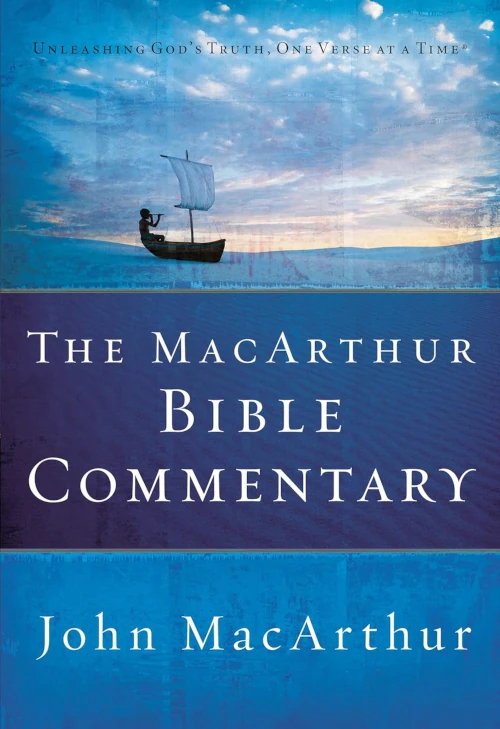
The MacArthur Bible Commentary: A Faithful, Focused Commentary
Unleashing God’s Truth, One Verse At A Time. Serious students of Scripture can easily lose their focus among the many Bible commentaries available today, studying for hours yet discovering no meaningful application of God’s eternal truth. Pastor and teacher John MacArthur covers the complete Bible—every passage of the Old and New Testaments, phrase by phrase.
Writer of 3 John
Traditionally, the apostle John wrote 3 John. Early church leaders such as Irenaeus and Clement of Alexandria affirmed this authorship. The letter identifies the writer simply as “the elder.” This title reflects both age and authority. John likely used it to describe his pastoral oversight rather than merely his years.
Internal evidence strongly supports Johannine authorship. The themes of truth and love appear repeatedly. The language closely mirrors 1 and 2 John. The emphasis on walking in the truth echoes 2 John 4. The warm pastoral tone also resembles John’s Gospel, especially his concern for obedience and love.
John’s background shapes this message. He was one of the twelve apostles. He witnessed the ministry, death, and resurrection of Jesus. He later served churches in Asia Minor. Therefore, he wrote as both eyewitness and shepherd. His calling centered on guarding truth and nurturing believers.
His relationship to Gaius appears personal. He addresses him as “beloved,” a term of affection. He rejoices in reports of Gaius walking in truth. John writes not as a distant authority but as a caring spiritual father.
John’s personality also shapes the letter. He combines tenderness with firmness. He commends faithfulness. Yet he openly confronts Diotrephes, a prideful leader. Therefore, the letter reflects mature pastoral wisdom. It shows us how experienced leadership protects truth while affirming faithful believers.
Date Written
Most scholars date 3 John between A.D. 85 and 95. This places it near the end of the first century. By this time, the apostolic generation was nearing its close. Churches had matured, yet internal struggles had intensified.
The letter does not mention the destruction of Jerusalem in A.D. 70. However, it likely postdates that event. The church had already spread well beyond Judea. Traveling missionaries moved among congregations in Asia Minor. Therefore, the setting fits a later stage of church development.
During this period, Emperor Domitian ruled Rome. Some traditions suggest localized persecution under his reign. While 3 John does not mention persecution directly, the political climate may have heightened tensions within churches. Believers needed unity and courage.
Spiritually, false teaching had begun infiltrating congregations. Early forms of Gnosticism denied Christ’s true humanity. John addressed these errors strongly in 1 and 2 John. Therefore, 3 John likely belongs to the same timeframe.
The timing affects interpretation. The church was transitioning from apostolic oversight to local leadership. As a result, conflicts over authority surfaced. Diotrephes may represent a leader resisting apostolic accountability. Therefore, the letter offers insight into early church governance and the challenges of preserving truth after the apostles.
To Whom Written
John writes this letter to Gaius. Several men in the New Testament bear that name. However, we cannot identify this Gaius with certainty. The letter focuses on him as a faithful believer and host to traveling missionaries.
Gaius appears spiritually mature. John rejoices that he walks in truth. He practices hospitality. He supports those who labor for the gospel. Therefore, he models steady Christian obedience.
Yet Gaius lives within a troubled church context. Diotrephes, a leader in the congregation, rejects apostolic authority. He refuses to welcome traveling brothers. He even casts out those who do. Therefore, Gaius faces social and spiritual pressure.
Culturally, the early church relied heavily on hospitality. Inns were often unsafe. Traveling teachers depended on believers for lodging and support. Therefore, welcoming missionaries was not optional kindness. It was partnership in the gospel.
Gaius likely lived in Asia Minor. He shared the Greco-Roman cultural background of the region. Patronage and status shaped social structures. Therefore, Diotrephes may have sought personal prominence.
Gaius’s situation shapes the tone of the letter. John encourages him to continue faithful service. He assures him that truth and love matter more than intimidation. Therefore, 3 John speaks to believers who remain faithful in difficult church environments.
Purpose of 3 John
John writes the book of 3 John primarily to encourage faithful support of true gospel workers. He also addresses the harmful behavior of Diotrephes. Therefore, the letter combines affirmation and correction.
The main problem involves hospitality and authority. Some believers faithfully welcomed traveling teachers. However, Diotrephes rejected them and opposed John’s leadership. As a result, unity and mission suffered.
John instructs Gaius to continue doing good. He writes in verse 11, “Beloved, do not imitate evil but imitate good. Whoever does good is from God; whoever does evil has not seen God.” This verse summarizes the purpose clearly. John calls for discernment and moral courage.
He also writes in verse 8, “Therefore we ought to support people like these, that we may be fellow workers for the truth.” This statement highlights the positive purpose. Supporting gospel workers makes believers partners in truth.
The letter seeks to instruct and encourage. It also implicitly warns against pride and selfish ambition. John expects a response. He desires continued hospitality, rejection of Diotrephes’ behavior, and imitation of faithful men like Demetrius.
Therefore, 3 John calls believers to align their actions with truth. It reminds us that doctrine and conduct cannot be separated.
Historical Context of 3 John
The late first century church lived under Roman rule. The empire maintained relative peace known as Pax Romana. However, emperor worship increasingly pressured believers. Christians refused to call Caesar “Lord.” Therefore, suspicion surrounded them.
Religiously, Judaism continued in synagogues. Meanwhile, Christianity expanded among Gentiles. False teachings also emerged. Some denied Christ’s humanity. Others promoted secret knowledge. Therefore, apostolic letters guarded orthodoxy.
Culturally, hospitality held high value. Travelers relied on local hosts. Churches often met in homes. Wealthier believers opened their houses for worship. Therefore, leadership and generosity often overlapped.
Conflict within congregations posed serious threats. Diotrephes loved “to put himself first.” He rejected apostolic letters. He spoke malicious words. Therefore, pride disrupted unity.
History deeply impacts the message. Without faithful hospitality, missionaries could not spread the gospel. Without humble leadership, churches fractured. Therefore, 3 John addresses practical survival of gospel mission.
The letter reveals early church structure. Apostles exercised oversight. Local leaders served congregations. However, tension sometimes arose. Therefore, John’s intervention shows how truth must govern authority.
Key Themes of 3 John
Truth dominates the book of 3 John. John rejoices that Gaius walks in the truth. The word truth reflects alignment with Christ’s teaching. It includes doctrine and lifestyle. Therefore, walking in truth means living consistently with the gospel.
Love also appears repeatedly. John addresses Gaius as beloved. He celebrates faithful service to brothers. Therefore, truth expresses itself through love.
Hospitality stands as a central theme. Supporting missionaries makes believers fellow workers for the truth. Therefore, generosity advances the gospel.
Imitation emerges as another theme. John contrasts evil and good. He urges believers to imitate what is good. Therefore, Christian growth includes choosing proper examples.
Authority and accountability also appear. Diotrephes rejects apostolic authority. John plans to confront him. Therefore, leadership must remain under truth.
The book emphasizes obedience. Walking in truth requires action. Supporting teachers requires sacrifice. Therefore, faith expresses itself through deeds.
Finally, joy surfaces strongly. John writes, “I have no greater joy than to hear that my children are walking in the truth.” Spiritual faithfulness brings deep pastoral joy. Therefore, 3 John celebrates faithful perseverance.
Major Events/Stories of 3 John
Though brief, 3 John contains important narrative movements. First, John opens with personal affection and prayer for Gaius. He rejoices over reports of his faithfulness. This establishes a tone of encouragement.
Second, John commends Gaius for supporting traveling brothers. These missionaries testify to his love before the church. Therefore, his example strengthens the broader community.
Third, the conflict with Diotrephes emerges. John describes his pride, rejection of authority, malicious speech, and refusal of hospitality. This section forms the central tension of the letter.
Fourth, John promises to address the issue in person. He intends to call attention to Diotrephes’ deeds. Therefore, apostolic authority remains active.
Fifth, John commends Demetrius. He likely carried the letter. John affirms his good testimony. Therefore, believers have a positive model to follow.
The letter closes with personal greetings and a desire for face-to-face conversation. These movements show encouragement, confrontation, affirmation, and hope for reconciliation. Even in a short letter, John advances the message of truth lived out in community.
Theological Contributions of 3 John
3 John teaches us that truth must shape relationships. It does not present abstract theology alone. Instead, it shows theology lived in church life.
The book teaches about God indirectly through truth and love. God stands behind truth. Therefore, walking in truth reflects His character. Doing good shows that one is from God.
It reveals human tendencies toward pride. Diotrephes seeks preeminence. Therefore, sin can infiltrate leadership roles. The letter warns us that spiritual authority must remain humble.
In covenant theology, the letter shows how believers partner in gospel mission. Supporting missionaries connects local churches to the global spread of Christ’s kingdom. Therefore, covenant community extends beyond one congregation.
The book connects clearly to Christ. Jesus declared Himself “the way, and the truth, and the life” in John 14:6. Therefore, walking in truth means abiding in Christ. Supporting those who proclaim Him spreads His name.
Uniquely, 3 John emphasizes hospitality as theological partnership. Few other books highlight this so directly. It teaches that financial and practical support participate in gospel ministry.
Therefore, 3 John enriches our understanding of lived theology within church community.
Special Consideration in 3 John
Several interpretive challenges appear in 3 John. First, we cannot identify Gaius with certainty. However, the message does not depend on his exact identity.
Second, Diotrephes presents questions. Was he a pastor? A wealthy host? A regional leader? The text does not specify. Therefore, we avoid speculation. What matters is his behavior.
The cultural practice of hospitality may feel distant to modern readers. Today we have hotels and institutions. However, early believers relied on homes. Therefore, supporting teachers meant opening one’s house.
The command not to imitate evil requires discernment. We must distinguish between false teachers and faithful ones. 2 John warned against welcoming false teachers. The book of 3 John commands welcoming true ones. Therefore, balance matters.
Some misunderstand the letter as merely personal conflict. However, it concerns truth and mission. Therefore, we must see the larger theological purpose.
There are no prophetic or eschatological elements emphasized here. Instead, the focus remains practical faithfulness. Yet this everyday obedience shapes the church’s future.
Therefore, 3 John calls us to apply truth wisely within our cultural context.
Conclusion on the book of 3 John
The final message of the book of 3 John centers on faithfulness to truth expressed through love and hospitality. John resolves the main tension by affirming good examples and promising correction of evil.
The letter reminds us that churches face internal challenges. Pride can disrupt fellowship. However, truth and love must prevail.
The lasting spiritual takeaway involves partnership. When we support faithful gospel workers, we become fellow workers for the truth. Our actions matter deeply.
Practically, believers today must practice discernment. We must welcome true teaching. We must reject prideful leadership. We must imitate what is good.
Above all, the book of 3 John points us back to Christ. He is the truth we walk in. He is the Lord we serve. When we live in humble obedience, we reflect His character.
Therefore, even the shortest book can carry lasting power. 3 John calls us to live truthfully, love faithfully, and serve courageously.
Discover More in Bible Study Toolbox
Looking for more? Explore additional New Testament Bible Outlines to see how God’s Word fits together chapter by chapter. Each outline is part of the resources available at Bible Study Toolbox, where we provide studies, guides, and tools to help believers grow in the Word with clarity and confidence. Contact us with any questions or concerns.