When we first meet Rahab in the book of Joshua, she lives in a doomed city. She is not part of Israel. She does not grow up under the covenant. In fact, she carries a reputation that many would consider disqualifying. Yet her name appears later in Scripture among the faithful.
Rahab’s story matters because it shows us what belief looks like in action. She does not simply feel fear. She responds with faith. She hears what God has done, believes it is true, and risks everything on that belief. Because of that, her life takes a dramatic turn.
As we study Rahab, we see that faith is not reserved for the religious or the morally impressive. God welcomes those who trust Him, even from unlikely places. Therefore, Rahab becomes a powerful example for new believers and seekers who wonder whether they truly belong in God’s story.
Rahab: Strengths & Accomplishments
Rahab’s greatest strength is her belief in the Lord.
When Israel prepares to enter Canaan, Joshua sends two spies into Jericho. They come to Rahab’s house, which is built into the city wall. The king of Jericho learns of their presence and demands that Rahab turn them over. Instead, she hides them on her roof among the stalks of flax.
Her courage becomes clear in Joshua 2:9–11. She says to the spies:
“I know that the LORD has given you the land, and that the fear of you has fallen upon us, and that all the inhabitants of the land melt away before you. For we have heard how the LORD dried up the water of the Red Sea before you when you came out of Egypt, and what you did to the two kings of the Amorites who were beyond the Jordan, to Sihon and Og, whom you devoted to destruction. And as soon as we heard it, our hearts melted, and there was no spirit left in any man because of you, for the LORD your God, he is God in the heavens above and on the earth beneath.”
This confession is remarkable. Rahab is a Canaanite, yet she declares that the Lord is the true God. She uses His covenant name, “LORD,” which reflects personal recognition. She acknowledges His power over heaven and earth. Therefore, her faith is not vague. It is specific and grounded in what God has done.
Rahab also acts on her belief. She does not merely speak words. She protects the spies at great personal risk. If discovered, she would face severe punishment. However, she chooses to align herself with the God of Israel rather than with her own king.
Because of her action, the spies promise to spare her and her family when Jericho falls. She lets them down by a rope through her window and displays a scarlet cord as a sign of the agreement.
Later, when Israel conquers Jericho, Joshua 6:25 tells us:
“But Rahab the prostitute and her father’s household and all who belonged to her, Joshua saved alive. And she has lived in Israel to this day, because she hid the messengers whom Joshua sent to spy out Jericho.”
Rahab’s faith results in deliverance, not only for herself but for her entire household. She becomes a bridge between two worlds. God uses her courage to preserve lives and to advance His redemptive plan.
Her accomplishments do not rest in status or background. They rest in belief that leads to obedience.
Rahab: Weaknesses & Mistakes
The Bible introduces Rahab with a difficult label. She is called a prostitute. Joshua 2:1 states that the spies “went into the house of a prostitute whose name was Rahab and lodged there.” Scripture does not soften this detail.
Her past reflects a broken moral life within a pagan culture. Therefore, we do not ignore her history. She lived in a city known for idolatry and wickedness. Her occupation places her outside Israel’s covenant standards.
Rahab also misleads the king’s messengers. She tells them the spies have already left the city. Some readers wrestle with this detail. The text reports her actions but does not pause to evaluate the morality of the deception. Instead, it focuses on her faith and allegiance to the Lord.
We must be careful not to excuse sin lightly. However, we also must avoid judging her story through modern assumptions. Rahab lives in a context of war and survival. Her decisive action shows loyalty to the God she now believes in.
Scripture never celebrates her past profession. Yet it also does not define her forever by it. Even in the New Testament, when she is mentioned in Hebrews and James, she is still identified by her former occupation. However, the emphasis shifts to her faith.
Her weaknesses remind us that God often calls people from imperfect backgrounds. He does not wait for us to clean ourselves up first. Instead, He meets us where we are and calls us into something new.
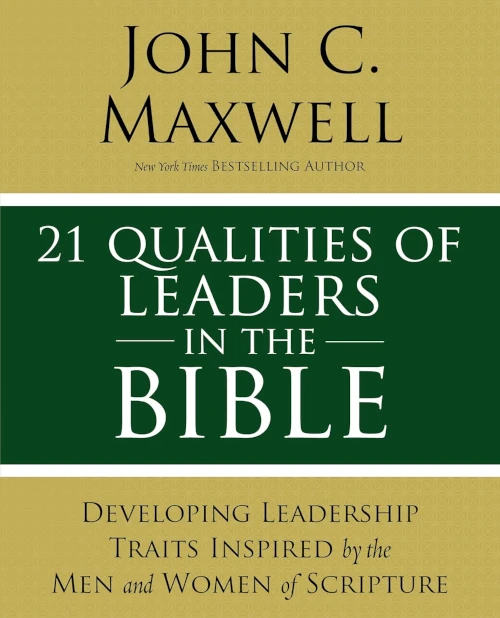
21 Qualities of Leaders in the Bible by John C. Maxwell
Learn leadership qualities from the greatest book ever written, and become a leader that people want to follow. Where do you turn to learn leadership? Business experts? Management consultants? Theoreticians? The world of politics? Why not learn from the Bible—the original leadership book!
Lessons from Her Life
Rahab teaches us that faith begins with hearing.
She says, “We have heard.” She listens to reports of the Red Sea and the defeat of kings. Therefore, her belief grows from testimony about God’s mighty works. This pattern still holds true. Faith comes from hearing the Word of God.
Rahab also shows that belief must move us to action. James 2:25 refers to her and says, “And in the same way was not also Rahab the prostitute justified by works when she received the messengers and sent them out by another way?” James does not argue that works save her. Instead, he shows that real faith produces visible obedience.
Her story also reveals that God welcomes outsiders. Rahab is not born into Israel. She does not have covenant heritage. Yet she confesses the Lord as God, and she is received. Later, she becomes part of Israel’s community.
Matthew 1:5 includes her in the genealogy of Jesus: “and Salmon the father of Boaz by Rahab.” This detail is astonishing. Rahab becomes an ancestor of King David and, ultimately, of Christ.
Therefore, her life points forward to the gospel. God’s plan has always included people from every nation. Rahab’s scarlet cord hanging from her window becomes a powerful symbol. When judgment falls on Jericho, that cord marks her household for rescue.
While Scripture does not explain the cord symbolically, we cannot ignore the picture. A visible sign, trusted in faith, brings deliverance in the midst of judgment. Rahab clings to the promise given to her. She gathers her family into her house and waits.
Her patience matters. She does not run from the city. She does not remove the cord. She remains under the sign of the covenant made with the spies.
Therefore, Rahab teaches us perseverance. Faith begins with belief, continues with obedience, and rests in God’s faithfulness.
Vital Statistics for Rahab
Rahab lives in Jericho during the time of Joshua, shortly after Israel crosses the Jordan River. This places her in the late Bronze Age, during Israel’s conquest of Canaan.
She resides in a house built into the city wall of Jericho. Her position likely allows travelers to enter discreetly. She lives with her father, mother, brothers, and extended family. When Jericho falls, her entire household is spared.
After the conquest, she dwells among the people of Israel. Joshua 6:25 notes that she “has lived in Israel to this day,” indicating her full integration into the community.
According to Matthew 1:5, she marries Salmon. She becomes the mother of Boaz, who later marries Ruth. Through Boaz and Ruth, she becomes part of the royal line of David. Ultimately, she stands in the genealogy of Jesus Christ.
Rahab appears in three major biblical contexts. First, she appears in Joshua 2 and 6. Second, she appears in Hebrews 11:31 among the heroes of faith. Third, she appears in James 2:25 as an example of faith demonstrated through action.
Her life moves from Jericho’s walls to Israel’s family, and then into the lineage of the Messiah.
Rahab: Key Verses & Mentions
Rahab’s confession in Joshua 2 stands as the centerpiece of her story. When she declares, “for the LORD your God, he is God in the heavens above and on the earth beneath,” she expresses full recognition of God’s sovereignty.
Joshua 6 records her rescue during Jericho’s fall. The walls collapse, yet her section remains intact until she and her family are brought out safely.
Hebrews 11:31 states:
“By faith Rahab the prostitute did not perish with those who were disobedient, because she had given a friendly welcome to the spies.”
This verse places her alongside Abraham, Moses, and other giants of faith. Her inclusion shows that faith, not pedigree, defines membership in God’s people.
James 2:25 adds another perspective:
“And in the same way was not also Rahab the prostitute justified by works when she received the messengers and sent them out by another way?”
James highlights the visible expression of her belief. Therefore, both Hebrews and James agree that Rahab’s faith was real and active.
Matthew 1:5 confirms her lasting legacy in the genealogy of Jesus. Her name, once associated with Jericho’s shame, now stands in the line of the Savior.
Closing Reflection
Rahab begins her story in a city marked for destruction. She lives on the margins, both socially and spiritually. Yet when she hears about the Lord’s mighty acts, she believes.
Because she believes, she acts. Because she acts, she is spared. Because she is spared, she becomes part of Israel. Because she becomes part of Israel, she stands in the family line of Christ.
Rahab’s life declares that no background is beyond God’s reach. Faith changes allegiance. It changes destiny. It changes identity.
Her story reminds us that God looks for those who trust Him. He does not measure worth by past failure. Instead, He responds to belief rooted in who He is.
Therefore, Rahab stands as a testimony to God’s redemptive power. In the middle of judgment, He provides rescue. In the middle of broken history, He writes new stories. And through simple, courageous faith, He brings outsiders into His everlasting kingdom.
Explore More Bible Character Studies
This study is part of our Bible Character studies, explore the lives, lessons, and faith of men and women throughout Scripture. For more outlines, studies, and resources, return to the Bible Study Toolbox homepage. Contact us with any questions.