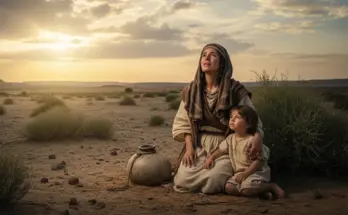
The story of Ruth is one of quiet strength, steady faith, and divine providence. Found in the Old Testament, the book of Ruth tells how a Moabite widow stepped into a new land, embraced a new people, and found unexpected favor in the eyes of God. Although she came from a foreign nation, Ruth’s commitment to Naomi and her trust in Israel’s God placed her at the center of God’s unfolding plan of redemption.
After the death of her husband, Ruth could have returned to the comfort and familiarity of Moab. Instead, she made a bold and selfless decision. She chose to remain with Naomi, saying, “Your people shall be my people, and your God my God” (Ruth 1:16, ESV). With nothing guaranteed and no promise of security, Ruth walked into the unknown, trusting that the God of Israel would provide.
In Bethlehem, Ruth’s humility and hard work opened doors of favor. She gleaned in the fields to provide for Naomi, not knowing that Boaz—the landowner—would soon become her redeemer. Through a series of seemingly ordinary events, God worked out His extraordinary plan. Ruth married Boaz, gave birth to Obed, and became the great-grandmother of King David.
Her story reminds us that God does not forget the faithful. He sees the humble, honors loyalty, and weaves ordinary lives into His eternal purposes. When we study the character of Ruth, we see more than a beautiful narrative—we see an invitation to walk by faith, even when the path ahead seems unclear.
Strengths & Accomplishments of Ruth
Ruth’s defining trait was her loyalty. After the death of her husband, she refused to leave Naomi, her mother-in-law. Instead of returning to her people in Moab, Ruth said:
“Where you go I will go, and where you lodge I will lodge. Your people shall be my people, and your God my God” (Ruth 1:16, ESV).
This commitment marked a turning point not only in her life but in Israel’s history.
Courage to Begin Again
Ruth left everything familiar to follow Naomi to Bethlehem. As a foreigner, she entered a new culture, faced uncertainty, and endured poverty. However, she did not give up. She humbly gleaned in the fields, relying on God’s provision through the law of Moses. Her actions showed quiet courage and a willingness to do what was necessary to survive with dignity.
Honored by God and Others
Because of her humility and hard work, Ruth found favor in the eyes of Boaz. He described her as a “worthy woman” (Ruth 3:11). Eventually, Boaz redeemed her by marrying her, securing both her and Naomi’s future. Ruth’s story did not end in obscurity. She became part of the lineage of David—and of Jesus Christ (Matthew 1:5). Her strength was not loud or forceful. It was steady, faithful, and deeply rooted in love.
Weaknesses & Mistakes of Ruth
Although Ruth is not recorded as making moral failures, her story includes risky decisions. For example, Naomi instructed her to approach Boaz at night, uncover his feet, and lie down (Ruth 3:4). This action could have led to misunderstanding or shame. Yet Ruth obeyed Naomi’s guidance, trusting that the custom would be understood by Boaz.
Social Vulnerability
Ruth’s position as a Moabite widow left her exposed in a society that valued lineage, land, and male protection. While this was not a personal fault, it was a real weakness in her situation. She had no power to secure her own future. Her only option was to place herself at the mercy of others. Boaz even warned her to stay in his field so she wouldn’t be harmed (Ruth 2:9).
Uncertain Timing
By laying at Boaz’s feet, Ruth initiated a conversation about redemption. Some scholars suggest that this could have backfired. Boaz was not the nearest kinsman. Another man had the first right to redeem. If he had said yes, Ruth may have married someone with a different character. But despite the risk, God worked through Ruth’s boldness and Boaz’s integrity. Her story shows how trusting God in uncertain situations can still lead to blessing.
Ruth: Lessons from Her Life
Ruth’s life teaches us that faith is not always loud—it is often shown through loyalty, hard work, and quiet courage. Ruth did not seek fame or power. She simply chose to be faithful where she was. Because of that choice, God brought redemption to her family and used her story to reveal His plan.
We learn that God welcomes outsiders into His covenant family. Ruth was a Moabite, yet she became a part of Israel’s greatest royal line. Her story foreshadows the gospel, where people from every nation are invited into God’s kingdom through faith.
Another lesson is about God’s providence. Ruth’s journey seemed marked by loss, grief, and uncertainty. However, God was weaving every detail together. He guided her steps to Boaz’s field and led her into a future she never could have imagined. This reminds us to remain faithful, even in the ordinary moments. God often works behind the scenes, turning our faithfulness into fruitfulness.
In every season of her life, Ruth trusted God and honored others. Her legacy proves that humble obedience can change history.
Vital Statistics for Ruth
Ruth lived during the time of the judges, a period marked by chaos and disobedience in Israel. While many turned away from God, Ruth turned toward Him. Her story stands as a bright light in a dark era.
She was a Moabite woman, likely raised in a pagan culture. Moabites were often viewed with suspicion or hostility by Israelites due to their history (Deuteronomy 23:3). Yet Ruth is the only woman in Scripture given an entire book bearing her name, and she is honored throughout the Bible.
Ruth’s husband, Mahlon, died early in the story. Her connection to Israel came through Naomi, her mother-in-law. Rather than returning to Moab, Ruth chose to go to Bethlehem. There, she met Boaz, a relative of Naomi’s late husband. Boaz eventually redeemed her through levirate marriage customs, preserving the family line.
Ruth became the mother of Obed, who became the father of Jesse, who became the father of David. Through this line came the Messiah. Despite her Gentile background, Ruth became a direct ancestor of Jesus. Her story reminds us that faith, not bloodline, secures our place in God’s plan.
Key Verse & Mentions for Ruth
One of the most well-known verses in Scripture comes from Ruth’s declaration of loyalty to Naomi:
“But Ruth said, ‘Do not urge me to leave you or to return from following you. For where you go I will go, and where you lodge I will lodge. Your people shall be my people, and your God my God.’” (Ruth 1:16, ESV)
This verse captures her commitment and the turning point in her story. She was no longer just a Moabite woman—she became part of God’s covenant people.
Ruth is mentioned twelve times in the book that bears her name. She is also mentioned once in the genealogy of Jesus found in Matthew 1:5:
“…and Salmon the father of Boaz by Rahab, and Boaz the father of Obed by Ruth, and Obed the father of Jesse…”
This single mention ties Ruth’s story directly into the birth of Jesus. Her life stands as a testimony to the grace of God that reaches beyond borders and includes the humble in His eternal purposes.
Closing Thoughts on Ruth
The life of Ruth reminds us that God often works through the quiet faithfulness of ordinary people. She was not a warrior, prophet, or ruler. She was a widow from a foreign land who chose loyalty over comfort and faith over fear. Because of her trust in God, Ruth became part of a much larger story—one that pointed forward to the coming of Christ.
As we reflect on her journey, we see how God brings beauty out of brokenness. He restores what is lost and honors those who walk humbly with Him. The story of Ruth continues to inspire those who feel forgotten or overlooked. It shows that no matter where we come from, faith can change everything.
In every field she gleaned, in every risk she took, and in every step she made, Ruth teaches us to trust God’s providence. Her story may be short, but its impact stretches all the way to eternity.
Explore More Bible Character Studies
This study is part of our Bible Character studies, explore the lives, lessons, and faith of men and women throughout Scripture. For more outlines, studies, and resources, return to the Bible Study Toolbox homepage. Contact us with any questions.