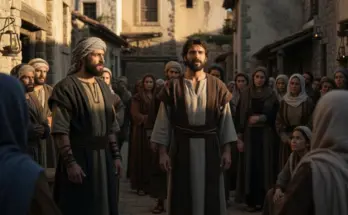
When we think of early church leaders, we often remember Peter or Paul. However, the New Testament also introduces us to faithful servants who worked quietly beside them. One of those men is Silas. His name appears at key moments in the Book of Acts, and his life shows us what steady leadership looks like.
Silas was not a headline apostle in the Gospels. In fact, he is not mentioned during Jesus’ earthly ministry. Yet God raised him up in the years after the resurrection. He became a trusted leader in the Jerusalem church, a missionary companion of Paul, and a man who endured suffering with courage.
For new believers, Silas matters because he shows us that God uses faithful servants in powerful ways. He did not seek fame. He simply obeyed. Therefore, his story helps us understand how the early church grew through teamwork, humility, and bold faith.
Silas: Strengths & Accomplishments
Silas first appears in the Book of Acts during a crucial moment for the early church. In Acts 15, believers debated whether Gentile converts must follow the law of Moses. The apostles and elders met in Jerusalem to settle the matter. After discussion, they sent a letter to the Gentile churches.
Acts 15:22 says, “Then it seemed good to the apostles and the elders, with the whole church, to choose men from among them and send them to Antioch with Paul and Barnabas. They sent Judas called Barsabbas, and Silas, leading men among the brothers.”
This verse reveals much about Silas. He was already recognized as a leading man. The church trusted him. He was not a new convert. He was spiritually mature and respected.
Silas also had a prophetic gift. Acts 15:32 tells us, “And Judas and Silas, who were themselves prophets, encouraged and strengthened the brothers with many words.” He did not only deliver letters. He spoke the truth. He strengthened believers through Spirit-led encouragement.
Later, after Paul and Barnabas parted ways, Paul chose Silas as his new missionary partner. Acts 15:40 states, “but Paul chose Silas and departed, having been commended by the brothers to the grace of the Lord.” Paul did not choose lightly. He selected a man who was dependable and courageous.
Together, Paul and Silas traveled through Syria and Cilicia, strengthening churches. They later revisited cities where Paul had planted congregations. Silas helped establish order, teaching, and stability in young churches.
One of the most powerful moments in Silas’s life occurred in Philippi. After casting a spirit out of a slave girl, Paul and Silas were beaten and imprisoned. Acts 16:23–25 records:
“23 And when they had inflicted many blows upon them, they threw them into prison, ordering the jailer to keep them safely. 24 Having received this order, he put them into the inner prison and fastened their feet in the stocks. 25 About midnight Paul and Silas were praying and singing hymns to God, and the prisoners were listening to them.”
Instead of complaining, Silas sang. Instead of despairing, he prayed. His faith did not collapse under pressure. Because of that testimony, God sent an earthquake. The prison doors opened. The jailer and his household were saved.
Silas also appears in Corinth. Acts 18:5 says, “When Silas and Timothy arrived from Macedonia, Paul was occupied with the word, testifying to the Jews that the Christ was Jesus.” Silas supported Paul’s preaching ministry. He labored in difficult cities. He endured opposition.
Later, we see his name connected to letters. In 1 Thessalonians 1:1, Paul writes, “Paul, Silvanus, and Timothy, To the church of the Thessalonians…” Silvanus is the Latin form of Silas. This suggests he helped shape or deliver apostolic teaching.
Finally, 1 Peter 5:12 says, “By Silvanus, a faithful brother as I regard him, I have written briefly to you…” Peter calls him faithful. That simple word speaks volumes. He was trusted by both Paul and Peter. God used Silas across leadership circles in the early church.

Transformed by Jesus New Testament Characters Who Inspire Faith
Discover the hidden treasures of the New Testament through 50 unforgettable Bible characters. From Mary’s humble faith to Peter’s failure and restoration, from Paul’s radical transformation to the unnamed thief on the cross, every page of the New Testament introduces us to people whose lives were changed by Jesus Christ.
Silas: Weaknesses & Mistakes
Scripture does not record any moral failure or major mistake by Silas. However, that does not mean he was perfect. The Bible simply does not highlight personal sins in his story.
We can observe that Silas entered ministry during a season of conflict. In Acts 15, the church faced sharp disagreement over Gentile believers. Soon after, Paul and Barnabas had “a sharp disagreement” over John Mark. Silas stepped into ministry at a time of division.
Although Silas was not the cause of conflict, he chose to stand with Paul. That decision meant leaving the familiar ministry of Jerusalem and entering dangerous missionary work. It also meant enduring persecution.
Silas suffered physically. He was beaten and imprisoned. He faced hostility from Jewish leaders and Roman authorities. Those trials surely tested his faith. However, Scripture does not record him shrinking back.
Therefore, while we do not see personal failures, we do see costly obedience. He counted the cost. He accepted suffering as part of serving Christ.
His life reminds us that faithfulness often includes hardship. Even strong leaders face pain. The absence of recorded failure does not make him superhuman. It shows that the Spirit sustained him in difficulty.
Lessons from His Life
Silas teaches us the power of quiet leadership. He did not demand attention. Yet God placed him in strategic moments.
First, we learn the value of trustworthiness. The Jerusalem church chose Silas because he was already proven. Faithfulness in small settings prepares us for larger assignments. God often promotes those who serve steadily.
Second, we see the importance of encouragement. Acts 15:32 says he strengthened believers with many words. The Greek term for “encouraged” reflects building someone up. Silas invested in people’s faith. Therefore, ministry is not only preaching to crowds. It is strengthening hearts.
Third, Silas shows us how to respond to suffering. In Philippi, he sang at midnight. He could have complained. Instead, he worshiped. Because of that response, others heard the gospel. Our reaction in pain can open doors for others.
Fourth, Silas demonstrates teamwork. He worked with Paul, Timothy, and likely Peter. He did not insist on being first. The early church grew through partnerships. God’s mission is larger than one personality.
Fifth, his life shows the importance of doctrinal clarity. In Acts 15, he helped deliver a message of grace. Gentile believers were not required to carry the full burden of the law. That decision protected the gospel. Silas stood for truth and unity.
Finally, we see that lasting impact does not always require spotlight recognition. Silas appears in several key books. Yet he never wrote his own letter. He strengthened others’ ministries. Sometimes our role is to help another voice be heard.
Vital Statistics for Silas
Silas, also called Silvanus, lived in the first century during the early expansion of the church. He was a Jewish believer and likely a Roman citizen, since Acts 16:37 indicates he shared Paul’s Roman status. This citizenship helped protect their legal rights.
He was based in Jerusalem at first. He served as a leader among the brothers. He functioned as a prophet, which means he spoke Spirit-guided encouragement and instruction. After Acts 15, he traveled extensively with Paul.
Silas ministered in Antioch, Syria, Cilicia, Philippi, Thessalonica, Berea, Corinth, and possibly other regions. He partnered closely with Paul during the second missionary journey. He also worked alongside Timothy.
His name appears in Acts, 1 and 2 Thessalonians, 2 Corinthians indirectly, and 1 Peter. This shows he maintained relationships across apostolic networks. Peter called him a faithful brother. Paul included him in greetings to churches.
Although we do not know his family background or final years, the New Testament presents him as a trusted apostolic coworker. His life unfolded during a time of intense persecution and rapid church growth.
Key Verses and Mentions
Silas appears most prominently in the Book of Acts. His introduction in Acts 15 establishes his leadership role. Acts 15:40–41 shows him traveling with Paul, strengthening churches.
The Philippian prison account in Acts 16 remains central to understanding his character. The midnight worship scene stands as a powerful testimony. Because Silas praised God in chains, the jailer asked, “Sirs, what must I do to be saved?” (Acts 16:30). Their faithful witness led to salvation.
He also appears in Thessalonica and Berea. Acts 17:10 notes that Paul and Silas went to Berea by night. There they encountered Jews who examined the Scriptures daily. Silas shared in both opposition and fruitfulness.
Paul references him as Silvanus in 1 Thessalonians 1:1. This greeting connects Silas to the founding of the Thessalonian church. His name stands beside Paul and Timothy. That placement suggests significant influence.
Peter’s commendation in 1 Peter 5:12 is especially meaningful: “By Silvanus, a faithful brother as I regard him, I have written briefly to you…” Peter’s words affirm Silas’s character. Faithful may seem simple, yet in Scripture it describes those who endure and remain steady.
These verses show that Silas was more than a companion. He was a recognized apostolic leader and servant.
Closing Reflection
Silas may not be the most famous figure in the New Testament, but his life carries deep significance. He stood firm when doctrine was debated. He strengthened believers when confusion threatened unity. He sang when chains cut into his ankles.
God used Silas in critical transitions of the early church. He helped carry the message of grace to Gentiles. He supported missionary expansion. He modeled endurance under persecution.
For us, Silas reminds us that leadership often looks like steady service. Faithfulness matters more than fame. Obedience matters more than recognition.
The early church grew because men like Silas said yes to God. They trusted Christ in suffering and in success. Therefore, as we study his life, we see the faithfulness of God at work through willing servants.
The same Lord who strengthened Silas still builds His church today. He continues to raise up leaders, servants, and encouragers. When we walk in obedience, He uses us in ways we may never fully see.
Continue Exploring Chapter Outlines
This outline is part of our growing collection of Chapter Outlines. You can explore more Bible Outlines or return to the Bible Study Toolbox homepage for outlines, studies, and resources to deepen your understanding of God’s Word. Contact us anytime.