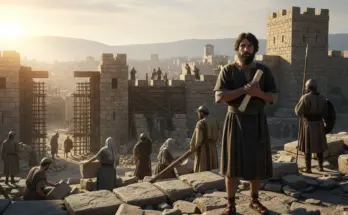
Some people spend their whole lives trying to rise above how others see them. Zacchaeus was one of those people. When we meet him in Luke 19, he is wealthy, powerful, and deeply disliked. Yet, he is also curious, restless, and searching. His story matters because it shows us how Jesus responds to people the crowd has already written off.
Zacchaeus lived in Jericho, a prosperous city on an important trade route. As a chief tax collector, he worked for Rome and oversaw other collectors. Because of this, many Jews saw him as a traitor and a thief. Tax collectors were known for taking more than required, so resentment followed them everywhere. Zacchaeus had money, but he lacked peace and acceptance.
When Jesus entered Jericho, the crowd pressed in to see Him. Zacchaeus wanted to see Jesus too, but his short stature and poor reputation kept him at the edges. Still, he did not give up. Instead, he ran ahead and climbed a sycamore tree. That moment reveals a man willing to risk embarrassment for a glimpse of hope.
What happened next changed everything. Jesus stopped, called Zacchaeus by name, and chose to stay in his home. This encounter shows us how grace works. Jesus did not begin with condemnation. However, grace did not leave Zacchaeus unchanged. His life turned sharply toward repentance and restoration.
As we study Zacchaeus, we see how God seeks the lost, transforms the willing, and restores what sin has broken.
Strengths & Accomplishments of Zacchaeus
At first glance, Zacchaeus does not seem like a model of faith. However, his story reveals several important strengths that God used. One of the clearest is his determination to see Jesus. Despite social barriers and personal limitations, Zacchaeus pressed forward. He ran ahead of the crowd and climbed a tree, actions that would have embarrassed a man of his status. This determination shows humility, even before repentance took full shape.
Another strength appears in Zacchaeus’s responsiveness to Jesus. When Jesus called him down from the tree, Zacchaeus obeyed immediately. Luke tells us, “So he hurried and came down and received him joyfully” (Luke 19:6, ESV). There is no hesitation in his response. Joy marked his obedience, which suggests a heart already softened toward change.
Zacchaeus also demonstrated honesty once confronted by grace. Standing before Jesus and the crowd, he openly addressed his wrongdoing. He did not minimize his past or shift blame. Instead, he committed himself to restitution. He declared, “Behold, Lord, the half of my goods I give to the poor. And if I have defrauded anyone of anything, I restore it fourfold” (Luke 19:8, ESV). This statement reflects a serious commitment to righteousness, rooted in the Law’s standards for restitution.
Finally, Zacchaeus’s greatest accomplishment was not financial generosity, but spiritual transformation. Jesus affirmed this change by saying, “Today salvation has come to this house” (Luke 19:9, ESV). God worked through Zacchaeus’s willingness to repent, turning a despised man into a living example of redeemed grace.
Weaknesses and Mistakes of Zacchaeus
Zacchaeus’s weaknesses are not hidden in the biblical account. As a chief tax collector, he participated in a system that oppressed his own people. Tax collectors often charged more than required, keeping the excess for themselves. Zacchaeus’s own words suggest he had defrauded others. His wealth likely came at the expense of justice and trust.
Because of his occupation, Zacchaeus also lived separated from his community. Social isolation was both a consequence and a choice. His position brought financial gain, but it cost him relationships and respect. The crowd’s reaction to Jesus staying with him makes this clear. Luke records, “And when they saw it, they all grumbled, ‘He has gone in to be the guest of a man who is a sinner’” (Luke 19:7, ESV). Zacchaeus was publicly labeled and rejected.
Another weakness was his reliance on wealth and status for security. Although Luke does not dwell on this, the broader context of Jesus’s teaching shows wealth often becomes a barrier to spiritual humility. Zacchaeus had likely trusted his position and income to protect him from judgment. However, these could not satisfy his deeper need for acceptance and peace.
The consequences of Zacchaeus’s mistakes were real. He lived with public scorn and personal emptiness. Yet, Scripture does not portray him as beyond hope. Instead, his failures set the stage for grace. God did not excuse his sins, but He also did not abandon him because of them.
Zacchaeus: Lessons from His Life
The life of Zacchaeus teaches us that grace often begins with seeking. Zacchaeus did not know exactly who Jesus was, but he wanted to see Him. That desire mattered. Jesus later explained, “For the Son of Man came to seek and to save the lost” (Luke 19:10, ESV). Zacchaeus’s seeking met Jesus’s greater mission of salvation.
Another lesson is that grace precedes repentance. Jesus did not wait for Zacchaeus to confess before offering fellowship. He chose to stay in Zacchaeus’s home first. This does not mean sin was ignored. Instead, grace created space for repentance to grow. Zacchaeus responded because he experienced acceptance he did not deserve.
We also learn that true repentance leads to action. Zacchaeus did not offer empty words. He committed to giving to the poor and restoring what he had taken. His response went beyond feeling sorry. It involved concrete steps toward justice and healing. Repentance, in Scripture, often includes turning and repairing where possible.
Zacchaeus’s story also teaches us about the danger of crowd judgment. The people around Jesus focused on Zacchaeus’s past. Jesus focused on his future. The crowd saw a sinner. Jesus saw a son of Abraham being restored. This challenges us to examine how we view others whom God is still working on.
Finally, Zacchaeus shows us that no one is too small, too sinful, or too overlooked for God’s attention. Jesus stopped for one man in a tree, in a crowded city, on His way to Jerusalem. That moment reminds us that God’s redemptive work is deeply personal.
Vital Statistics for Zachaeus
Zacchaeus lived during the first century, under Roman occupation of Judea. He resided in Jericho, a wealthy city known for trade and agriculture. Jericho’s location made it a center for tax collection, which explains Zacchaeus’s role there. As a chief tax collector, he supervised others and held significant authority within the Roman system.
His name, Zacchaeus, comes from a Hebrew root meaning “pure” or “innocent,” which stands in sharp contrast to his reputation. This contrast highlights the redemptive power of his story. Although his lineage is not detailed, Jesus referred to him as “a son of Abraham,” affirming his place within Israel’s covenant community (Luke 19:9, ESV).
Zacchaeus had direct interaction with Jesus during Jesus’s final journey to Jerusalem. This encounter took place shortly before the triumphal entry. While Scripture does not record Zacchaeus’s later life, his immediate transformation suggests a lasting change. His relationships likely shifted as he pursued restitution and generosity.
Zacchaeus’s role, location, and timing place him at a critical moment in Jesus’s ministry. His story stands as a testimony to how the gospel reached into everyday life, even within corrupt systems and broken reputations.
Key Verses and Mentions of Zacchaeus
The primary account of Zacchaeus appears in Luke 19:1–10. Luke introduces him clearly: “He entered Jericho and was passing through. And behold, there was a man named Zacchaeus. He was a chief tax collector and was rich” (Luke 19:1–2, ESV). This opening sets the stage for both his problem and his need.
Zacchaeus’s effort to see Jesus is recorded in Luke 19:3–4, highlighting his determination despite obstacles. The turning point comes when Jesus addresses him directly: “Zacchaeus, hurry and come down, for I must stay at your house today” (Luke 19:5, ESV). The word “must” reflects divine purpose, not convenience.
The crowd’s reaction appears in Luke 19:7, revealing social tension and judgment. Zacchaeus’s response follows immediately in Luke 19:8, where he pledges generosity and restitution. This verse captures the heart of repentance expressed through action.
Jesus’s final words frame the theological meaning of the encounter: “Today salvation has come to this house, since he also is a son of Abraham” (Luke 19:9, ESV). The account concludes with a summary of Jesus’s mission in Luke 19:10, connecting Zacchaeus’s story to the larger gospel message.
Zacchaeus is not mentioned elsewhere in Scripture, but his brief appearance leaves a lasting impact. His life illustrates how personal encounters with Jesus reveal the heart of salvation.
Closing Thoughts on Zacchaeus
The story of Zacchaeus reminds us that God’s grace reaches where human judgment stops. Zacchaeus was excluded, distrusted, and dismissed by others. Yet, Jesus saw him, called him by name, and entered his life without hesitation. That choice changed everything.
Zacchaeus’s transformation did not come through public approval or personal achievement. It came through an encounter with Jesus that exposed sin and offered mercy at the same time. His repentance showed itself in generosity, justice, and restored relationships. Salvation touched his household, not just his heart.
For us, Zacchaeus stands as a reminder that God seeks the lost with purpose and patience. He restores dignity to those willing to respond. The grace that reached a man in a tree still reaches people today, meeting them where they are and calling them toward something new.
Explore More Bible Character Studies
This study is part of our Bible Character studies, explore the lives, lessons, and faith of men and women throughout Scripture. For more outlines, studies, and resources, return to the Bible Study Toolbox homepage. Contact us with any questions.