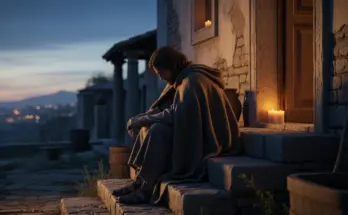
A Clean House Isn’t Enough
What happens when evil leaves—but nothing takes its place? Jesus gave a powerful warning in the Parable of the Empty House. At first glance, the story seems simple: a man is delivered from an unclean spirit, but because his life remains empty, worse evil returns. However, the deeper message strikes at the heart of what it means to truly follow God.
This parable is recorded in both Matthew 12 and Luke 11. Jesus was speaking to a crowd that had seen His miracles and heard His teaching, but many still rejected Him. They wanted the benefits of cleansing without full surrender to the One doing the cleansing.
The empty house represents a life no longer bound by visible sin or demonic power. The problem is that the house remains empty—unoccupied by God. There is no new owner, no new direction, no new devotion. The evil that once left sees an opportunity to return—and does so with greater force.
Jesus wasn’t just talking about spirits and possession. He was warning about the danger of moral reform without spiritual rebirth. We can clean up our lives, but if we don’t invite God in, we remain vulnerable to a deeper fall.
Let’s walk through the parable of the empty house, passage by passage, and uncover the meaning Jesus intended for both His audience and us today.
The Unclean Spirit’s Departure
“When the unclean spirit has gone out of a person, it passes through waterless places seeking rest, but finds none.” (Matthew 12:43, ESV)
The story begins with a clear image: an unclean spirit leaves a person. Jesus doesn’t say why it leaves. The cause isn’t the focus. What matters is the state left behind—an unoccupied life.
In the biblical worldview, unclean spirits were spiritual agents of evil. Their presence in a person’s life brought suffering, confusion, and separation from God. To be free from such a spirit would seem like a victory. And it is—at least temporarily.
Jesus describes the unclean spirit wandering through “waterless places.” In Jewish thought, the wilderness or desert represented places of chaos and disorder. This imagery paints a picture of restlessness and agitation. The spirit cannot find a new home. It has been cast out, but it is still seeking someone to enter.
This first verse sets the tone: deliverance alone does not equal safety. Evil may depart for a season, but it continues to seek access. The empty life is not safe simply because evil has left.
The Danger of an Empty Life
“Then it says, ‘I will return to my house from which I came.’ And when it comes, it finds the house empty, swept, and put in order.” (Matthew 12:44, ESV)
The spirit decides to return. It still claims ownership over the person it once inhabited. “My house,” it says. This is not just arrogance—it reflects a real threat. If nothing has changed inside the person, the door remains open.
Jesus says the house is swept and put in order. That suggests outward improvement. Perhaps the person has experienced healing, broken old habits, or adopted better behavior. But something is missing. The house is still empty.
This is the central warning of the parable of the empty house. It is possible to experience external transformation without internal renewal. A person can clean up their life, yet still lack true spiritual life.
The phrase “put in order” echoes the idea of reformation. The house looks better—but has not been filled. The Spirit of God has not entered. The person remains spiritually vacant.
An empty life is not a neutral state. It is an invitation. Jesus describes evil as active and opportunistic. When there is no resistance, when there is no indwelling power to guard the house, the door is wide open.
The Return of the Spirit—and More
“Then it goes and brings with it seven other spirits more evil than itself, and they enter and dwell there, and the last state of that person is worse than the first.” (Matthew 12:45, ESV)
The returning spirit does not come alone. It brings others—seven more spirits, more evil than itself. The number seven often symbolizes completeness in Scripture. Here, it indicates the completeness of corruption. What was once a single problem becomes a total invasion.
These spirits “enter and dwell there.” They make themselves at home. The house was still available. Nothing had moved in to take control. The final condition is worse than the first.
This is not just a warning about demon possession. Jesus is making a broader point. When a person experiences spiritual breakthrough—freedom, healing, even conviction—but does not move forward into truth, obedience, and relationship with God, they are at greater risk than before.
The more light a person has, the greater their accountability. To reject that light, or to simply let it fade without replacing it with truth, brings about a more dangerous condition than the original one.
The Last State Is Worse Than the First
Jesus doesn’t minimize the seriousness of spiritual danger. He emphasizes that the final outcome is far worse. The person is not back where they started. They are now in deeper bondage and deception.
This pattern was familiar to His audience. Throughout Israel’s history, God delivered His people—yet they often returned to sin and idolatry. With each return, their condition worsened. Prophets had warned of this cycle for generations.
Now Jesus speaks directly to that same pattern. He warns that those who are freed but not filled are vulnerable to a devastating relapse.
A Warning to a Generation
“So also will it be with this evil generation.” (Matthew 12:45b, ESV)
Jesus ends the parable with a striking application. He connects the story not just to individuals—but to a generation.
This generation had seen more miracles than any before it. Jesus had cast out demons, healed the sick, and taught with authority. Yet many in the crowd still rejected Him. They wanted signs, but they did not want submission. They were being cleansed—but not converted.
Jesus declares that the parable is a picture of their condition. They were like a house cleaned and empty. The religious leaders had promoted outward righteousness. The people may have looked more spiritual than generations before them. But without faith in Jesus, the house was still vacant.
This wasn’t just a passive condition. It was dangerous. Rejection of the Messiah opened the door to deeper darkness. Within a generation, that warning would be fulfilled. The rejection of Christ would lead to spiritual and national consequences.
Historical Fulfillment and Pattern
In a few decades, Jerusalem would fall. The temple would be destroyed. The city would be overrun. The nation, having rejected its true King, would suffer greatly. This is not coincidence—it is fulfillment.
Jesus’ parable was both a personal warning and a prophetic one. Individuals must be filled with the Spirit. Nations must be submitted to God. Otherwise, worse will come.
What Should Fill the Empty House?
The parable never says what should fill the house. But the rest of Scripture is clear: when a person is cleansed, they must be filled.
Acts 2:38 shows the pattern: “Repent and be baptized… and you will receive the gift of the Holy Spirit.” The Spirit does not just visit; He dwells in those who belong to Christ.
Romans 8:9 says, “Anyone who does not have the Spirit of Christ does not belong to Him.” The Spirit’s presence is not optional. He is the sign of true spiritual life.
Filling also means more than presence—it means control. Ephesians 5:18 commands believers, “Be filled with the Spirit.” That verb is ongoing. It describes a continual filling that results in worship, gratitude, and submission.
Obedience to God’s Word becomes the fruit of that filling. The heart once ruled by sin is now ruled by truth. The house once empty is now occupied by the living God.
Conclusion of the Parable of the Empty House
The Parable of the Empty House gives us a sober look at spiritual life. Freedom from evil is not the final goal. God desires more than a cleaned-up life. He calls for a filled life—a life transformed by His presence.
Jesus spoke this parable to confront a generation that wanted the blessings of cleansing without the cost of surrender. That danger remains today. We must not settle for outward change. We must not rest in temporary peace.
True security comes only when the house is filled. Not with ritual. Not with religion. But with the Spirit of God.
Let us not leave the door open. Let us welcome the One who alone can make our hearts His home.
Discover More Parables of Jesus
Looking for more? Explore additional Parables of Jesus to see how God’s Word fits together. Each parable is part of the resources available at Bible Study Toolbox, where we provide studies, guides, and tools to help believers grow in the Word with clarity and confidence. Contact us anytime.