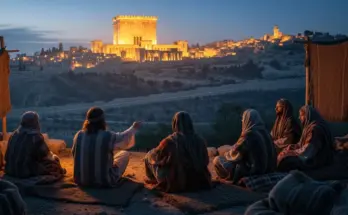
Colossians 1 opens Paul’s letter to the church in Colossae with a powerful focus on the supremacy of Christ. This young congregation lived in a Roman city shaped by Greek philosophy, Jewish traditions, and local religious ideas. Therefore, they needed clarity about who Jesus truly is. Paul writes to anchor their faith firmly in Christ alone.
Colossae sat in Asia Minor, not far from Laodicea and Hierapolis. The gospel likely reached the city through Epaphras, a faithful servant mentioned in this chapter. False teachings had begun to influence believers, so Paul wrote to strengthen their understanding. He does not begin with arguments. Instead, he begins with truth about Christ.
Colossians 1 matters because it places Jesus at the center of creation, redemption, and the church. It connects the Old Testament hope of Israel with the fulfillment found in the Son. In this outline, we will follow the chapter’s flow. We will examine Paul’s greeting, his prayer, his description of salvation, and his majestic portrait of Christ. We will also consider Paul’s ministry and the revealed mystery of the gospel.
Greeting & Thanksgiving for Fruitfulness (Colossians 1:1–8)
Paul opens with a standard apostolic greeting, yet even here Christ stands at the center. He writes, “Paul, an apostle of Christ Jesus by the will of God, and Timothy our brother” (Colossians 1:1). His authority comes from Christ, not from human appointment. That point matters because the church faces competing voices.
He addresses “the saints and faithful brothers in Christ at Colossae” (1:2). The phrase “in Christ” defines their identity. They belong to Him. Paul immediately gives thanks because of their “faith in Christ Jesus and of the love that you have for all the saints” (1:4). Faith and love flow from a shared hope.
Paul explains that this hope is “laid up for you in heaven” (1:5). The gospel produces fruit because it carries truth. He says it is “bearing fruit and increasing—as it also does among you” (1:6). This language echoes Old Testament imagery of fruitful land and covenant blessing. The gospel fulfills what Israel’s story anticipated.
Epaphras plays a vital role in this section. Paul calls him “our beloved fellow servant” and “a faithful minister of Christ on your behalf” (1:7). He learned the gospel and faithfully taught it. Therefore, the church stands on solid apostolic teaching. Thanksgiving sets the tone. The gospel bears fruit because Christ reigns.
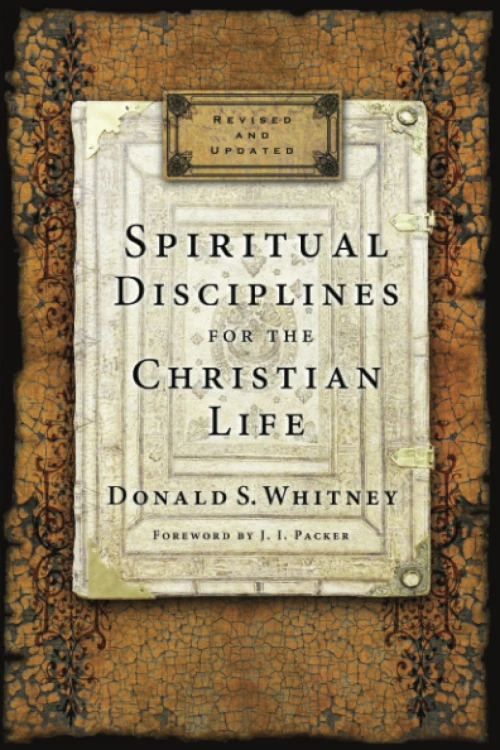
Spiritual Disciplines for the Christian Life
Over 600,000 copies sold!
We aren’t meant to wait for holiness―we’re meant to pursue it. God commands Christians to actively “be holy,” but what does that look like in daily life? Rather than overwhelming legalism or loose boundaries, Don Whitney encourages us to find a practical middle ground through biblical habits.
Paul’s Prayer for Spiritual Wisdom (Colossians 1:9–14)
After thanksgiving, Paul moves to prayer. He says, “We have not ceased to pray for you” (1:9). He asks that they be “filled with the knowledge of his will in all spiritual wisdom and understanding.” Knowledge here does not mean mere information. It refers to discernment shaped by God’s revealed truth.
This prayer connects belief and conduct. Paul continues, “so as to walk in a manner worthy of the Lord, fully pleasing to him” (1:10). Right knowledge leads to faithful living. He describes a life that bears fruit, grows in knowledge, and gains strength from God’s power.
He speaks of endurance and patience with joy. These virtues matter because false teaching often pressures believers to shift their allegiance. However, strength comes “according to his glorious might” (1:11). The source of stability remains God’s power, not human effort.
Paul then summarizes salvation in covenant language. He writes, “He has delivered us from the domain of darkness and transferred us to the kingdom of his beloved Son” (1:13). This language recalls Israel’s exodus from Egypt. Just as God delivered Israel from bondage, He now delivers believers from darkness.
In Christ, “we have redemption, the forgiveness of sins” (1:14). The Greek word for redemption, apolytrōsis, means release by payment. It echoes the Old Testament idea of ransom. Therefore, Paul frames salvation as a decisive rescue and transfer into Christ’s kingdom rule.
Supremacy of Christ in Colossians 1 (Colossians 1:15–20)
This section forms the theological center of Colossians 1. Many scholars believe Paul includes an early Christian hymn here. Whether hymn or confession, the focus remains clear. Christ stands supreme over all creation and redemption.
Paul begins, “He is the image of the invisible God, the firstborn of all creation” (1:15). The term “image” translates to the Greek word eikōn. It means visible representation. Jesus makes the unseen God known. The phrase “firstborn” does not mean created. Instead, it speaks of rank and authority, as in Psalm 89:27, where David is called the firstborn king.
Paul explains further: “For by him all things were created” (1:16). He lists heaven and earth, visible and invisible, thrones and dominions. Christ stands above every spiritual power. Therefore, no rival authority can claim equal status.
He adds, “He is before all things, and in him all things hold together” (1:17). Christ does not merely initiate creation. He sustains it. The universe continues because He wills it so.
Paul then shifts from creation to redemption. “He is the head of the body, the church” (1:18). The same Lord who rules creation governs His people. He calls Christ “the beginning, the firstborn from the dead.” His resurrection inaugurates a new creation.
Verse 19 declares, “For in him all the fullness of God was pleased to dwell.” The term fullness, plērōma, means totality. Nothing of God’s nature remains absent in Christ. Finally, Paul writes that through Him God reconciles “all things… making peace by the blood of his cross” (1:20). The cross stands at the center of cosmic reconciliation. The supremacy of Christ defines the entire chapter.

Reconciliation & Steadfast Faith (Colossians 1:21–23)
After presenting Christ’s supremacy, Paul applies it to the believers’ experience. He reminds them of their past condition. “You, who once were alienated and hostile in mind, doing evil deeds” (1:21). Alienation describes separation from God’s covenant life.
However, he continues, “he has now reconciled in his body of flesh by his death” (1:22). Reconciliation restores relationship. Christ’s physical death secures real peace. This statement counters any teaching that minimizes the importance of His bodily sacrifice.
Paul explains the purpose of reconciliation. It aims “to present you holy and blameless and above reproach before him” (1:22). These terms echo sacrificial language from the Old Testament. Animals offered to God had to be without blemish. Now Christ presents His people as acceptable before God.
Yet Paul includes a sober reminder: “if indeed you continue in the faith, stable and steadfast” (1:23). Continuance demonstrates genuine belief. The gospel they heard came “proclaimed in all creation under heaven.” This phrase emphasizes its universal scope. The same Christ who created all now offers reconciliation to all nations.
Paul’s Suffering & Stewardship of the Mystery (Colossians 1:24–29)
In the final section of Colossians 1, Paul describes his ministry. He writes, “Now I rejoice in my sufferings for your sake” (1:24). His suffering does not add to Christ’s atoning work. Instead, it reflects participation in Christ’s mission. The message of a crucified Lord often brings opposition.
Paul says he became a minister “according to the stewardship from God that was given to me for you” (1:25). The word stewardship translates to oikonomia. It means management of a household responsibility. God entrusted Paul with proclaiming the gospel fully.
He describes this message as “the mystery hidden for ages and generations but now revealed to his saints” (1:26). In biblical terms, a mystery refers to something once concealed but now disclosed. The revealed mystery centers on Christ’s saving work among the nations.
Paul states the content clearly: “Christ in you, the hope of glory” (1:27). The inclusion of Gentiles fulfills God’s covenant promises to Abraham. Through Christ, God forms one new covenant people.
Paul concludes with his ministry aim. “Him we proclaim, warning everyone and teaching everyone with all wisdom” (1:28). The goal is maturity in Christ. He labors with divine energy, “for this I toil, struggling with all his energy that he powerfully works within me” (1:29). Even Paul’s effort depends on Christ’s sustaining power.
Closing Reflections
Colossians 1 presents one of the clearest declarations of Christ’s supremacy in the New Testament. Paul begins with thanksgiving for gospel fruit. He then prays for spiritual wisdom and endurance. At the center, he unfolds a majestic portrait of Jesus as Creator, Sustainer, Head of the church, and Reconciler.
This chapter anchors the church in truth. Christ stands before creation, above every power, and at the center of redemption. His cross secures peace. His resurrection begins a new creation. Therefore, the church lives under His authority and hope.
Within the larger story of Scripture, Colossians 1 connects Israel’s covenant promises to their fulfillment in Christ. The promised kingdom, the hope of glory, and the gathering of the nations converge in Him. Paul’s ministry flows from this reality, and so does the church’s stability.
When we study Colossians 1, we see that everything holds together in Christ. Creation, redemption, and the church find unity in Him. The chapter leaves no room for rivals. Christ is supreme.
Continue Exploring Chapter Outlines
This outline is part of our growing collection of Chapter Outlines. You can explore more Bible Outlines or return to the Bible Study Toolbox homepage for outlines, studies, and resources to deepen your understanding of God’s Word. Contact us anytime.