Have you ever wondered why Daniel 9 carries so much weight in many prophecy discussions? When we study Daniel 9, we find a powerful prayer of repentance and a clear message of God’s faithfulness to His covenant. Many believers feel overwhelmed when they hear different interpretations of this chapter. However, when we read it slowly, the message becomes easier to understand. Daniel prayed for mercy because he believed God would keep His promises. We see a similar pattern when we look at Israel’s story in the first century, because God always completes what He declares.

Bamboozled Believers by Michael Biehler
Michael Biehler pilots an intellectual adventure while challenging every reader to reexamine his core beliefs. This game-changing, subversive Christian crossover book will at first confound and then delight all who love the truth. Bamboozled Believers makes sense and it will help you to make to make sense of the Bible too.
To preview the book, go to http://bamboozledbelievers.com Get Yours on Amazon
This chapter gives us a prayer, a prophecy, and a promise. We watch Daniel confess the sins of his people. Then we hear God speak through Gabriel about the future of Jerusalem. Because this message points toward the coming of the Messiah and the covenant transition, we can see why Daniel 9 matters so much today. When we follow a partial preterist view, we see most of this prophecy fulfilled in the first century, since Jesus completed His work and confirmed the covenant through His death and resurrection. We study this chapter so we can understand God’s faithfulness in history and trust His plan for our own lives.
Daniel’s Prayer for Mercy (Daniel 9:1–19)
1 In the first year of Darius the son of Ahasuerus, by descent a Mede, who was made king over the realm of the Chaldeans—2 in the first year of his reign, I, Daniel, perceived in the books the number of years that, according to the word of the Lord to Jeremiah the prophet, must pass before the end of the desolations of Jerusalem, namely, seventy years. 3 Then I turned my face to the Lord God, seeking him by prayer and pleas for mercy with fasting and sackcloth and ashes. 4 I prayed to the Lord my God and made confession, saying, “O Lord, the great and awesome God, who keeps covenant and steadfast love with those who love him and keep his commandments, 5 we have sinned and done wrong and acted wickedly and rebelled, turning aside from your commandments and rules. 6 We have not listened to your servants the prophets, who spoke in your name to our kings, our princes, and our fathers, and to all the people of the land. 7 To you, O Lord, belongs righteousness, but to us open shame, as at this day, to the men of Judah, to the inhabitants of Jerusalem, and to all Israel, those who are near and those who are far away, in all the lands to which you have driven them, because of the treachery that they have committed against you. 8 To us, O Lord, belongs open shame, to our kings, to our princes, and to our fathers, because we have sinned against you. 9 To the Lord our God belong mercy and forgiveness, for we have rebelled against him 10 and have not obeyed the voice of the Lord our God by walking in his laws, which he set before us by his servants the prophets. 11 All Israel has transgressed your law and turned aside, refusing to obey your voice. And the curse and oath that are written in the Law of Moses the servant of God have been poured out upon us, because we have sinned against him. 12 He has confirmed his words, which he spoke against us and against our rulers who ruled us, by bringing upon us a great calamity. For under the whole heaven there has not been done anything like what has been done against Jerusalem. 13 As it is written in the Law of Moses, all this calamity has come upon us; yet we have not entreated the favor of the Lord our God, turning from our iniquities and gaining insight by your truth. 14 Therefore the Lord has kept ready the calamity and has brought it upon us, for the Lord our God is righteous in all the works that he has done, and we have not obeyed his voice. 15 And now, O Lord our God, who brought your people out of the land of Egypt with a mighty hand, and have made a name for yourself, as at this day, we have sinned, we have done wickedly. 16 “O Lord, according to all your righteous acts, let your anger and your wrath turn away from your city Jerusalem, your holy hill, because for our sins, and for the iniquities of our fathers, Jerusalem and your people have become a byword among all who are around us. 17 Now therefore, O our God, listen to the prayer of your servant and to his pleas for mercy, and for your own sake, O Lord, make your face to shine upon your sanctuary, which is desolate. 18 O my God, incline your ear and hear. Open your eyes and see our desolations, and the city that is called by your name. For we do not present our pleas before you because of our righteousness, but because of your great mercy. 19 O Lord, hear; O Lord, forgive. O Lord, pay attention and act. Delay not, for your own sake, O my God, because your city and your people are called by your name. ”
Daniel’s prayer helps us understand the spiritual condition of Israel at that time. His words show humility, honesty, and deep trust in God’s character. Daniel admitted the failures of his people without excuses. He acknowledged that God was righteous, even when His judgments felt heavy. Because Daniel knew prophecy, he prayed with confidence, not fear. He understood that God’s promises never fail, so he approached God with bold expectation. This gives us a clear model for how God’s people should seek Him during seasons of correction.
Daniel also rooted his entire prayer in God’s covenant faithfulness. He remembered what God had done during the Exodus, so he believed God would act again. Daniel knew that true restoration begins with repentance, so he asked God to forgive, to heal, and to restore. He did not blame others for Israel’s condition. Instead, he carried the nation’s sins as his own. This attitude opens the door for God’s mercy because God responds to a humble heart.
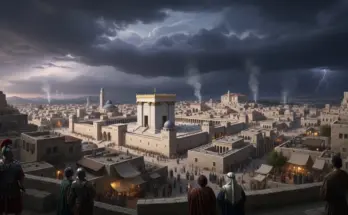
When we study this section through a partial preterist lens, the patterns become more clear. Israel faced judgment because of repeated covenant breaking. The exile was one example, but Jesus spoke of a greater judgment coming in the first century. That judgment would fall on Jerusalem because the nation rejected the Messiah, just as earlier generations rejected the prophets. However, God also promised restoration through the Messiah. Jesus’ ministry brought the long-awaited forgiveness Daniel prayed for. Because Jesus came during a time of deep spiritual decline, we can see why Daniel’s prayer sets the stage for the prophecy that follows. God heard Daniel’s cry for mercy, and He responded with a promise that would shape the future of Israel, lead to the coming of Christ, and usher in a new covenant for all nations.
Gabriel Announces the Seventy Weeks (Daniel 9:20–27)
20 While I was speaking and praying, confessing my sin and the sin of my people Israel, and presenting my plea before the Lord my God for the holy hill of my God, 21 while I was speaking in prayer, the man Gabriel, whom I had seen in the vision at the first, came to me in swift flight at the time of the evening sacrifice. 22 He made me understand, speaking with me and saying, “O Daniel, I have now come out to give you insight and understanding. 23 At the beginning of your pleas for mercy a word went out, and I have come to tell it to you, for you are greatly loved. Therefore consider the word and understand the vision. 24 “Seventy weeks are decreed about your people and your holy city, to finish the transgression, to put an end to sin, and to atone for iniquity, to bring in everlasting righteousness, to seal both vision and prophet, and to anoint a most holy place. 25 Know therefore and understand that from the going out of the word to restore and build Jerusalem to the coming of an anointed one, a prince, there shall be seven weeks. Then for sixty-two weeks it shall be built again with squares and moat, but in a troubled time. 26 And after the sixty-two weeks, an anointed one shall be cut off and shall have nothing. And the people of the prince who is to come shall destroy the city and the sanctuary. Its end shall come with a flood, and to the end there shall be war. Desolations are decreed. 27 And he shall make a strong covenant with many for one week, and for half of the week he shall put an end to sacrifice and offering. And on the wing of abominations shall come one who makes desolate, until the decreed end is poured out on the desolator. ”
This passage forms one of the most discussed prophecies in Scripture, and for good reason. The details are rich, layered, and deeply connected to God’s covenant with Israel. When we approach Daniel 9 from a partial preterist view, the pieces fit together in a clear and consistent way. The message Gabriel delivered helps us see how God arranged history to prepare for the coming of the Messiah and the transition from the old covenant to the new. Every phrase carries weight because it points toward what Jesus would accomplish.
Gabriel said the Messiah would be “cut off,” and this language points directly to the crucifixion. Jesus offered Himself as the perfect sacrifice, bringing an end to the old system. His death confirmed the covenant, just as Gabriel said the anointed one would “confirm a covenant with many.” Because Jesus’ ministry lasted about three and a half years, many believers see this as the first half of the “one week,” with the second half unfolding through the early church as the gospel went out to Israel first. This view keeps the focus on Jesus instead of a future political figure.
The prophecy also speaks of the end of sacrifice. Christ fulfilled this when He died, because His one offering made the temple sacrifices unnecessary. The book of Hebrews explains this clearly. However, the physical system continued until AD 70. When the Romans destroyed Jerusalem and burned the temple, the entire sacrificial structure ended forever. This event fulfilled the final statement about desolation. Therefore, this reading matches the historical timeline, honors the covenant context, and respects the message Daniel received. It shows how God completed His plan through Christ and brought Israel’s old covenant era to a close in a decisive and meaningful way.

Dragon’s Prophecy by Jonathan Cahn
For the first time ever, Jonathan Cahn will open up End-Time Prophecy to reveal the mysteries behind the End of the Age and what is now happening before our eyes – even the hidden keys to victory in the light of what’s coming – and how to overcome your Dragon!
THE DRAGON’S PROPHECY – Israel, The Dark Resurrection, and the End of Days Get Yours on Amazon
Closing Thoughts on Daniel 9
Daniel 9 gives us a powerful blend of prayer and prophecy. We watch Daniel seek God with a humble heart, and we see how God responded with a message about Israel’s future. When we read this chapter through a partial preterist lens, the events point directly to Jesus and the covenant transition in the first century. Because the seventy weeks focus on the Messiah’s work and Jerusalem’s destiny, we can see how God completed His plan in history.
This chapter strengthens our trust in God. He keeps His word, even when the path seems long. As we reflect on Daniel 9, we gain confidence that God guides His people with perfect wisdom and perfect timing. We learn that His promises never fail, and His purpose always moves forward.
Discover More in Bible Study Toolbox
Want to study further? Explore our full Eschatology resources at Bible Study Toolbox, where we connect prophecy, Scripture, and history to show how God’s plan unfolds. Each study and outline is designed to help believers grow in understanding and live with confidence in Christ’s promises. Contact us if you need us!