Matthew 24 is one of the most discussed and misunderstood chapters in the New Testament. Many readers approach it with fear or confusion, because they assume it speaks primarily about modern events. However, Jesus originally spoke these words to His disciples in a specific historical moment. That setting matters deeply for understanding His message.
The chapter begins as Jesus leaves the temple for the last time. What follows is not abstract theology, but a direct response to the disciples’ questions about judgment, timing, and the future of Israel’s sacred center. The language is urgent because the danger was real and near for them.
Scripture often speaks first to the original audience, while still offering lasting meaning for future believers. Matthew 24 fits that pattern well. In this study, we read the chapter through a partial preterist framework, recognizing fulfilled prophecy while affirming future hope where the Bible clearly teaches it.
Rather than chasing headlines or setting dates, we will let the text speak on its own terms. Our goal is clarity, confidence, and faith rooted in what Jesus actually said.
Jesus foretells Destruction of the Temple (Matthew 24:1–2)
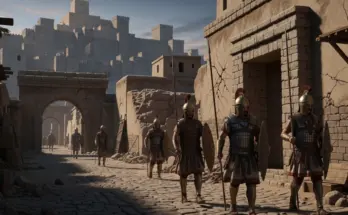
Matthew 24 opens with Jesus departing from the temple complex. His disciples draw His attention to its impressive stones and structures. Herod’s temple was a marvel of the ancient world, symbolizing national identity and religious security.
Jesus responds with a shocking prophecy.
“You see all these, do you not? Truly, I say to you, there will not be left here one stone upon another that will not be thrown down.” (Matthew 24:2, ESV)
This statement sets the entire chapter in motion. Jesus is not speaking vaguely about the distant future. He is predicting the literal destruction of the temple standing before them.
For first-century Jews, this would have sounded unthinkable. The temple represented God’s dwelling place and covenant presence. Yet Jesus had already pronounced judgment on it earlier in Matthew’s Gospel. This warning aligns with His rejection by the religious leadership and His declaration that the kingdom would be taken from them.
History confirms the fulfillment. In AD 70, Roman armies under Titus destroyed Jerusalem and the temple completely. Ancient historians record that the stones were dismantled, fulfilling Jesus’ words with remarkable precision.
This prophecy anchors Matthew 24 firmly in its original historical context.
Signs of the End of the Age (Matthew 24:3–14)
After hearing Jesus’ warning, the disciples ask a compound question.
“Tell us, when will these things be, and what will be the sign of your coming and of the end of the age?” (Matthew 24:3, ESV)
It is important to note that the disciples connect the destruction of the temple with “the end of the age.” In Jewish thinking, the temple symbolized the Mosaic age. Its destruction would signal a massive covenantal transition.
Jesus responds by describing conditions that would characterize the years leading up to that judgment.
“See that no one leads you astray. For many will come in my name, saying, ‘I am the Christ,’ and they will lead many astray.” (Matthew 24:4–5, ESV)
False messiahs and deceptive leaders were common in the first century. The book of Acts and Jewish historical sources confirm this unrest.
Jesus continues.
“And you will hear of wars and rumors of wars… For nation will rise against nation, and kingdom against kingdom, and there will be famines and earthquakes in various places.” (Matthew 24:6–7, ESV)
These events did occur within that generation. The Roman Empire experienced uprisings, famines, and natural disasters throughout the mid-first century.
Jesus explains that these signs were not the end itself, but the beginning of birth pains. He then speaks directly to His disciples about persecution.
“Then they will deliver you up to tribulation and put you to death, and you will be hated by all nations for my name’s sake.” (Matthew 24:9, ESV)
This language matches the experience of the early church as recorded in Acts and the Epistles. Despite opposition, Jesus promises that the gospel would spread.
“And this gospel of the kingdom will be proclaimed throughout the whole world as a testimony to all nations, and then the end will come.” (Matthew 24:14, ESV)
In the New Testament, “the whole world” often refers to the Roman world. Paul later affirms that the gospel had gone into all the earth within his lifetime.
The Abomination of Desolation (Matthew 24:15–28)
Jesus next addresses a specific and urgent warning.
“So when you see the abomination of desolation spoken of by the prophet Daniel, standing in the holy place… then let those who are in Judea flee to the mountains.” (Matthew 24:15–16, ESV)
This prophecy draws from Daniel’s language concerning desecration tied to judgment. Jesus applies it to a future event His disciples would witness.
The instruction to flee makes sense only if fulfillment occurs within their lifetime. Luke’s parallel account clarifies the meaning.
“But when you see Jerusalem surrounded by armies, then know that its desolation has come near.” (Luke 21:20, ESV)
Roman armies surrounding Jerusalem marked the decisive moment. Early Christian sources indicate that believers heeded this warning and escaped before the city fell.
Jesus emphasizes urgency.
“Let the one who is on the housetop not go down… and let the one who is in the field not turn back.” (Matthew 24:17–18, ESV)
The tribulation described here is local and specific.
“For then there will be great tribulation, such as has not been from the beginning of the world until now.” (Matthew 24:21, ESV)
The destruction of Jerusalem was catastrophic for Jewish society. Josephus records immense suffering, famine, and loss of life.
Jesus concludes this section by warning against false deliverers and dramatic claims. His coming would not be hidden or secret. Judgment would be unmistakable.
The Coming of the Son of Man (Matthew 24:29–31)
This passage is often read as a description of the final return of Christ. However, the language reflects Old Testament prophetic imagery.
“Immediately after the tribulation of those days the sun will be darkened, and the moon will not give its light.” (Matthew 24:29, ESV)
Such language appears in Isaiah, Ezekiel, and Joel to describe national judgment and covenantal collapse. It is symbolic, not astronomical.
Jesus continues.
“Then will appear in heaven the sign of the Son of Man… and they will see the Son of Man coming on the clouds of heaven.” (Matthew 24:30, ESV)
This echoes Daniel 7, where the Son of Man comes to the Ancient of Days to receive authority. It describes enthronement and vindication, not descent to earth.
The “coming” language signifies Christ’s royal authority revealed through judgment on Jerusalem. His enemies would see proof that He reigns.
The gathering of the elect refers to the worldwide expansion of the church following this transition. The kingdom moves forward without the temple system.
The Lesson of the Fig Tree (Matthew 24:32–34)
Jesus reinforces His point with a simple illustration.
“From the fig tree learn its lesson: as soon as its branch becomes tender and puts out its leaves, you know that summer is near.” (Matthew 24:32, ESV)
The signs He described would indicate nearness, not distance.
He then makes one of the clearest time statements in the chapter.
“Truly, I say to you, this generation will not pass away until all these things take place.” (Matthew 24:34, ESV)
In the Gospels, “this generation” consistently refers to Jesus’ contemporaries. There is no contextual reason to redefine it here.
Jesus affirms the certainty of His words.
“Heaven and earth will pass away, but my words will not pass away.” (Matthew 24:35, ESV)
This statement underscores fulfillment, not postponement.
No One Knows the Day and Hour (Matthew 24:35–51)
Jesus then shifts focus. While the general timeframe was knowable, the exact moment was not.
“But concerning that day and hour no one knows, not even the angels of heaven, nor the Son, but the Father only.” (Matthew 24:36, ESV)
This does not contradict the previous statements. Jesus had given signs and a generation marker, but not a date.
He compares the days leading up to judgment with Noah’s time.
“For as were the days of Noah, so will be the coming of the Son of Man.” (Matthew 24:37, ESV)
Life continued normally until sudden judgment arrived. The warning was about readiness, not prediction.
Jesus concludes with parables emphasizing faithful service.
“Therefore, stay awake, for you do not know on what day your Lord is coming.” (Matthew 24:42, ESV)
The application for the original audience was urgent obedience. The broader application for believers today is faithfulness, vigilance, and trust in Christ’s authority.
Closing Thoughts on Matthew 24
Matthew 24 is not a puzzle meant to confuse believers or fuel speculation. It is a fulfilled warning that confirmed Jesus as the true Messiah and reigning King. Read through a partial preterist lens, the chapter becomes clear, grounded, and historically meaningful.
Jesus spoke to real people facing real danger, and His words proved trustworthy. The destruction of Jerusalem marked the end of the old covenant order and the public vindication of Christ’s kingdom.
At the same time, this chapter reminds us that God acts in history and keeps His promises. While some aspects of biblical hope remain future, Matthew 24 calls us to live faithfully in the present.
We are not waiting for fear-driven signs, but serving a risen King whose word never fails.
Discover More in Bible Study Toolbox
Want to study further? Explore our full Eschatology resources at Bible Study Toolbox, where we connect prophecy, Scripture, and history to show how God’s plan unfolds. Each study and outline is designed to help believers grow in understanding and live with confidence in Christ’s promises. Contact us if you need us!