The trial of Jesus before Pontius Pilate is often remembered for its outcome, but the Gospel writers linger on something deeper. They slow the narrative not to dramatize violence, but to expose a conscience under pressure. Pilate stands at the center of the story as a man invested with authority, yet internally divided. He is not portrayed as cruel or impulsive. He is careful, deliberate, and repeatedly convinced of Jesus’ innocence.
This tension is intentional. Scripture draws attention to Pilate’s words, his delays, and his attempts to avoid responsibility. Each movement reveals a growing gap between what he knows to be true and what he is willing to defend. The Passover setting intensifies the moment, bringing political anxiety, religious hostility, and public scrutiny into the courtroom. Rome demands order. The crowd demands blood. Truth stands quietly in chains.
Rather than presenting Pilate as a villain, the Gospels present him as a warning. His story forces readers to confront an uncomfortable reality. Knowing the truth does not guarantee faithfulness to it. Authority does not ensure courage. Neutrality, when justice is at stake, is never neutral. As the trial unfolds, Pilate’s struggle becomes more than a historical account. It becomes a mirror held up to every moment where truth demands a costly response.
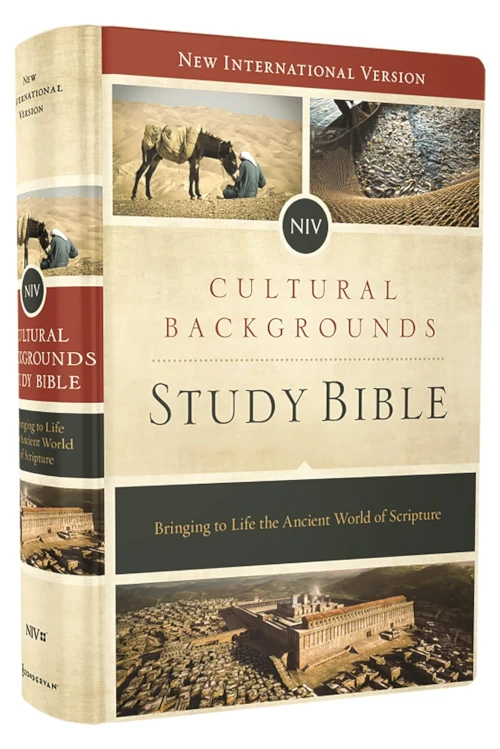
NIV, Cultural Backgrounds Study Bible (Context Changes Everything)
New dimensions of insight with a behind-the-scenes tour of the ancient world.
You’ve heard many Bible stories hundreds of times, but how many details are you missing? Sometimes a little context is all you need to discover the rich meaning behind even the most familiar stories of Scripture.
Authority Without Peace
Jerusalem was swollen with people, tension, and expectation. Passover drew pilgrims from across Judea and beyond, filling the city with reminders of Israel’s deliverance from foreign rule. For Rome, that memory was dangerous. For the man appointed to keep order, it was exhausting.
Pontius Pilate governed Judea on behalf of Rome from Caesarea Maritima, but during major feasts he relocated to Jerusalem. The move was strategic. Passover crowds could ignite unrest, and any disturbance would reflect poorly on Roman authority. Pilate’s responsibility was not theological clarity or moral purity. It was stability. Rome rewarded peace, not discernment.
Into this charged setting, the religious leaders brought Jesus of Nazareth. The timing mattered. Jewish authorities lacked the legal power to carry out capital punishment under Roman occupation, so they delivered Jesus to the governor early in the morning, framing their accusations in political terms rather than religious ones. Luke records the shift clearly. Jesus was accused of misleading the nation, forbidding tribute to Caesar, and claiming kingship. These were charges Rome would not ignore.
Pilate’s first recorded action reveals both authority and distance. He questioned Jesus directly, asking whether He claimed to be “the King of the Jews.” Jesus’ response did not incite rebellion or deny the charge outright. Instead, He spoke in a way that stripped the accusation of political threat. John’s Gospel clarifies that Jesus’ kingdom was “not of this world,” signaling no challenge to Roman rule. Pilate listened, evaluated, and reached a verdict that should have ended the trial. “I find no guilt in him.”
Yet the case did not close. Authority did not bring peace. The more Pilate pressed for clarity, the more resistance he encountered from the accusers. When he learned that Jesus was a Galilean, Pilate attempted a procedural exit by sending Him to Herod Antipas, who ruled that region. The move was legal, cautious, and revealing. Pilate sought relief from responsibility, not resolution of truth.
Herod returned Jesus without judgment, clothed in mockery rather than conviction. The case came back heavier than before. Pilate now stood publicly convinced of Jesus’ innocence while privately aware that the matter would not dissolve quietly. The leaders were relentless. The crowd was growing. Rome was watching.
The Gospels do not portray Pilate as ignorant of justice. They portray him as constrained by fear of disorder and the limits of political survival. His authority was real, but it was not free. The judgment seat gave him power over Jesus’ fate, yet it also exposed his vulnerability. From the opening moments of the trial, Pilate was caught between what he knew and what he feared. Peace, the very thing he was sent to enforce, remained just beyond his grasp.
An Innocent Man and a Guilty System
The trial did not advance toward clarity. It tightened around contradiction.
Pilate had already rendered a verdict that should have ended the matter. After questioning Jesus, he announced to the accusers and the crowd, “I find no guilt in this man” (Luke 23:4). This was not a private impression. It was a formal declaration from Rome’s highest authority in Judea. Yet instead of resolving the case, that statement exposed the deeper conflict. The system charged with preserving justice had no mechanism for accepting innocence when innocence threatened order.
The religious leaders escalated their accusations. Luke records that they became more urgent, insisting that Jesus stirred up the people from Galilee to Jerusalem. Their persistence revealed motive. This was not about evidence but removal. Jesus had disrupted their authority, challenged their interpretation of the law, and drawn crowds during the most volatile week of the year. From their perspective, releasing Him was more dangerous than condemning Him.
Pilate’s internal struggle sharpened as the charges grew louder. The Gospels repeatedly show him attempting to disengage. Sending Jesus to Herod had failed. Declaring Him innocent had failed. Even the absence of credible charges failed to quiet the crowd. The governor now faced a dilemma common to imperial rule. Roman justice prized order above equity. An innocent man could be sacrificed if unrest could not be contained.
John’s Gospel exposes Pilate’s reasoning more fully. After further questioning, Pilate again affirmed that he found no guilt in Jesus (John 19:4). However, he also sought a compromise. Appealing to a Passover custom, he offered the crowd a choice between Jesus and Barabbas, a man imprisoned for insurrection and murder. The offer itself reveals Pilate’s calculation. He assumed the contrast would resolve the matter. Surely the crowd would choose a teacher over a proven rebel.
They did not.
Barabbas was released. Jesus remained.
This moment crystallized the system’s guilt. The crowd, influenced by the chief priests, demanded the release of a violent offender and the punishment of a man Rome itself could not condemn. Pilate’s authority was still intact, but his options were narrowing. Each attempt to preserve justice without consequence failed. Each delay increased the pressure.
From a scholarly perspective, many historians note that Roman governors were judged harshly for allowing riots, especially during festivals. Complaints could be sent directly to Rome. A reputation for weakness could end a career or worse. While Scripture does not record Pilate’s private fears, it clearly shows his public decisions moving steadily away from truth and toward survival.
The conflict was no longer about Jesus alone. It was about whether innocence could survive inside a system built on fear, control, and expedience. Pilate stood at the center of that system, aware of the truth, yet increasingly unable to act on it. The trial continued, not because guilt had been proven, but because justice had become inconvenient.
Pontius Pilate: Fear Enters the Courtroom
The tone of the proceedings shifted when fear replaced calculation.
Up to this point, Pontius Pilate had treated the case as a political inconvenience. Jesus appeared harmless to Roman authority, and the charges lacked substance. However, the accusations now took a sharper turn. The religious leaders insisted that Jesus claimed to be the Son of God. This charge carried little weight under Roman law, but its effect on Pilate was immediate and personal. John records that when Pilate heard this, “he was even more afraid” (John 19:8).
Fear entered the courtroom not as panic, but as unease. Roman culture was steeped in superstition, omens, and divine retribution. While Pilate was a Roman official, he was not immune to such concerns. The title “Son of God” did not sound merely theological. In the Roman world, it echoed claims associated with divine favor, judgment, and the displeasure of the gods. Pilate withdrew again to question Jesus privately, seeking answers that might quiet his growing anxiety.
Jesus offered no reassurance. His responses did not defend Himself, nor did they flatter Pilate’s authority. Instead, He spoke of power that was granted from above. This statement reframed the entire encounter. Authority was no longer merely Roman. It was accountable. Pilate, who wielded power over life and death, was confronted with the idea that his authority was derivative, not absolute.
The pressure intensified outside the chamber. The crowd remained restless. The chief priests advanced a final and devastating argument. “If you release this man, you are not Caesar’s friend.” This was not rhetoric. It was a threat. Loyalty to Caesar was the foundation of Roman governance. Accusations of disloyalty could be reported directly to Rome, especially during a festival already known for unrest.
Here the conflict reached its breaking point. Pilate’s fear was no longer abstract or spiritual. It was political, immediate, and career-ending. The Gospel text shows the effect plainly. Pilate brought Jesus out and sat on the judgment seat. The trial had moved beyond evidence. It had become a calculation of risk.
Scholars often note that Roman prefects like Pilate operated under constant scrutiny. Judea had already proven difficult to govern, and prior incidents of unrest could not be erased. In that context, the threat of being labeled disloyal to Caesar carried enormous weight. While this historical insight is supported by Roman administrative practices, the Gospel accounts themselves require no speculation to show Pilate’s dilemma. His actions reveal it.
Fear had accomplished what reason could not. Pilate still believed Jesus was innocent. He had said so repeatedly. Yet the courtroom was no longer governed by truth. It was governed by survival. The escalation was complete. Justice now stood opposed not by ignorance, but by fear, and fear was winning.
Pontius Pilate: The Illusion of Innocence
The moment of decision arrived quietly, almost ceremonially.
With the accusations unresolved and the crowd pressing closer to violence, Pontius Pilate turned to a public gesture. Matthew records that water was brought before the assembled crowd. Pilate washed his hands and declared himself innocent of Jesus’ blood, placing responsibility squarely on those demanding the sentence (Matthew 27:24). The act was deliberate and visible. It was meant to settle the matter in the eyes of Rome, the crowd, and his own conscience.
Yet the gesture exposed the illusion at the heart of the trial.
In Jewish tradition, handwashing could symbolize innocence when a crime could not be solved, as described in Deuteronomy 21. However, that ritual applied to unknown guilt, not to a case where the judge had personally examined the accused and repeatedly declared him innocent. Pilate’s action borrowed the appearance of moral distance without possessing its substance. Authority does not dissolve accountability through symbolism.
The internal conflict reached its peak here. Pilate knew Jesus was innocent. The Gospel writers are unified on this point. He had said it plainly, more than once. He had attempted legal transfers, compromises, and procedural delays. None had succeeded. Now, facing the threat of disorder and political consequence, Pilate sought a way to escape guilt without defying the crowd.
The crowd’s response stripped the gesture of its power. They accepted the responsibility with chilling resolve. The declaration did not halt the proceedings or bring reflection. It accelerated the outcome. What Pilate attempted to set aside, the crowd embraced, and the machinery of execution moved forward.
From a theological standpoint, the moment stands as a profound warning. Scripture consistently teaches that responsibility cannot be transferred by declaration alone. The prophets repeatedly condemned leaders who used ritual to cover injustice. Pilate’s handwashing did not absolve him. It revealed him. The judge who knew the truth chose the safety of appearance over the cost of righteousness.
The climax was not the sentence itself, but the failure of conscience under pressure. Pilate did not condemn Jesus in ignorance or rage. He did so while insisting on his own innocence. That contradiction lies at the heart of the scene. In attempting to distance himself from guilt, Pilate demonstrated how easily truth can be surrendered when fear is cloaked in ceremony.
Pontius Pilate: Justice Denied, Truth Condemned
The decision, once made, moved swiftly.
After washing his hands, Pontius Pilate delivered Jesus over to the will of the crowd. The Gospels describe the sequence with restrained clarity. Jesus was scourged, mocked by Roman soldiers, and prepared for execution. Pilate’s authority did not waver in form. The sentence carried the full weight of Roman power. Yet its substance was hollow. Rome condemned a man its own governor had declared innocent.
John records Pilate’s final act before handing Jesus over. He brought Him out once more and presented Him to the crowd. “Behold your King.” The words were not a confession of faith. They were a bitter irony. The chief priests rejected the claim outright, declaring loyalty to Caesar alone. In that moment, political allegiance overrode every earlier accusation. The charge was no longer blasphemy or sedition. It was expedience. Jesus had become disposable.
Pilate authorized the crucifixion. The method itself carried meaning. Crucifixion was reserved for slaves, rebels, and enemies of the state. It was public, humiliating, and intended as a warning. Rome crucified not only to punish, but to deter. By approving this sentence, Pilate aligned himself fully with the system he had tried to navigate without moral cost.
The immediate outcome was order. The crowd dispersed. The festival continued. From a Roman perspective, the crisis passed. Yet Scripture presents the resolution differently. Justice was not preserved. Truth was not protected. The silence of Pilate after this point is striking. He fades from the narrative as quickly as he entered it. The Gospels offer no reflection from him, no repentance, no defense. His role is complete.
Historically, Pilate’s later removal from office is noted in non-biblical sources, but those accounts fall outside Scripture and remain speculative. The Bible does not concern itself with his personal end. It preserves his choice. That choice alone defines him.
The resolution exposes the cost of compromise. Pilate succeeded in avoiding immediate political fallout, but he failed at the moment that mattered most. He preserved his position while condemning truth itself. Jesus was led away to be crucified, and the governor who knew better allowed injustice to stand unchallenged.
In the end, Pilate achieved the peace he sought, but only on the surface. Scripture leaves readers with the enduring contrast. An innocent man was condemned, and the man who condemned Him remains forever remembered not for cruelty, but for surrender.
Thematic Threads Woven Throughout
The trial narratives preserve more than a sequence of legal events. They reveal enduring patterns that surface wherever power, fear, and truth intersect.
From the opening interrogation to the final sentence, justice is consistently acknowledged and then set aside. Pilate’s repeated declarations of innocence are not incidental details. They are the spine of the account. Scripture emphasizes that the governor recognized the absence of guilt in Jesus Christ. The injustice of the outcome is therefore not rooted in confusion or lack of evidence, but in deliberate concession. The Gospels present justice as something seen clearly and then abandoned under pressure.
Alongside justice stands fear, growing steadily as the narrative advances. Pilate’s fear is not portrayed as irrational panic. It is the fear of instability, accusation, and loss. Roman governance depended on the perception of loyalty to Caesar and the prevention of unrest. When the crowd invoked Caesar’s name, fear gained legal and political weight. Scripture shows how fear, once admitted, reshapes decision-making until truth itself becomes negotiable.
Authority is another thread woven tightly through the story. Pilate’s position granted him power over life and death, yet the trial exposes the limits of that power. Jesus’ words in John’s Gospel, stating that authority is granted “from above,” reframe the entire encounter. Human authority is shown as real but accountable. Pilate acts as judge, yet Scripture subtly reverses the roles, placing his conscience on trial.
The theme of responsibility emerges most starkly in the handwashing scene. Pilate’s public gesture demonstrates a universal human impulse. Guilt is acknowledged but displaced. The act is not mocked in Scripture; it is simply shown to be ineffective. Responsibility, once assumed by office and action, cannot be transferred by ritual or declaration. The narrative allows the gesture to stand, exposing its emptiness without commentary.
Finally, the Gospels trace the contrast between truth and expedience. Jesus speaks little, yet His silence carries weight. Pilate speaks often, yet his words fail to secure justice. Truth does not shout in this account. It waits, steady and unmoved, while expedience grows loud and demanding. The outcome reveals which voice is easier to obey.
These themes are not presented as abstract lessons but as lived realities. They unfold through real decisions made by real people under real pressure. The biblical record does not sensationalize the failure. It documents it. In doing so, it leaves readers with a sobering clarity. When truth becomes costly, the greatest danger is not open hostility, but quiet surrender.
Pontius Pilate: When Neutrality Becomes a Verdict
The Gospels never portray Pontius Pilate as a man ignorant of the truth. They portray him as a man who recognized it and still stepped aside. That distinction is crucial. Pilate did not condemn Jesus because he believed the accusations. He condemned Him because refusing to act became more dangerous than acting unjustly.
Throughout the trial, Pilate attempted to occupy a middle ground. He questioned, delayed, redirected, negotiated, and symbolically distanced himself from responsibility. Each action reveals an inner conflict between conviction and preservation. Yet Scripture shows that neutrality was never truly available to him. As governor, his role required decision. Choosing not to defend justice was itself a decisive act.
The biblical record underscores this point by repetition. Pilate declared Jesus innocent multiple times. Each declaration increased his accountability. Knowledge intensified responsibility rather than diminishing it. In this way, the trial exposes a sobering biblical principle. Moral clarity does not absolve guilt if it is not accompanied by moral courage.
Jesus’ silence sharpens the contrast. He does not argue for release or appeal to public sympathy. Instead, He stands as truth embodied, allowing the injustice to unfold. The Gospel writers do not frame this as passivity. They frame it as purpose. While Pontius Pilate sought to avoid responsibility, Jesus embraced the path set before Him. Authority attempted to escape judgment, while the innocent submitted to it.
From a theological perspective shared across Christian traditions, Pilate’s failure illustrates how fear can eclipse conscience without erasing it. His actions were not driven by hatred or zeal. They were driven by calculation. Scripture does not condemn him with commentary or verdict. It simply records his choice and allows its weight to stand.
The lasting insight of the account is unsettling in its simplicity. Pilate tried to remain neutral, yet neutrality proved impossible. His refusal to defend the truth became a verdict against it. The cross that followed stands as both the result of human failure and the instrument of divine redemption.
The narrative leaves one question suspended, unanswered by commentary but unavoidable in reflection. When truth stands before us and demands a cost, will we recognize that silence, delay, and symbolic distance are themselves choices, and that neutrality, in the end, always decides something?
Closing Thoughts on Pontius Pilate
Pilate’s role in the condemnation of Jesus ends quickly in the Gospel narrative, but its significance lingers. He fades from the story not because his decision lacked weight, but because it required no further explanation. The record stands complete. An innocent man was condemned by a judge who knew better.
The tragedy of Pilate’s choice is not found in open hostility toward Jesus, but in quiet surrender to fear. He attempted to preserve peace, position, and control while distancing himself from guilt. Scripture shows the futility of that effort. Ritual could not cleanse responsibility. Silence could not undo knowledge. Delay could not replace courage.
Yet the Gospels also place Pilate’s failure within a larger redemptive purpose. Human injustice did not thwart God’s plan. It fulfilled it. The cross stands as both an indictment of compromised authority and the means of salvation. Pilate’s weakness magnified the cost of truth, while Jesus’ obedience revealed its power.
The account leaves readers with a sobering conclusion. When truth stands before us, refusing to choose is itself a choice. The legacy of Pontius Pilate reminds us that neutrality, when justice is on trial, always renders a verdict.
Discover More Overlooked Bible Stories
We hope this untold story helps you see God’s work in a new way. You can keep exploring by visiting our homepage at BibleStudyToolbox.com. You can also browse more articles in the Overlooked Bible Stories category to continue your study. If you have any questions or want to reach out, please visit our Contact Page.