The scene opens not in a synagogue or a seat of power, but in Cana, a small Galilean village hosting a wedding feast. According to the Gospel of John, Jesus, His mother, and His newly gathered disciples are present among the guests (John 2:1–2). Nothing in the setting suggests a moment of cosmic importance. This is a local celebration, likely involving extended family and neighbors, unfolding in the ordinary rhythms of village life. Yet John deliberately begins Jesus’ public story here, grounding what follows in the real, social fabric of first-century Judaism.
Weddings in this period were not brief ceremonies but multi-day feasts, often lasting up to a week. Hospitality was not optional. It was a moral obligation, especially for families of modest means whose reputation depended on generosity. Wine, in this context, was not a luxury item but a symbol of joy, blessing, and covenant celebration, frequently associated in Scripture with God’s favor and abundance. To run out would bring lasting shame on the hosts. This was not merely an inconvenience, but a social failure that could follow a family for years.
Mary’s presence at the wedding, and her awareness of the shortage that will soon emerge, suggests close involvement with the family. The text does not explain how she knows the wine is failing, but her concern reflects practical attentiveness rather than panic. She does not rally the crowd or demand intervention. Instead, she brings the problem quietly to Jesus, acknowledging a need without prescribing a solution. John records no emotional appeal, only the stark statement of reality: the resources meant to sustain joy are nearly gone.
At this stage, no miracle has occurred. No public crisis has yet broken open. But the tension is already present beneath the surface. A celebration meant to mark new beginnings is approaching humiliation. The setup is intentional and restrained. John places divine activity at the edge of ordinary failure, where human limitation becomes unavoidable. The story has not yet turned, but the conditions are set. God’s glory is about to be revealed, not by spectacle, but within the fragile space of everyday human responsibility and quiet concern.
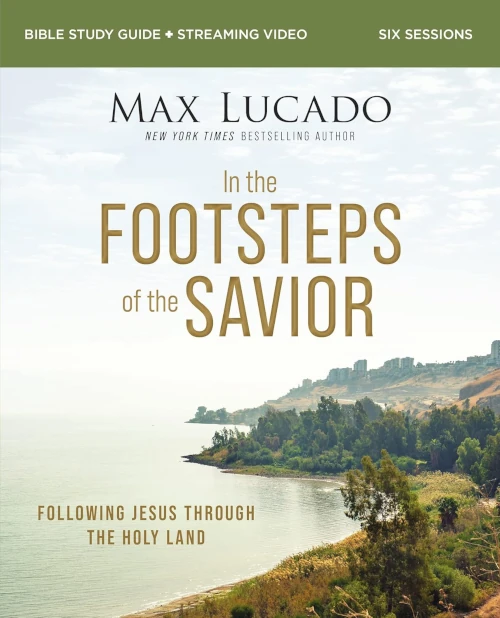
The Footsteps of the Savior: Following Jesus Through the Holy Land
In the Footsteps of the Savior is an invitation to come alongside Max as he shares meaningful, insights on the people and places that shaped Jesus’s life. In this special compilation, Max weaves together in-depth teaching from his bestsellers with poignant reflections on his time in the Holy Land.
A Crisis No One Planned For
The crisis emerges quietly, without announcement or public disruption. The wine has failed. What should have sustained days of celebration is now gone, and with it the fragile margin protecting the host family from shame. In the world of first-century Galilee, such a failure carried weight. Hospitality was bound to honor, and honor was bound to identity within the village. This was not a private shortfall but a communal exposure waiting to happen.
The Gospel of John records no reaction from the crowd, suggesting the problem is still contained. Yet Mary becomes aware of the shortage and responds with restraint. Her action is deliberate. She does not address the servants directly or alert the master of the feast. Instead, she turns to Jesus, presenting the situation plainly: “They have no wine” (John 2:3, ESV). The statement carries no request, no instruction, and no visible pressure. It reflects confidence rather than desperation, as if placing the problem where it ultimately belongs.
Jesus’ reply introduces the central tension of the scene. His words, often misunderstood when isolated, reflect distance rather than rejection. He acknowledges the reality of the moment while asserting that its resolution must align with divine timing. Within John’s Gospel, references to Jesus’ “hour” consistently point forward to His death and glorification. Here, at the beginning of His public ministry, the crisis exposes the gap between human expectation and divine purpose. The need is immediate. The mission unfolds on a longer horizon.
Scholarly interpretations vary at this point. Some commentators view Jesus’ response as a corrective, clarifying that His ministry is not directed by familial authority. Others understand it as a boundary-setting statement, marking a shift from private life to public calling. These views are interpretive and should be understood as scholarly analysis rather than explicit claims of the text. What the narrative itself makes clear is that Jesus does not deny the need. He reframes it.
The tension sharpens here. The wedding continues, but its stability is eroding. The family’s joy hangs on resources already exhausted. Mary does not argue or withdraw. Instead, she entrusts the situation fully, stepping back without explanation. The conflict remains unresolved, suspended between human insufficiency and divine intention. Nothing visible has changed, yet everything is now in motion.
Ordinary Water, Obedient Servants
The turning point comes without spectacle or announcement. Jesus does not address the crowd or explain His intent. Instead, He turns to what is already present. John records six stone water jars standing nearby, set there for Jewish rites of purification (John 2:6). Their presence anchors the moment firmly in first-century religious life. These jars were not decorative. They belonged to the daily practices of cleansing required by tradition, reinforcing boundaries between what was considered clean and unclean.
Each jar held twenty or thirty gallons, an amount that underscores the scale of what follows. Jesus instructs the servants to fill them with water, and they do so “to the brim” (John 2:7, ESV). The detail matters. There is no room for later confusion or dilution. What goes into the jars is ordinary water, drawn and poured by servants whose names are never recorded. Their role is essential but understated. They ask no questions and receive no explanation. Their obedience is complete and unembellished.
At this point in the narrative, nothing visible has changed. The water remains water. The crisis has not yet resolved. Yet Jesus now instructs the servants to draw some out and take it to the master of the feast. The action requires trust. The servants carry forward what they know was water moments earlier, placing their own credibility at risk. John offers no insight into their thoughts, but the movement itself signals quiet courage shaped by obedience.
Only after the water is drawn does its nature change. The text does not describe the moment of transformation, only its result. The master of the feast tastes what has been brought and reacts with surprise, unaware of its origin. The sign occurs without ceremony, hidden within faithful action rather than public display. The servants know. The master does not. The miracle unfolds in layers of awareness.
Scholars have long noted the symbolic weight of this moment. Many interpret the use of purification jars as a theological signal, suggesting transformation from old forms to new fulfillment. This reading is common in Johannine scholarship and reflects theological interpretation rather than explicit narrative explanation. What the text itself emphasizes is restraint. Jesus acts decisively, yet quietly. The turning point is not marked by power alone, but by obedience, trust, and the use of what was already at hand.
The water jars remain where they were. The servants return to their tasks. Yet the direction of the story has changed. The crisis has crossed from human insufficiency into divine provision, and it has done so without drawing attention to itself.

Quiet Abundance, Hidden Glory
The outcome unfolds without fanfare. The master of the feast tastes the wine and responds with genuine astonishment. He calls the bridegroom and remarks that the customary order has been reversed: the good wine has been kept until now (John 2:9–10, ESV). His reaction is practical, not theological. He does not ask where the wine came from, nor does he sense that anything miraculous has occurred. From his perspective, the problem has simply been solved, and solved generously.
The host family is spared public embarrassment. The celebration continues uninterrupted. What could have become a moment of lasting shame instead becomes an occasion of unexpected honor. In a culture where communal memory mattered deeply, this quiet preservation of dignity is no small outcome. The abundance is real and measurable. Hundreds of gallons now stand where emptiness had threatened. Yet the source of that abundance remains largely hidden.
John is careful to note who understands what has happened. The servants who drew the water know its origin, and so do the disciples. The master of the feast does not. The crowd does not. This distinction is central to the narrative. The sign is not performed to compel belief through spectacle. It is revealed selectively, forming faith in those already following rather than demanding recognition from those merely attending.
The Gospel of John concludes this episode with a theological summary rather than a public reaction: “This, the first of his signs, Jesus did at Cana in Galilee, and manifested his glory. And his disciples believed in him” (John 2:11, ESV). Glory, in John’s framework, is not volume or visibility. It is revelation. What is revealed here is not only power, but character. Jesus provides what is needed, when it is needed, without drawing attention to Himself.
Scholars widely recognize this moment as the inauguration of Jesus’ public ministry in John’s Gospel. Many note that the miracle’s restraint sets the pattern for the signs that follow. These interpretations are scholarly observations rather than narrative claims, but they align closely with the text’s emphasis. The miracle does not escalate conflict or provoke opposition. It deepens trust within a small circle and preserves joy for a humble family.
The outcome is complete before most realize there was ever a problem. The wine flows. The feast endures. The glory revealed is real, but it remains veiled to all except those watching closely. In this first sign, divine abundance enters ordinary life quietly, leaving faith strengthened, dignity protected, and joy uninterrupted.
God Present in the Everyday
The wedding at Cana concludes without public recognition of what has occurred, yet its significance extends far beyond the village. The Gospel of John frames the event as Jesus’ first sign, not because it was the most dramatic, but because it revealed the pattern of His ministry. God’s decisive action enters ordinary life quietly, addressing real human needs without demanding attention in return.
Nothing in the account suggests that the crowd leaves changed or even aware. The master of the feast credits the bridegroom. The guests continue celebrating. The servants return to their work. Yet the disciples walk away with something altered within them. John explicitly notes that this sign caused them to believe in Him (John 2:11). Faith is formed not through spectacle, but through witness. They see Jesus act with authority, restraint, and compassion, and they begin to understand that His presence redefines ordinary spaces.
The setting matters. This sign does not occur in Jerusalem, the center of religious power, but in Galilee, often viewed as peripheral and unimpressive. The people affected are not rulers or religious leaders, but a family whose names are never recorded. The need addressed is not political or theological debate, but the preservation of joy and dignity. In this, the narrative presents a clear theological claim through historical events: God is not distant from common life. Divine glory is not reserved for sacred platforms alone.
Scholars frequently observe that John’s Gospel emphasizes revelation through everyday encounters. This interpretation reflects literary and theological analysis rather than explicit narration, yet it aligns closely with the text. Jesus’ first sign establishes that His mission engages daily human experience, transforming it from within rather than overriding it from above.
The lasting significance of Cana is not found in public acclaim, but in quiet assurance. Those closest to Jesus learn that obedience matters, timing matters, and provision often arrives without announcement. The story closes without command or explanation, leaving a question embedded in the narrative itself: if God chose to reveal His glory in a village wedding, unnoticed by most, where might His presence still be quietly at work today?
Discover More Overlooked Bible Stories
We hope this untold story helps you see God’s work in a new way. You can keep exploring by visiting our homepage at BibleStudyToolbox.com. You can also browse more articles in the Overlooked Bible Stories category to continue your study. If you have any questions or want to reach out, please visit our Contact Page.