Beginning: A Nation Torn Between Two Voices
The story opens during the reign of Ahab, king of Israel, a period the biblical record describes as a low point in the nation’s covenant faithfulness. Ahab did more to provoke the LORD than all the kings before him, largely because he formalized the worship of Baal on a national scale. His marriage to Jezebel, a Phoenician princess, brought not only political alliance but religious transformation. Temples were built, altars erected, and Baal was publicly honored as a god of rain, fertility, and agricultural success. This was not a quiet drift from faith but a visible reordering of Israel’s loyalties.
Against this backdrop, Elijah appears abruptly in the biblical narrative. Scripture offers no genealogy, no hometown, and no explanation of his rise. He enters with a declaration, not an introduction, announcing that there would be neither dew nor rain except by the word of the LORD. The statement directly confronts Baal’s supposed authority. In the ancient Near Eastern worldview, control of rain meant control of life itself. By declaring drought, Elijah challenges not only a false god but the entire religious system supporting Ahab’s rule.
The drought that follows is not symbolic. It is physical, prolonged, and devastating. Fields fail, livestock suffer, and economic stability erodes. The land itself bears witness to Israel’s divided heart. According to the covenant warnings recorded in the Law, drought was a consequence of abandoning the LORD for other gods. The silence of the skies becomes a theological statement written across the landscape.
Elijah’s actions in this opening phase are purposeful and restrained. He does not organize resistance or rally public support. Instead, he withdraws at God’s direction, first to the brook Cherith and later to Zarephath, outside Israel’s borders. The narrative emphasizes that God sustains His prophet even as the nation suffers. This contrast is deliberate. While Israel chases security through Baal, Elijah lives by daily dependence on the word of the LORD.
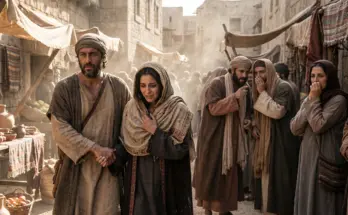
The people of Israel, meanwhile, are caught between two voices. The royal court promotes Baal as the solution to the crisis, yet the drought exposes the emptiness of that claim. At the same time, the LORD’s prophet is largely unseen, absent from public life. The result is spiritual paralysis. The nation neither fully rejects the LORD nor fully returns to Him. This hesitation sets the stage for confrontation. Before fire ever falls from heaven, the real crisis is already clear. Israel is divided, and a divided allegiance cannot sustain a covenant people.
Rising Conflict: The Challenge on Mount Carmel
The drought drags on until its purpose can no longer be ignored. After years of scarcity, the word of the LORD sends Elijah back into public view with a direct command to confront Ahab. When the two meet, the tension is immediate and political. Ahab accuses Elijah of being the troubler of Israel, yet Elijah redirects the charge. The trouble, he says, comes from abandoning the commandments of the LORD and following the Baals. This exchange sets the terms of the conflict. The crisis is not environmental or economic. It is covenantal.
Elijah then calls for a public assembly. All Israel is summoned, along with the prophets of Baal and the prophets of Asherah who are supported at Jezebel’s table. The chosen location, Mount Carmel, is significant. Carmel sits along a fertile ridge overlooking the Mediterranean, long associated with agricultural abundance. In Canaanite belief, this was contested ground, a place where a storm god’s power should have been most evident. By choosing Carmel, the confrontation moves into Baal’s supposed territory.
Before any sacrifice is prepared, Elijah addresses the people directly. His question is simple and unsettling: how long will they limp between two opinions? The language suggests instability and divided loyalty, not ignorance. Israel knows the LORD. The problem is hesitation. The people offer no response. Their silence reveals the depth of the conflict. They are not hostile to Elijah, but they are unwilling to choose.
The contest itself exposes the nature of the rival worship. The prophets of Baal prepare their altar and call on their god from morning until noon. Their actions escalate as the hours pass. They cry out, dance around the altar, and later cut themselves according to their custom, believing bloodshed might provoke divine response. These practices align with known elements of ancient Near Eastern fertility rituals, where extreme acts were used to compel a god’s attention. Yet the biblical account is unambiguous. There is no voice, no answer, no response.
Elijah’s presence during this period is restrained but deliberate. He does not intervene. He allows the process to run its course. His brief words highlight the contrast between frantic ritual and divine silence, but the narrative places the weight on the outcome rather than the rhetoric. By the time the offering of the evening sacrifice approaches, the failure of Baal’s prophets is total and public. Their god has not merely delayed. He has not acted at all.
The consequences are visible. A full day of ritual effort produces nothing, and the people witness it. The conflict has sharpened. What began as drought has become exposure. The question Elijah raised now hangs unanswered but unavoidable. If Baal cannot respond on his own ground, under ideal conditions, then Israel’s divided loyalty has no foundation. The stage is set for the decisive moment, not because Elijah has proven himself, but because Baal has proven silent.
Turning Point: Fire Falls from Heaven
As the day moves toward its close, the narrative slows and sharpens its focus. The time of the evening sacrifice arrives, a detail rooted in Israel’s worship rhythm. This is the hour traditionally associated with prayer and atonement, not spectacle. Against the backdrop of Baal’s failure, Elijah steps forward and calls the people nearer. The shift is intentional. What follows is not a contest of endurance but a moment of revelation.
Elijah’s first action is restorative rather than dramatic. He repairs the altar of the LORD that had been torn down, using twelve stones, one for each tribe of Israel. This detail matters. The northern kingdom has long been politically divided from Judah, yet Elijah’s act recalls a unified covenant identity. The altar itself becomes a theological statement. Before fire falls, the covenant is acknowledged.
The preparation continues with deliberate excess. A trench is dug around the altar, and the sacrifice is drenched repeatedly with water until it saturates everything and fills the trench. In a land ravaged by drought, this act is costly and unmistakable. The narrative leaves no room for doubt about manipulation or trickery. Any natural explanation is removed before the prayer begins.
Elijah’s prayer is brief and restrained. He addresses the LORD as the God of Abraham, Isaac, and Israel, anchoring the moment in covenant history. His request is not for personal validation but for clarity. He asks that the people may know the LORD is God and that their hearts are being turned back. The emphasis is theological and communal, not personal. According to the text, Elijah acts in obedience to the word of the LORD, not independent initiative.
The response is immediate. Fire falls from heaven and consumes not only the offering and the wood but also the stones, the dust, and the water in the trench. The scope of the fire underscores total divine action. In ancient Near Eastern contexts, fire often symbolized divine presence and approval, especially in sacrificial settings. Here, the fire functions as unmistakable confirmation. The LORD is not silent. He responds decisively and publicly.
The people’s reaction is equally clear. They fall on their faces and confess that the LORD alone is God. The moment leaves no space for ambiguity or divided allegiance. What the drought exposed and the failed rituals revealed is now settled by direct divine intervention. The turning point of the story is not Elijah’s courage alone but the LORD’s willingness to act in history to reclaim His people. The silence of Baal is answered by the fire of heaven, and the nation is forced, at last, to choose.
Final Resolution: Revival Followed by Backlash
The immediate aftermath of the fire is decisive and severe. With the people now openly confessing the LORD as God, Elijah commands that the prophets of Baal be seized. The narrative records their execution at the brook Kishon, a seasonal stream at the base of Mount Carmel. This act reflects covenant enforcement rather than personal vengeance. According to the Law of Moses, prophets who led Israel into idolatry were subject to death. The moment marks a purge of institutionalized apostasy, not a spontaneous uprising. Revival, in this context, carries weighty consequences.
With the false prophets removed, the focus shifts back to the drought. Elijah announces to Ahab that the sound of rushing rain is near, even though the sky remains clear. He ascends Carmel again, this time not to confront but to intercede. His posture is humble and persistent. He sends his servant repeatedly to look toward the sea until a small cloud appears, described as insignificant in size yet heavy with promise. The detail reinforces the biblical pattern that restoration often begins subtly before becoming undeniable.
The rain that follows is sudden and abundant. After years of dryness, the land receives what Baal could not provide. The storm confirms that the LORD, not the fertility god of Canaan, governs creation. Elijah runs ahead of Ahab’s chariot to Jezreel, a striking image of prophetic urgency and divine enablement. For a brief moment, it appears that national renewal may extend beyond worship into leadership.
That hope collapses quickly. When Jezebel learns what has happened, her response is immediate and personal. She issues a death threat against Elijah, targeting him not as a prophet but as an enemy of her religious and political authority. The revival on Carmel does not soften her resolve. It hardens it. Power structures built on idolatry rarely yield quietly.
Elijah’s reaction exposes the human cost of prophetic faithfulness. The same man who stood alone before hundreds now flees into the wilderness. Scripture does not frame this as cowardice but exhaustion. The emotional weight of confrontation, execution, prayer, and public expectation converges. Elijah’s despair reveals a sobering truth. Spiritual victories do not insulate God’s servants from fear or fatigue.
Many scholars note that this pattern recurs throughout Scripture. Moments of revival are often followed by resistance, sometimes more intense than what preceded them. The narrative does not end with Carmel as a permanent turning point for Israel. Instead, it presents revival as real but contested. God has acted decisively, yet the hearts of rulers remain divided.
The final resolution, then, is deliberately complex. The LORD proves Himself beyond dispute. Rain falls. Idolatry is exposed. Yet the prophet must still walk through isolation and threat. The story closes this phase not with triumphal certainty but with sober realism. Faithfulness may spark renewal, but it can also provoke backlash. The fire from heaven settles the question of who God is. It does not remove the cost of standing with Him.
Closing Reflection
The story of Carmel refuses to settle into a simple victory narrative. Fire falls, rain follows, and yet the conflict does not end. Scripture presents these events without smoothing their edges. Elijah’s courage on the mountain and his collapse in the wilderness belong to the same faithful servant. Both are recorded because both tell the truth about life before God.
What stands out is not only what the LORD does, but why He does it. The fire falls in response to a prayer aimed at turning hearts back, not proving a prophet right. The rain comes after judgment, not before, restoring the land once covenant order is acknowledged. Throughout the account, divine power serves relational purposes. God reveals Himself so His people will know Him, not merely fear Him.
The people’s response is equally instructive. They confess the LORD as God when confronted with undeniable evidence, yet the broader narrative shows that confession alone does not guarantee lasting reform. The silence before the fire and the division afterward expose how difficult sustained faithfulness can be. Scripture does not portray Israel as ignorant but as hesitant, torn between convenience and covenant.
Elijah’s experience after Carmel adds a final layer of honesty. The prophet who calls down fire also asks to die beneath a broom tree. The Bible records both moments without commentary, allowing the contrast to speak. Many scholars observe that this tension underscores a recurring biblical theme. God’s servants are sustained by divine strength, yet they remain fully human, vulnerable to fear and weariness.
The question raised on Carmel lingers beyond the chapter. How long will God’s people hesitate between two loyalties? The narrative offers no abstract answer, only lived reality. When the LORD acts, a decision is demanded. The fire clarifies truth, but it also reveals the cost of standing with it. The story invites readers to consider not whether God is able to answer, but whether they are prepared to remain faithful after He does.
Discover More Overlooked Bible Stories
We hope this untold story helps you see God’s work in a new way. You can keep exploring by visiting our homepage at BibleStudyToolbox.com. You can also browse more articles in the Overlooked Bible Stories category to continue your study. If you have any questions or want to reach out, please visit our Contact Page.