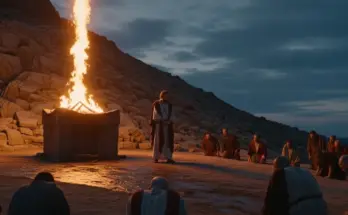
Gideon’s story offers some of the most powerful leadership insights in Scripture. When we explore Gideon leadership lessons, we discover principles rooted not in personal strength but in God’s steady presence. Gideon begins his journey in hiding, working quietly inside a winepress to protect a little grain from Midianite raiders. Judges 6 explains that Israel faced severe oppression because they abandoned God’s covenant. As a result, for seven years the Midianites invaded the land at harvest time, consumed Israel’s crops, and left the people impoverished. Israel cried out, and God responded with both correction and compassion.
Strong’s Exhaustive Concordance
The New Strong’s Expanded Exhaustive Concordance of the Bible is a valuable tool for pastors, teachers, and students of the Bible. This expanded edition is computer generated for highest accuracy, and the Hebrew and Greek dictionaries have been augmented with definitions from the classic reference work Vine’s Complete Expository Dictionary of Old and New Testament Words. Get Yours on Amazon
We see early that Gideon was not a leader seeking recognition. He took no military role, held no public position, and expressed no confidence in himself. His introduction is almost jarring because we find him doing a necessary task in a completely unexpected setting. Threshing wheat in a winepress reveals the fear that shaped life under Midian. Yet this is where God began His work. Gideon did not need to stand tall or be well known. God found him as he was, and from that place He shaped him into a leader who learned to trust His voice above fear.
As we walk through Judges 6 through 8, we see that Gideon’s transformation did not happen quickly. His leadership grew through reassurance, obedience, conflict, and humility. Along the way we learn how God forms hesitant people into faithful servants. These Gideon leadership lessons speak to anyone who desires to follow God’s call, even when it feels overwhelming. They remind us that God’s strength is made perfect in weakness, and He delights in using ordinary people to accomplish His purposes.
Beginning: A Hidden Man in a Broken Land
The opening of Gideon’s story gives us crucial context for understanding his fears and questions. Judges 6:1 declares that Israel did evil in the Lord’s sight, so He handed them to Midian. Historically, Midianite groups operated like mobile swarms of raiders. They traveled with livestock, tents, and fighting men. This explains the description in Judges 6:5, where they are compared to locusts. Their presence overwhelmed the land, leaving Israel without resources or harvest.
Because the Midianites raided at predictable times, Israel attempted to hide grain wherever they could. They built hideouts in mountains and caves, hoping to preserve enough food to survive each year’s invasion. This background is essential for understanding Gideon’s actions. He was not timid by nature. He was doing what any normal person would do under constant threat. The land was not only physically devastated. The people felt spiritually abandoned and emotionally crushed.
The arrival of a prophet in Judges 6:7 to remind Israel of God’s faithfulness and their disobedience shows that God had not forgotten His people. He prepared their hearts before calling Gideon, reminding them that deliverance came not from human strength but from repentance and trust in Him. This sets the stage for Gideon leadership lessons to emerge through a man who felt unprepared, unnoticed, and overwhelmed.
Gideon in the Winepress
Judges 6:11 introduces Gideon in a vivid, unexpected scene. He is threshing wheat in a winepress. Winepresses were hollowed basins carved into bedrock or built into the ground. They were ideal for crushing grapes but completely unsuitable for threshing wheat. Threshing normally required breeze to carry away chaff. Using a winepress meant Gideon had to work harder and produce less grain, yet it helped him stay hidden from Midianite raiders.
This humble setting reveals the emotional climate of Israel and the inner fears Gideon carried. It also highlights God’s surprising choice. Gideon was not preparing for leadership. He was not praying for influence or seeking honor. He was simply trying to survive. Yet God chose this moment and this place to begin a transformation. This becomes the first Gideon leadership lesson, one centered on availability rather than ability. God often meets people where they are, not where they think they should be.
The Weight of Gideon’s Questions
When the Angel of the Lord greeted Gideon with the words, “The Lord is with you, O mighty man of valor” (Judges 6:12), Gideon struggled to reconcile those words with reality. He questioned God’s presence, asking why Israel suffered and where the miracles of the past had gone. His questions reflected Israel’s collective pain. They remembered the deliverance from Egypt, the victories under Joshua, and the promises of the covenant. Yet all they saw was devastation.
These questions remind us that God’s call often enters a person’s life long before they feel ready. Gideon’s honest doubts show that confusion does not disqualify a person from God’s service. His struggle becomes part of the process God uses to teach, shape, and strengthen him. Through these early scenes, we begin to see Gideon leadership lessons emerge organically. Leadership begins with God’s presence, not human confidence.

Conflict: A Call That Confronts Fear
Gideon’s internal conflict deepens as the Lord speaks again in Judges 6:14. The instruction is direct. “Go in this might of yours and save Israel from the hand of Midian.” Gideon immediately points out his limitations. His clan is the weakest in Manasseh, and he considers himself the least in his family. In ancient Israel, this statement reflected more than modesty. Social position shaped a person’s opportunities. Gideon did not see himself as someone God could use.
The Lord answers Gideon’s concerns with reassurance. “I will be with you” (Judges 6:16). This simple promise becomes a foundational Gideon leadership lesson. God does not ask for self-confidence. He asks for trust. Leaders God shapes often begin with hesitation because true leadership in Scripture flows from reliance on Him, not reliance on self.
The First Sign of Reassurance
Gideon asks for a sign to confirm that he is hearing correctly. When the fire consumes the offering in Judges 6:21 and the Angel of the Lord disappears, Gideon fears he will die because he believes he has seen God. The Lord responds with calming words in verse 23. “Peace be to you. Do not fear; you shall not die.” This moment becomes a turning point in Gideon’s story. He builds an altar and names it “The Lord Is Peace.”
The placement of peace early in Gideon’s calling is significant. Leadership shaped by God begins with peace rooted in His presence, not in favorable circumstances. Gideon still fears Midian, still doubts his ability, and still questions his future. Yet he meets God in a moment of reassurance that anchors his heart for what comes next.
The Confrontation with Baal Worship
God then commands Gideon to destroy his father’s altar to Baal and the Asherah pole beside it. This act forced him to confront the spiritual confusion in his own household. Israel had blended worship of Yahweh with Canaanite practices, something well attested by archaeological findings across the region. Removing these idols was not merely symbolic. It was an act of spiritual war. Gideon obeyed but did so at night because he feared the reaction of his family and the townspeople.
When the community discovered what had happened, they wanted to kill Gideon. His father Joash defended him, arguing that if Baal was a true god, Baal could defend himself. This earned Gideon the name Jerubbaal, meaning “Let Baal contend with him.” The name marked a shift in identity. Gideon became publicly known as someone who challenged false gods. This is another Gideon leadership lesson. Leadership often requires confronting wrong practices, even when it costs reputation or safety.
Turning Point: Divine Reassurance in the Dark
The Midianite threat grew stronger, and Gideon rallied Israel to fight. Judges 6:34 says the Spirit of the Lord clothed Gideon, empowering him for the task. Yet God was not finished shaping him. Judges 7 contains one of the clearest Gideon leadership lessons in the entire narrative. God reduces Gideon’s army from thirty-two thousand to three hundred. He does this in two stages. First, He sends home anyone who is afraid. Then, He selects the final number based on how the men drink water.
Some biblical scholars highlight that the method itself is not the point. The emphasis rests on God ensuring that Israel cannot claim victory by its own power. God says explicitly in Judges 7:2 that the army is too large. Victory must demonstrate God’s strength, not human might. This becomes a defining moment in Gideon’s leadership journey. He learns that leadership anchored in God remains steady even when resources shrink.
The Enemy’s Dream and Interpretation
Though God reduced the army, He also provided reassurance. In Judges 7:10, the Lord tells Gideon to go down to the Midianite camp if he is afraid. This invitation reveals God’s compassion. He does not criticize Gideon for fear but meets him within it. Gideon arrives at the camp and overhears a Midianite soldier recounting a dream about a barley loaf overturning a tent. Barley represented the grain of the poor, which aligns with Gideon’s humble identity. The other soldier interprets the dream as a sign that God will give Midian into Gideon’s hand.
This moment becomes a remarkable Gideon leadership lesson. God strengthens His servant through the voice of an enemy. The text states that Gideon worships immediately. His fear begins to turn into confidence because he recognizes that God’s promise is certain. The reassurance prepares him to lead with clarity and obedience.
The Night Attack
Gideon divides his three hundred men into three groups. They carry torches inside clay jars and blast trumpets. At Gideon’s signal, they break the jars, reveal the torches, and blow the trumpets. The sudden burst of light and noise throws the Midianite camp into confusion. Judges 7:22 explains that the Lord caused the enemy to turn their swords against each other. The emphasis remains clear. Gideon leads, but God delivers.
The night attack becomes one of the most iconic scenes in the book of Judges. It shows how God uses unexpected methods to bring victory. It also reveals a key Gideon leadership lesson. True leadership involves courage rooted in trust, even when the plan makes no sense in human terms. Gideon followed God’s instructions and watched God act.
Victory, Aftermath, and the Weight of Leadership
Israel celebrates after the victory and asks Gideon to rule over them. They want him, his son, and his grandson to form a dynasty. Yet Gideon refuses. Judges 8:23 records his answer. “The Lord will rule over you.” This statement shows deep spiritual clarity. Gideon understood that leadership belonged to God, not to him. This becomes one of the most enduring Gideon leadership lessons. True leadership recognizes God’s authority and rejects self-glory.
However, Gideon’s story includes a warning. He requests gold from the men of Israel and uses it to make an ephod. Judges 8:27 says this ephod became a snare to Gideon and Israel. The text does not accuse Gideon of abandoning God, but it acknowledges that even leaders shaped by God can make choices that lead people astray. This part of the story teaches humility. It shows how spiritual victories do not eliminate the need for ongoing vigilance and obedience.

Fill Your Home with Praise to God
Celebrate His presence daily with a beautiful wall decal that reminds you and your family to lift your voices in worship.Bring Scripture to life in your home with a wall decal that encourages constant praise and joyful reminders of His goodness. Get Yours on Amazon
The Final Years
Gideon brought peace to Israel for forty years. The land rested because God used him to break the power of Midian. Yet after his death, Israel returned quickly to idolatry. Judges 8:34 says the people did not remember the Lord or how He delivered them through Gideon. The cycle of Judges continues. The nation experienced temporary relief but lacked lasting faithfulness.
These final scenes give us a realistic picture of leadership. Gideon’s courage mattered. His obedience brought freedom. His mistakes carried consequences. And the people responded with mixed devotion. The story remains honest because Scripture does not avoid complexity. Instead, it shows us the full portrayal of a leader shaped by God and the ongoing struggle of a nation that frequently turned away.
Reflective Conclusion
When we study Gideon leadership lessons, we discover that God transforms hesitant people into leaders who trust His presence more than their limitations. Gideon began as a man hiding in fear, questioning God’s faithfulness, and doubting his own worth. Yet God patiently shaped him into someone who confronted idolatry, inspired courage, and stepped boldly into battle. His victories and failures remind us that God uses ordinary lives to accomplish extraordinary work when we depend on Him.
Gideon’s story asks each of us a simple but challenging question. In what hidden place might God be calling us to trust Him enough to rise, obey, and walk forward in faith?
Discover More Untold Stories
We hope this untold story helps you see God’s work in a new way. You can keep exploring by visiting our homepage at BibleStudyToolbox.com. You can also browse more articles in the Untold Stories category to continue your study. If you have any questions or want to reach out, please visit our Contact Page.